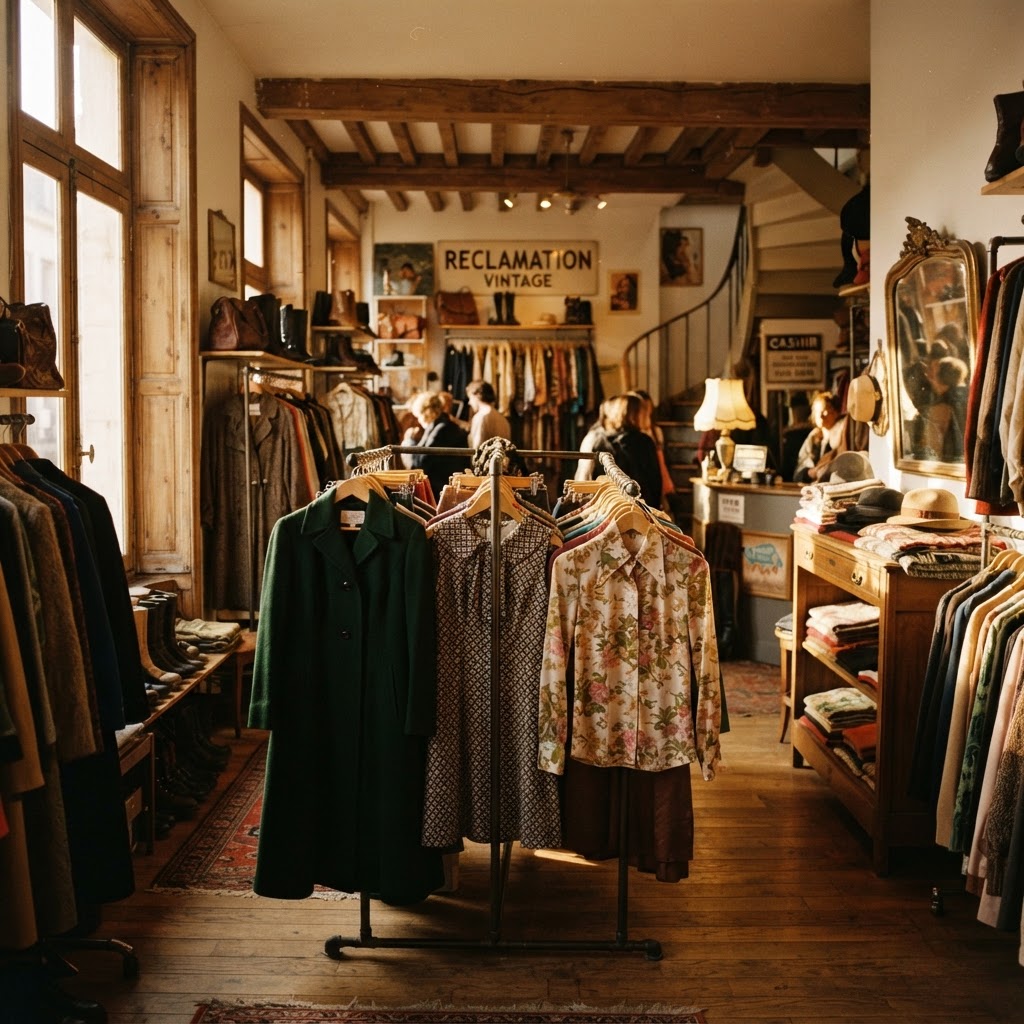
Why Vintage Fashion Is the Ultimate Sustainable Style Choice
Fast fashion's environmental toll is impossible to ignore—but the solution might already exist in closets of the past. Vintage clothing offers a stylish, eco-conscious alternative that reduces waste, conserves resources, and celebrates the craftsmanship of decades gone by. Here's why shopping vintage is one of the most powerful sustainable choices you can make.
The Hidden Cost of Fast Fashion
Every year, the global fashion industry produces an estimated 92 million tons of textile waste. Synthetic fibers shed microplastics into waterways, cotton farming drains aquifers, and the relentless churn of trend cycles sends perfectly wearable garments to landfills before they've even had a chance to shine. For anyone serious about living with a smaller environmental footprint, the wardrobe is one of the most impactful places to start.
Enter vintage fashion—not just a nostalgic indulgence or an aesthetic quirk, but a genuinely transformative approach to getting dressed. When you choose a pre-owned garment from the 1920s through the 2010s, you're opting out of a system that profits from overproduction and stepping into one that honors longevity, quality, and history.
What Makes Vintage Fashion Inherently Sustainable?
At its core, sustainable fashion is about extending the life cycle of clothing. Every time a garment changes hands rather than heading to a landfill, its original carbon cost is amortized across more years and more wearers. Studies suggest that extending the life of a piece of clothing by just nine months can reduce its carbon, water, and waste footprint by 20 to 30 percent.
Vintage clothing takes this principle to its logical extreme. A 1950s wool coat or a 1970s silk blouse has already survived decades—proof that it was made to last. The fabrics tend to be denser, the stitching more deliberate, and the construction more thoughtful than what rolls off most contemporary production lines. Choosing vintage means choosing durability over disposability.
Decades of Design, Zero New Resources Required
One of the most compelling environmental arguments for vintage shopping is elegantly simple: no new resources are consumed. When you purchase a 1980s leather jacket or a 1960s mod dress, no new cotton was farmed, no new polyester was synthesized, and no new factory was powered up to produce it. The garment already exists. You're simply giving it a new chapter.
Compare that to even the most conscientious contemporary "sustainable" brand, which still requires raw materials, manufacturing energy, and shipping logistics to bring a new item into the world. Vintage sidesteps all of that entirely. It's the ultimate expression of the circular economy—a system where nothing is wasted because everything continues to circulate.
The Craftsmanship Advantage
There's a reason vintage garments have survived long enough to be called vintage. Clothing from the 1920s through the 1980s in particular was often made under entirely different production philosophies. Mid-century American and European manufacturers built garments with full linings, reinforced seams, and natural fibers that age gracefully rather than deteriorating rapidly.
This craftsmanship isn't just aesthetically pleasing—it's environmentally significant. A well-made garment that lasts 50 years represents a fraction of the environmental impact of five cheaply made garments that each last a decade. When you invest in vintage, you're investing in clothing that has already proven its staying power.
Vintage as a Counter-Narrative to Trend Culture
Fast fashion's business model depends on making consumers feel perpetually out of style. New "micro-trends" emerge and evaporate within weeks, nudging shoppers toward constant purchasing. The environmental damage of this cycle is staggering, but so is the psychological toll—a never-ending treadmill of consumption that rarely delivers lasting satisfaction.
Vintage fashion offers a radical alternative. When you build a wardrobe around pieces from different eras, you opt out of the trend cycle almost entirely. A perfectly cut 1940s blazer or a 1990s slip dress isn't "in" or "out"—it simply is. It carries its own authority. Vintage dressers tend to develop a stronger, more personal aesthetic identity precisely because they're not following a script written by a marketing department.
This shift from trend-chasing to intentional curation is one of the most sustainable mindset changes a fashion lover can make.
The Numbers Don't Lie: Resale Is Booming
The sustainable fashion movement isn't fringe anymore—it's accelerating. The global secondhand apparel market was valued at over $170 billion in 2023 and is projected to nearly double within the next five years. Younger consumers, particularly Gen Z and Millennials, are driving this growth, motivated by both environmental values and a hunger for unique, non-mass-produced style.
Vintage, as the most curated and historically rich segment of the resale market, sits at the intersection of sustainability and storytelling. Each piece comes with provenance, character, and a kind of irreproducibility that fast fashion simply cannot offer. That 1970s wrap dress didn't come off an assembly line last Tuesday—it has a life, and you get to continue it.
How to Build an Eco-Conscious Vintage Wardrobe
Stepping into vintage shopping with sustainability as your guiding principle doesn't have to be overwhelming. A few key strategies can help:
- Buy less, choose well. Resist the urge to accumulate. A handful of exceptional vintage pieces will serve you better—and sit lighter on the planet—than a closet stuffed with impulse buys.
- Prioritize natural fibers. Wool, cotton, silk, and linen from earlier decades tend to be higher quality and more biodegradable than their synthetic counterparts.
- Learn basic care and repair. A loose button or a small seam split doesn't mean a garment is finished. Learning simple repairs extends the life of your pieces and deepens your relationship with them.
- Think in outfits, not items. Before purchasing, consider how a vintage piece will work with what you already own. Intentional purchasing is the heartbeat of sustainable style.
- Source from reputable curators. Not all vintage is created equal. Seek out marketplaces that authenticate their pieces, provide accurate condition descriptions, and specialize in the eras you love.
The Emotional Dimension of Sustainable Dressing
Sustainability isn't only about carbon metrics and waste diversion—it's also about fostering a deeper, more meaningful relationship with the things we own. Vintage clothing encourages exactly that. When you wear a 1930s beaded evening gown or a 1960s mod shift dress, you're wearing something that has outlasted trends, economic upheavals, and cultural shifts. That history is palpable.
This emotional resonance translates into longer ownership and greater care. We tend to look after the things we love. And when we love our clothes, we keep them longer, repair them when needed, and pass them on thoughtfully rather than discarding them carelessly. The sustainable wardrobe, at its best, is built on this kind of intentionality.
Conclusion: Shop Vintage, Dress with Purpose
The most sustainable garment is the one that already exists. That truth sits at the heart of everything vintage fashion represents: a celebration of endurance, craftsmanship, and the remarkable ability of well-made clothing to transcend its own era.
At Ensemble, our carefully authenticated collection spans the 1920s through the 2010s, offering fashion lovers access to pieces that are as environmentally responsible as they are beautiful. Whether you're drawn to the structured elegance of the 1940s, the free-spirited silhouettes of the 1970s, or the bold minimalism of the 1990s, every purchase you make through Ensemble is a vote for a fashion system built on longevity rather than landfill.
Dress with history. Dress with intention. Dress with Ensemble.