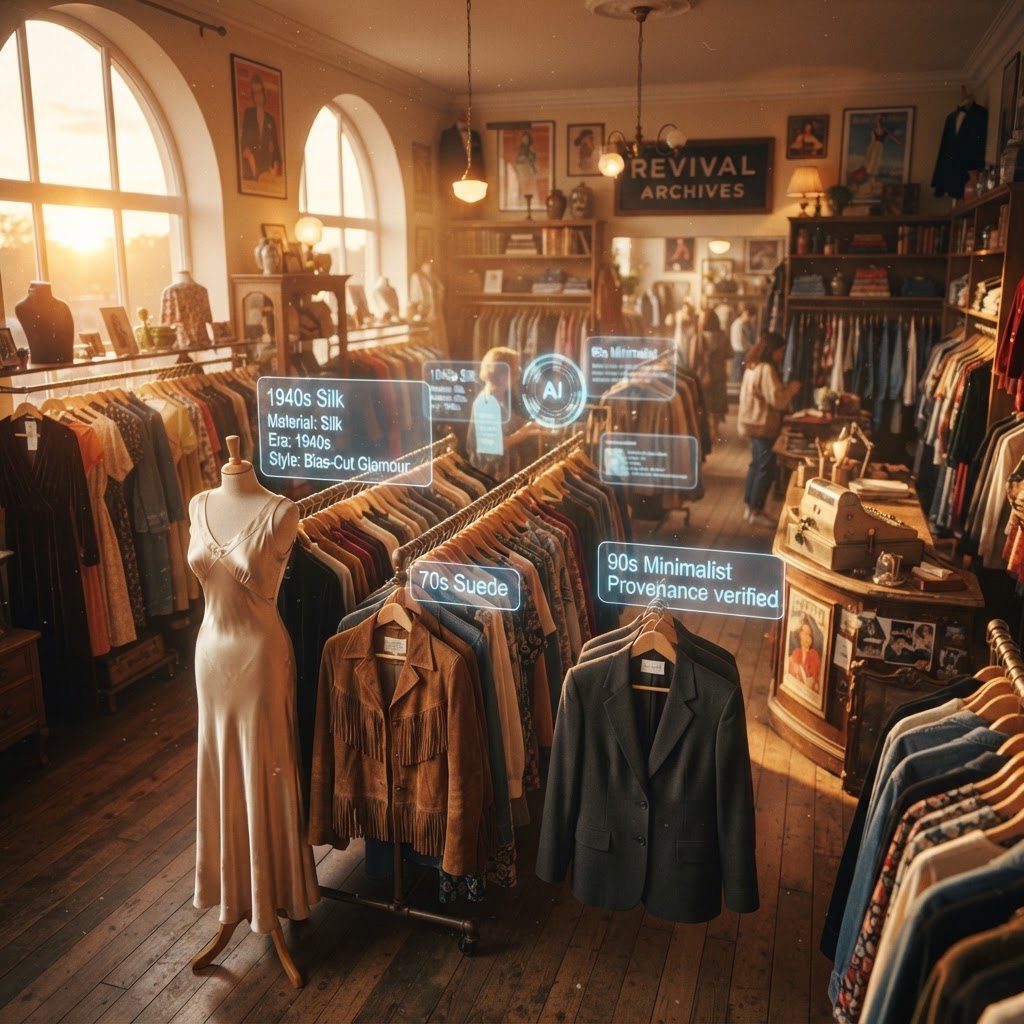
Why Vintage Fashion Buyers Are Turning to AI-Powered Marketplaces (And Never Looking Back)
The thrill of the thrift has gone digital — and smarter than ever. Vintage fashion lovers are discovering that AI-powered marketplaces don't just save time; they surface the exact pieces collectors have been dreaming about for years. Here's why the future of vintage shopping looks a lot like the past, only faster.
The Golden Age of Vintage Shopping Has Arrived
For decades, finding the perfect vintage piece meant waking up at dawn for estate sales, digging through musty bins at flea markets, or refreshing online listings like a part-time job. The hunt was half the fun — but it was also exhausting, inconsistent, and often fruitless. Today, something remarkable is happening: AI-powered marketplaces are transforming the vintage fashion world, making it easier than ever to find authenticated, era-accurate clothing from the 1920s through the 2010s without sacrificing the magic of discovery.
Vintage fashion buyers — from casual thrifters to serious collectors — are migrating toward platforms that use artificial intelligence to curate, authenticate, and personalize the shopping experience. And once they make the switch, most never go back to the old way of doing things.
The Problem With Traditional Vintage Shopping
Let's be honest: the traditional vintage marketplace was broken in ways we simply accepted as normal. Sellers used inconsistent terminology, so searching for a "1970s wrap dress" might return results ranging from authentic Diane von Fürstenberg originals to fast-fashion knockoffs made last year with a vaguely retro aesthetic. Misdated listings were rampant. Authentication was largely a matter of personal expertise, and most buyers simply didn't have enough of it.
Beyond accuracy, there was the problem of scale. The vintage market is enormous and deeply fragmented. Great pieces were buried under thousands of irrelevant listings. Even experienced collectors admitted they were probably missing extraordinary finds simply because the search tools weren't sophisticated enough to surface them.
And then there was the issue of trust. Without rigorous vetting, buyers frequently received items that didn't match their descriptions — a "mint condition" blouse with a hidden stain, a "genuine 1940s" coat with a care label that wasn't introduced until 1972. Returns were complicated. Disputes were common. The joy of the find was often overshadowed by the anxiety of the transaction.
Enter AI: The Vintage Expert That Never Sleeps
Artificial intelligence has quietly become the vintage shopper's most powerful ally. Here's how it's changing the game:
Smarter Search and Discovery
Modern AI doesn't just match keywords — it understands context, era, and aesthetic. When a buyer searches for "1960s mod fashion," an AI-powered platform can recognize the silhouettes, color palettes, and construction details associated with that specific movement and serve up results that are genuinely relevant. Visual search technology takes this even further, allowing shoppers to upload a photo of an inspiration piece and receive listings of real vintage items with similar cuts, fabrics, and styling.
This means buyers are discovering pieces they didn't even know to search for — a kind of serendipitous precision that the old keyword-based systems could never achieve.
AI-Assisted Authentication
One of the most significant advances is in authentication. AI models trained on thousands of data points — including label typography, stitching patterns, zipper styles, fabric compositions, and care instruction formatting — can flag inconsistencies that even experienced human buyers might miss. A platform can now cross-reference a claimed 1950s evening gown against a database of known construction methods from that decade and raise a red flag if something doesn't add up.
This doesn't replace human expertise entirely, but it creates a powerful first line of defense against misrepresentation, dramatically improving the accuracy of listings across the board.
Personalized Curation at Scale
Perhaps the most beloved feature among regular vintage shoppers is personalized curation. AI systems learn individual taste profiles — not just stated preferences, but behavioral signals like which listings a buyer lingers on, which eras they return to, and which price points they're comfortable with. Over time, the marketplace essentially learns to think like its user, surfacing new arrivals that feel tailor-made.
For buyers with highly specific tastes — say, someone who collects exclusively 1980s Japanese designers or Depression-era workwear — this level of personalization is transformative. Instead of spending hours filtering through noise, they open the app and find a curated edit waiting for them.
Why This Matters for Authenticity-Focused Collectors
The vintage fashion community has always placed enormous value on authenticity — not just in the sense of real versus fake, but in the deeper sense of historical integrity. A piece of clothing from 1932 carries a story, a cultural context, a set of construction choices made by someone long gone. Serious collectors care deeply about preserving and understanding that provenance.
AI-powered platforms are uniquely positioned to honor this value. By building in decade-specific expertise at the infrastructure level, these marketplaces can ensure that a 1940s bias-cut gown is listed and described with the kind of historical accuracy that respects the item's true significance. Educational content generated by AI can help buyers understand what made a particular era's fashion distinctive — the wartime fabric restrictions of the 1940s, the synthetic fiber revolution of the 1960s, the power-dressing codes of the 1980s — deepening appreciation and making every purchase more meaningful.
Sustainability and the AI Advantage
It's impossible to talk about the vintage fashion boom without acknowledging its sustainability dimension. Buying vintage is one of the most effective ways to participate in fashion without contributing to the environmental damage caused by fast fashion production. As younger consumers in particular become more eco-conscious, the vintage market continues to grow.
AI makes this sustainable choice more accessible. When the barrier to finding the right piece is lowered — when you don't have to spend twelve hours hunting to find a single great blazer — more people choose vintage over new. Better matching technology means fewer impulse purchases that end up unworn, and more intentional acquisitions that last. The result is a more circular, mindful fashion economy.
The Human Element Isn't Going Away
For all its power, AI is a tool, not a replacement for the human connections that make vintage fashion special. The best AI-powered marketplaces understand this. They use technology to handle the friction — the searching, sorting, flagging, and matching — so that buyers and sellers can focus on what they actually love: the stories behind the clothes, the craftsmanship of a bygone era, the thrill of connecting a one-of-a-kind piece with the person who will treasure it.
Sellers benefit too. AI-assisted listing tools help individual sellers — many of whom are passionate collectors themselves — write accurate, era-appropriate descriptions, price competitively based on market data, and reach buyers who are genuinely likely to love what they're offering. The result is a healthier, more efficient marketplace for everyone.
Conclusion: Ensemble Is Built for This Moment
The shift toward AI-powered vintage fashion marketplaces isn't a trend — it's a permanent evolution in how we relate to clothing with history. And at Ensemble, we've built our platform from the ground up with this future in mind. Whether you're searching for an authentic 1920s beaded flapper dress, a sharp 1970s leisure suit, or a coveted 1990s designer archive piece, Ensemble combines deep decade expertise with intelligent technology to make sure you find exactly what you're looking for — and discover plenty of pieces you didn't know you needed.
The past has never been easier to find. Welcome to Ensemble.