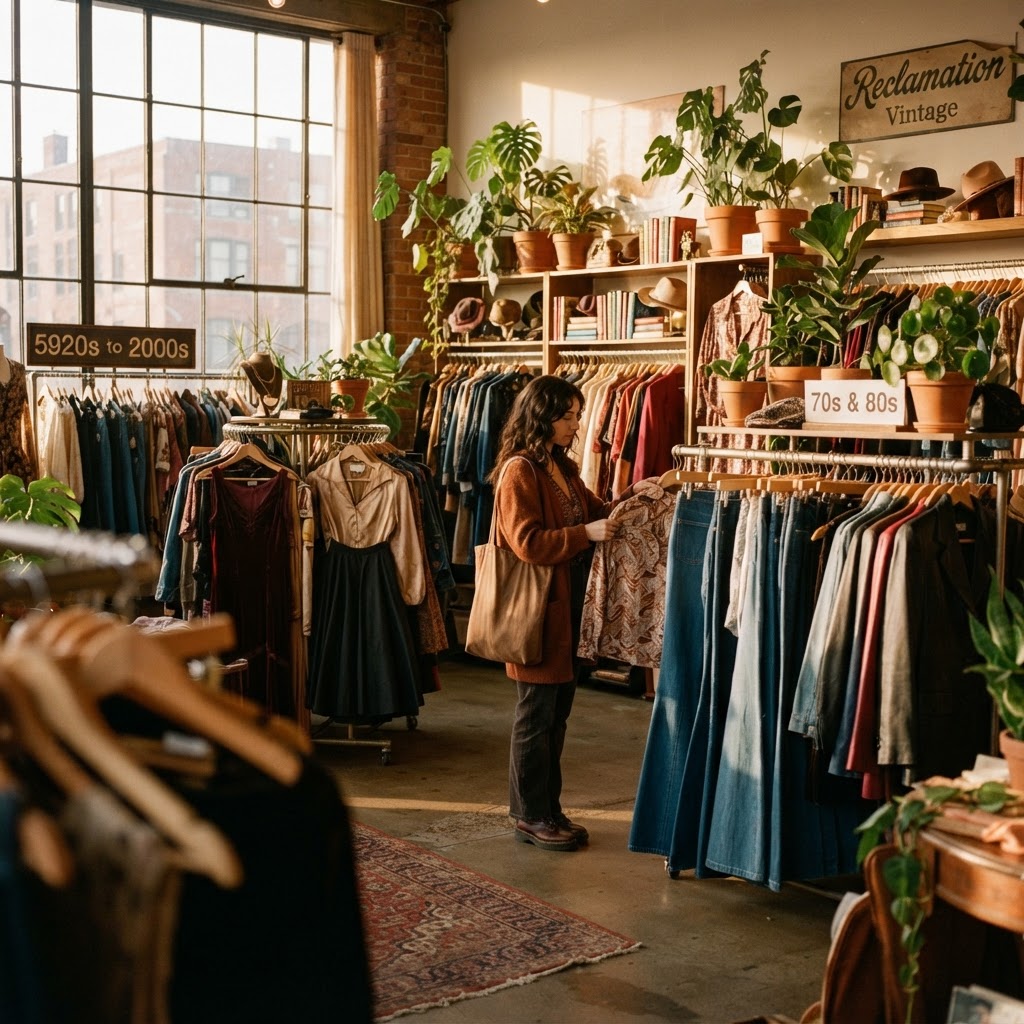
Wearing History: How Vintage Fashion Is the Ultimate Eco-Conscious Style Choice
Every decade from the Roaring Twenties to the aughts left behind a wardrobe worth saving — and wearing. Choosing vintage isn't just a style statement; it's one of the most powerful acts of sustainable fashion you can make. Here's why looking to the past might be the most forward-thinking thing you can do for the planet.
The Hidden Cost of Fast Fashion
Before we dive into the glittering world of vintage finds, it's worth understanding what we're pushing back against. The modern fashion industry is responsible for approximately 10% of global carbon emissions, more than international flights and maritime shipping combined. Every year, billions of garments are produced at breakneck speed, worn a handful of times, and discarded — ending up in landfills where synthetic fibers take hundreds of years to decompose.
The rise of fast fashion in the 1990s and 2000s transformed clothing from a considered purchase into a disposable commodity. But here's the thing: the antidote to this crisis has been hanging in thrift stores, estate sales, and vintage markets all along.
Why Vintage Is Inherently Sustainable
At its core, vintage fashion is the ultimate form of circular economy thinking. When you purchase a 1970s wrap dress or a 1940s wool overcoat, you are extending the life cycle of a garment that already exists. No new raw materials are extracted. No new factory energy is consumed. No new shipping emissions are generated. The carbon cost of that garment was paid decades ago — and by wearing it now, you're essentially getting an extraordinary return on an investment someone else already made.
This concept, known as garment longevity, is increasingly recognized by sustainability researchers as one of the most impactful levers in reducing fashion's environmental footprint. Studies have shown that extending the active life of a garment by just nine months can reduce its carbon, water, and waste footprint by 20 to 30 percent. Vintage clothing, by definition, has already cleared that bar many times over.
A Decade-by-Decade Look at Quality That Lasts
One of the unsung arguments for vintage fashion is sheer construction quality. Garments from the 1920s through the 1980s were built in an era when clothing was expected to last. Let's take a quick tour through the decades.
The 1920s and 1930s gave us bias-cut silhouettes and hand-sewn beading — garments that required skilled artisanship and natural fibers like silk, wool, and cotton that age gracefully rather than degrading into microplastic waste.
The 1940s and 1950s were defined by wartime resourcefulness and postwar craftsmanship. Utility clothing from the 1940s was designed with durability as a mandate. Circle skirts and structured blazers from the 1950s were tailored to last a lifetime.
The 1960s and 1970s introduced bold synthetic experimentation, but also some of the most enduring design icons in fashion history — mod shifts, peasant blouses, and denim that only gets better with age. Levi's 501s from this era, for example, are considered collector's items precisely because the denim was woven on shuttle looms with a density modern manufacturing rarely replicates.
The 1980s delivered power shoulders and luxurious fabrics — cashmere blends, silk charmeuse, fine wools — in quantities that today's mid-range market simply can't match at the same price point.
The 1990s and 2000s brought us minimalist staples and early streetwear, much of which has already achieved vintage status and is being rediscovered by a new generation of conscious shoppers who recognize quality when they see it.
The Water Equation
It takes roughly 2,700 liters of water to produce a single conventional cotton T-shirt — enough drinking water for one person for 2.5 years. A pair of jeans? Closer to 7,500 liters. When you buy vintage, that water has already been spent. You're not adding to the demand that drives those numbers up season after season.
This is particularly meaningful in an era of accelerating water scarcity. Fashion's thirst for fresh water — used in cotton cultivation, dyeing, and finishing processes — places enormous strain on ecosystems around the world. Choosing a pre-loved garment instead of a new one is a direct vote against that cycle of depletion.
Vintage as an Act of Slow Fashion
The slow fashion movement encourages consumers to buy less, buy better, and invest in pieces with longevity. Vintage shopping is slow fashion by nature. Finding the perfect 1960s mod coat or a pristine 1980s blazer requires patience, knowledge, and intentionality. You're not scrolling through an endless algorithm of identical drop-shipped products; you're hunting for something singular.
This slower, more deliberate approach to dressing naturally leads to a more curated wardrobe — one built on pieces you truly love rather than impulse purchases you'll forget about by next season. A wardrobe of 20 well-chosen vintage pieces will almost always outlast and outlove a wardrobe of 100 fast fashion items.
Challenging the 'Hygiene' Myth
One of the most persistent objections to vintage shopping is the question of cleanliness or hygiene. It's worth addressing directly: vintage garments are thoroughly cleanable, and many professional vintage sellers — including those on platforms like Ensemble — inspect, clean, and restore items before listing them. Natural fibers like wool and silk have inherent antimicrobial properties. And frankly, a good dry clean or gentle hand wash is all that stands between you and a flawlessly wearable piece of history.
The real hygiene concern, arguably, is the toxic chemical load involved in producing new fast fashion — azo dyes, formaldehyde-based finishes, and flame retardants that have been linked to health and environmental issues. Vintage clothing, particularly pieces from earlier decades, often predates the worst of these industrial practices.
Building a Sustainable Wardrobe with Vintage
If you're ready to make vintage a cornerstone of your eco-conscious style, here are a few guiding principles:
Start with the classics. A 1970s leather belt, a 1950s cashmere cardigan, or a 1990s minimalist blazer are pieces that transcend trend cycles and will serve you for years to come.
Think in terms of cost-per-wear. A $120 vintage wool coat worn 200 times costs you 60 cents per wear. A $30 fast fashion coat that pills after 10 wears costs $3 per wear — and ends up in a landfill.
Learn basic garment care. Steam rather than wash when possible. Use cedar blocks instead of mothballs. Store knitwear folded, never hung. These small habits dramatically extend the life of any garment, vintage or otherwise.
Embrace imperfection. A small mend or a slightly faded hem is not a flaw — it's evidence of a life well-lived. The Japanese philosophy of wabi-sabi, finding beauty in imperfection and impermanence, maps beautifully onto vintage dressing.
The Bigger Picture
Fashion is one of the industries most ripe for systemic change, and consumer choices genuinely matter. When you choose vintage over new, you send a market signal. You reduce demand for raw material extraction. You keep textiles out of landfills. You support small sellers and independent marketplaces rather than global fast fashion conglomerates.
None of this requires you to sacrifice style. Quite the opposite — the most interesting, most individual wardrobes in the world are almost always built around vintage pieces that can't be found on any rack at any mall.
Conclusion: Shop the Archive at Ensemble
At Ensemble, we believe that the most sustainable garment is the one that already exists — and that the past nine decades of fashion history represent an extraordinary, largely untapped resource for style-conscious, eco-minded dressers. Our marketplace connects you with authenticated vintage pieces from the 1920s through the 2010s, each one a thread in the ongoing story of what we wear and why it matters.
When you shop Ensemble, you're not just buying a dress or a jacket. You're extending a garment's life, reducing your environmental footprint, and wearing something with a story that no algorithm could ever generate. That's sustainable style — and it never goes out of fashion.