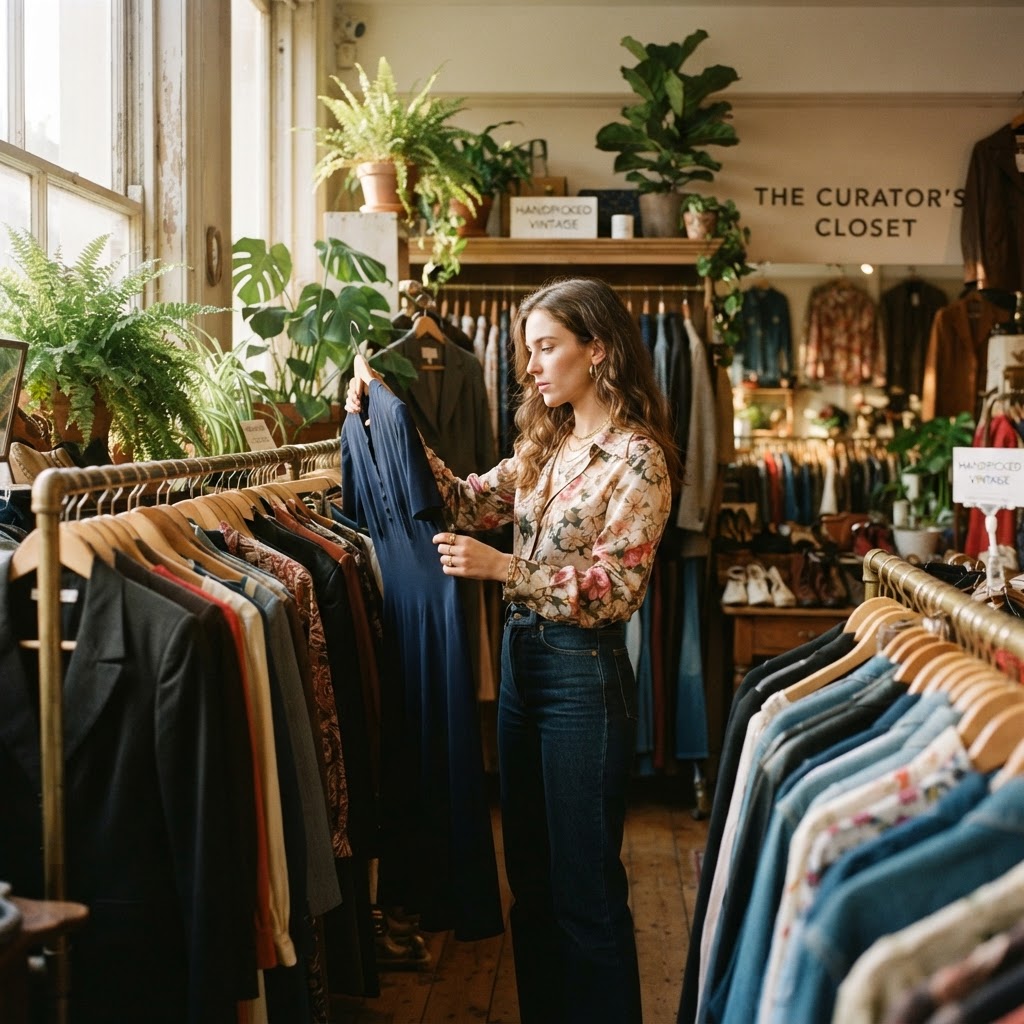
Wearing History: How Vintage Fashion Is the Ultimate Eco-Conscious Choice
Every decade leaves behind a wardrobe worth saving — and choosing vintage isn't just a style statement, it's one of the most powerful acts of sustainable living you can make. From flapper dresses to '90s denim, pre-loved clothing carries a smaller environmental footprint than anything hanging on a fast-fashion rack today. Here's why turning to the past might be the most forward-thinking fashion move you'll ever make.
The Fashion Industry's Dirty Secret
The global fashion industry is responsible for approximately 10% of annual carbon emissions worldwide — more than all international flights and maritime shipping combined. Each year, an estimated 92 million tons of textile waste ends up in landfills, while factories consume billions of gallons of fresh water to dye and finish new garments. Fast fashion, with its relentless cycle of micro-trends and disposable clothing, sits at the center of this crisis.
But there's a quiet revolution happening in closets, thrift stores, and curated online marketplaces. More and more style-conscious consumers are asking a simple question: why buy new when the past made it better?
Vintage fashion — authentic clothing from the 1920s through the 2010s — offers a compelling answer. Choosing pre-loved pieces isn't a compromise. It's a conscious upgrade.
What Makes Vintage Truly Sustainable?
Sustainability in fashion is often discussed in terms of materials — organic cotton, recycled polyester, natural dyes. But the most sustainable garment is one that already exists. When you purchase a vintage piece, you're extending the life of something that took energy, water, and labor to produce. You're keeping it out of a landfill. You're refusing to generate demand for new production.
This concept is known as circular fashion — a model where clothing is kept in use for as long as possible, cycling between owners rather than ending up as waste. Vintage shopping is circular fashion in its purest form, no corporate greenwashing required.
Consider the numbers: producing a single new cotton T-shirt requires roughly 2,700 liters of water — enough for one person to drink for 2.5 years. A new pair of jeans? Closer to 7,500 liters. When you buy vintage, that cost has already been paid, long ago, and the garment has proven its staying power by surviving decades of use.
A Decade-by-Decade Legacy of Quality
One of the most compelling arguments for vintage is craftsmanship. Before the rise of fast fashion in the late 1990s and early 2000s, clothing was generally made to last. Seams were finished with care. Fabrics were woven to endure. Each decade left behind a distinctive legacy of quality worth preserving.
1920s and 1930s: Bias-cut silhouettes and hand-finished details define garments from this era. Fabrics like silk charmeuse and fine wool crepe were expensive investments, sewn with precision that modern mass production rarely matches.
1940s and 1950s: Wartime rationing taught designers to do more with less, resulting in structured tailoring and economical construction that was nonetheless built to endure. Circle skirts and tailored wool suits from this era routinely outlast modern equivalents by decades.
1960s and 1970s: The psychedelic revolution brought bold prints and experimental materials, but also a wave of handmade and artisan garments that reflected true individuality. Levi's denim from the '70s, for example, has become legendary for its durability and character.
1980s and 1990s: Power suits, grunge flannels, and minimalist slip dresses — these decades produced silhouettes that cycle back into trend every few years, proving their enduring appeal. Buying an authentic '80s blazer means owning the original, not a watered-down revival.
2000s and 2010s: Even relatively recent vintage has a place in the eco-conscious wardrobe. Early-aughts pieces are now hitting peak collectibility, and rescuing them before they hit landfills is an act of both style and stewardship.
The Carbon Math of Secondhand Shopping
Researchers at the sustainability nonprofit ThredUp have estimated that buying one secondhand item instead of a new one reduces its carbon footprint by 82%. Over a year, if just one in five Americans bought a single piece of secondhand clothing instead of new, it would save 25 billion gallons of water and keep 1.5 billion pounds of CO2 out of the atmosphere.
Vintage shopping also sidesteps the toxicity embedded in new garment production. Conventional cotton farming accounts for 16% of all insecticide use globally. Synthetic dye runoff poisons waterways in garment-producing regions. When you buy vintage, you opt out of funding that cycle entirely.
Style Without the Compromise
Some shoppers hesitate at the idea of vintage because they assume it means settling — for poor condition, limited selection, or unflattering fits. But the vintage market has matured dramatically, and curated marketplaces have changed the game entirely.
Today's vintage shopping experience means access to authenticated, carefully sourced pieces spanning nearly a century of fashion. It means finding a 1960s Pucci shift dress in pristine condition, or a perfectly worn-in Levi's Type III trucker jacket from 1978, or a sleek '90s Calvin Klein slip dress that looks more relevant now than it did when it was new.
The key is knowing where to look — and trusting the curation. Well-sourced vintage is not a consolation prize. It's the main event.
Building an Eco-Conscious Wardrobe, One Decade at a Time
Approaching your wardrobe through a vintage lens encourages a fundamentally different mindset: buy less, choose well, make it last. Instead of chasing weekly trend cycles, you begin to think in terms of decades. You ask: will this piece still feel meaningful in ten years? Will it still fit? Will it hold up?
Vintage clothing has already answered those questions. It has survived. It carries stories. And each time it passes to a new owner, its narrative deepens rather than ends.
Building a sustainably minded wardrobe doesn't require an all-or-nothing approach. Start with one anchor piece per decade — a 1940s brooch, a 1970s wrap dress, a 1990s bomber jacket. Learn to mix eras. Discover that a 1960s mod coat looks extraordinary over contemporary wide-leg trousers, or that a 1980s silk blouse transforms a modern minimalist outfit into something genuinely distinctive.
The goal isn't a costume. It's a living wardrobe that reflects taste, history, and values simultaneously.
Why Vintage Is the Future
Eco-conscious fashion is often framed as a sacrifice — choosing rougher textures, plainer silhouettes, or higher price tags in the name of ethics. Vintage fashion flips that narrative entirely. Here, sustainability and beauty are the same thing. Durability and style are inseparable. The ethical choice is also the more interesting, more individual, more elegantly crafted one.
As consumer awareness grows and the true cost of fast fashion becomes impossible to ignore, vintage is not a niche — it's a movement. It's a refusal to treat clothing as disposable. It's a recognition that the most radical thing you can wear is something that was made to last, and did.
Discover Your Decade at Ensemble
At Ensemble, we believe every garment deserves a second life — and a third, and a fourth. Our marketplace brings together authenticated vintage clothing from the 1920s through the 2010s, carefully curated for quality, authenticity, and enduring style. Whether you're building an eco-conscious wardrobe from scratch or searching for that one perfect piece to complete a collection, Ensemble is where fashion history and sustainable living meet.
Explore our current collection and find the decade that speaks to you. The most sustainable outfit you'll ever wear might be waiting for you right now — it just has a few decades of stories to tell first.