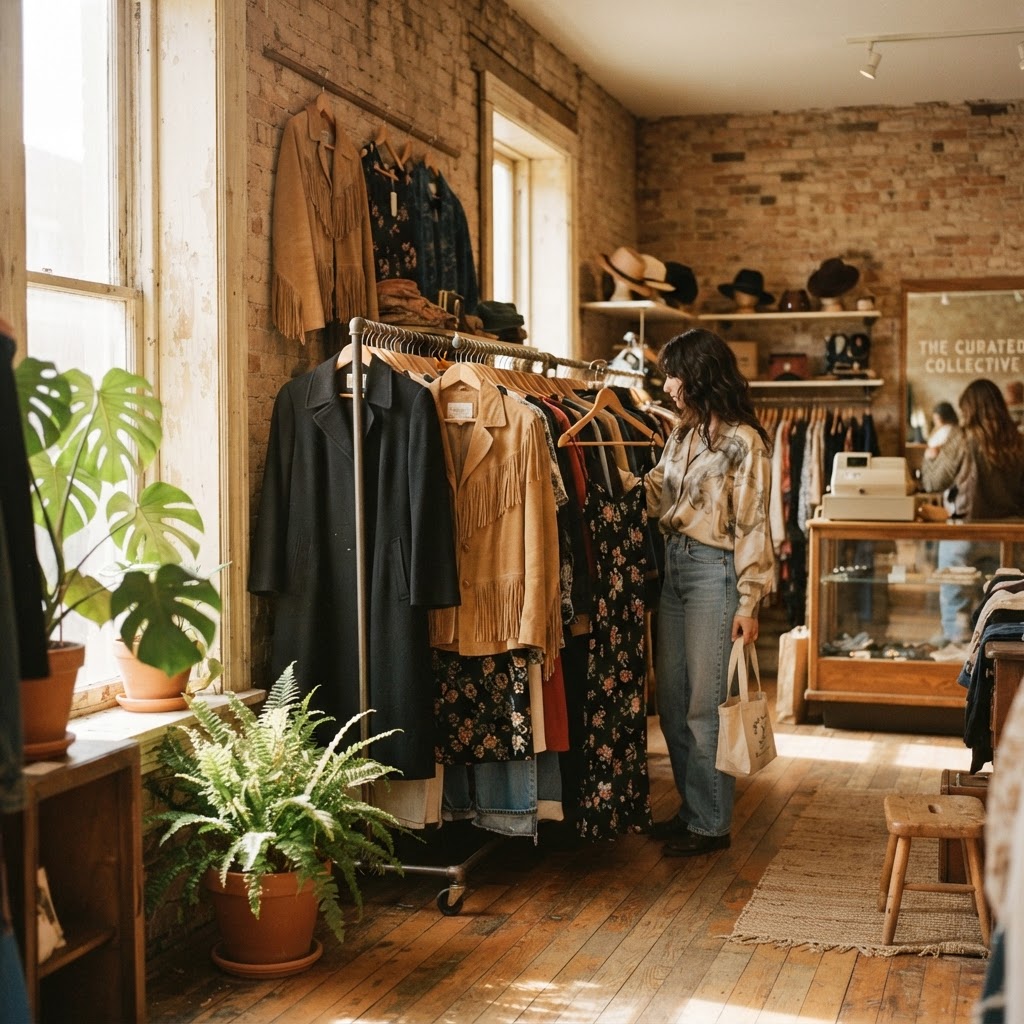
Wearing History: How Vintage Fashion Is the Most Sustainable Choice You Can Make
Every decade tells a story through its clothes — and choosing to wear that story instead of discarding it is one of the most powerful eco-conscious decisions a modern wardrobe can make. Vintage fashion isn't just a trend; it's a revolution against the throwaway culture of fast fashion. From the flapper dresses of the 1920s to the Y2K staples of the early 2000s, buying vintage means investing in style that already exists — and that changes everything.
The Hidden Cost of "New"
Before we dive into the magic of decades past, it's worth pausing on a sobering reality: the global fashion industry is responsible for approximately 10% of annual carbon emissions — more than aviation and maritime shipping combined. The rise of fast fashion in the late 1990s and 2000s accelerated a cycle of overproduction, cheap materials, and disposability that has left an enormous environmental scar on the planet. Synthetic fabrics shed microplastics into waterways. Textile dyeing pollutes freshwater sources. Mountains of discarded clothing pile up in landfills across the globe.
Against this backdrop, the choice to shop vintage isn't just aesthetic — it's ethical.
What Makes Vintage Fashion Inherently Sustainable?
At its core, vintage fashion is the ultimate form of recycling. When you purchase a 1970s suede jacket or a 1990s silk slip dress, you are extending the life of a garment that already exists. No new raw materials were harvested. No new factories ran overnight. No new shipping containers crossed oceans. The carbon footprint of a pre-owned garment is a fraction of its newly manufactured equivalent.
Research from organizations like the Ellen MacArthur Foundation has shown that extending the life of a garment by just nine months reduces its carbon, water, and waste footprint by approximately 20–30%. When you shop vintage, you're often extending a garment's life not by months, but by decades.
There's also the matter of material quality. Clothing made before the mass-market fast fashion boom — think anything from the 1920s through the early 1990s — was often constructed from natural fibers like wool, cotton, silk, and linen. These materials are biodegradable, breathable, and built to last. A well-made 1940s wool coat or a 1960s cotton shirtwaist dress was designed to be worn for years, even passed down through generations. The craftsmanship embedded in vintage garments is, itself, a form of sustainability.
A Decade-by-Decade Look at Sustainable Style
The 1920s–1940s: Built to Last
The early decades of the 20th century produced clothing under a fundamentally different economic philosophy: make it well, make it last. During the Great Depression and World War II, rationing and resourcefulness shaped fashion in profound ways. Fabric was precious. Seams were reinforced. Hems were let down rather than discarded. The garments that survived from these eras are testaments to durability — and finding one today means inheriting that ethic of care.
The 1950s–1960s: The Golden Age of Construction
Post-war prosperity brought a golden era of tailoring and construction. Full-skirted dresses, structured blazers, and hand-finished details defined this period. Garments were lined, boned, and fitted with precision. The 1960s ushered in mod minimalism alongside an explosion of bold color — but even the most playful pieces of this era were made with an attention to craft that is rare today. Choosing a vintage 1950s or 1960s piece means choosing something built to outlast trends by generations.
The 1970s: Natural Fibers and Earthly Roots
The 1970s brought with them a cultural turn toward nature, environmentalism, and authenticity — values that are deeply reflected in the decade's fashion. Natural fiber textiles, earthy palettes, and artisanal touches like embroidery and patchwork defined the era. The irony is beautiful: a decade so aligned with environmental consciousness produced clothing that embodies sustainability by its very nature. A vintage 1970s peasant blouse or corduroy flare is not just stylish — it's philosophically consistent with the values driving today's eco-fashion movement.
The 1980s–1990s: Power, Edge, and Unexpected Longevity
It might surprise some to learn that even the bold, maximalist fashion of the 1980s contributes to sustainable style. Shoulder-padded blazers, leather jackets, and statement knitwear from this era were made with significantly more structural integrity than their fast-fashion counterparts today. The 1990s introduced minimalist grunge, slip dresses, and denim that has proven remarkably enduring. Vintage 90s denim, in particular, is now highly sought after — and rightly so. The heavyweight cotton used in pre-2000s denim is virtually impossible to find in new production today.
The 2000s–2010s: Reclaiming Y2K and Beyond
Even relatively recent decades are now part of the vintage conversation. Y2K fashion — cargo pants, velour tracksuits, low-rise everything — has made a full cultural comeback. Rather than buying new fast-fashion replicas of these styles, shopping authentic vintage pieces from the early 2000s ensures that existing garments stay in circulation. The 2010s brought with them a rise in ethical fashion awareness, and many pieces from this decade reflect early attempts at conscious construction. Buying these items secondhand deepens their sustainability story.
The Circular Fashion Economy
Vintage shopping is a cornerstone of the circular fashion economy — a model that keeps materials in use for as long as possible, extracts maximum value from them, and minimizes waste. Unlike the linear model of "make, use, dispose," circular fashion asks: what if nothing ever needed to be thrown away?
When you buy vintage, you become part of a chain of stewardship. Someone made that garment. Someone wore it. Someone cared for it enough to preserve it. And now it passes to you. That chain is a living rejection of disposability.
Vintage marketplaces also support local economies and small sellers — independent curators, estate sale specialists, and passionate collectors who have done the work of sourcing, cleaning, and authenticating pieces. This is a human-scale economy built on knowledge and care, not algorithmic overproduction.
Styling Vintage for a Modern, Conscious Wardrobe
One of the most common misconceptions about vintage fashion is that it requires a head-to-toe costume approach. In reality, the most sustainable and stylish vintage wardrobes are built on intentional mixing. A single vintage blazer can anchor dozens of modern outfits. A 1960s silk scarf can transform a simple contemporary look. A pair of authentic 1990s Levi's can outlast five pairs of new fast-fashion denim.
The key is buying with intention — choosing pieces that you genuinely love, that fit your life, and that you will care for over time. This is the opposite of impulse buying. It is slow fashion in its truest form.
Caring for vintage garments is also an act of sustainability. Learning to hand-wash delicate fabrics, store woolens with cedar rather than chemicals, and repair rather than discard extends the life of your investment and reduces your household's fashion waste footprint even further.
Conclusion: Your Wardrobe as an Act of Conscience
Every garment in your closet represents a choice — about labor, materials, consumption, and the kind of world you want to participate in. Vintage fashion offers a path that is simultaneously beautiful, deeply personal, and genuinely good for the planet.
At Ensemble, we believe that the most exciting wardrobe is one built from history. Our curated marketplace brings together authentic pieces from the 1920s through the 2010s, each one carrying a story, a craft, and a conscience. When you shop Ensemble, you're not just finding something to wear — you're choosing to wear your values. Explore our latest collections and discover how the past can be the most forward-thinking choice you make today.