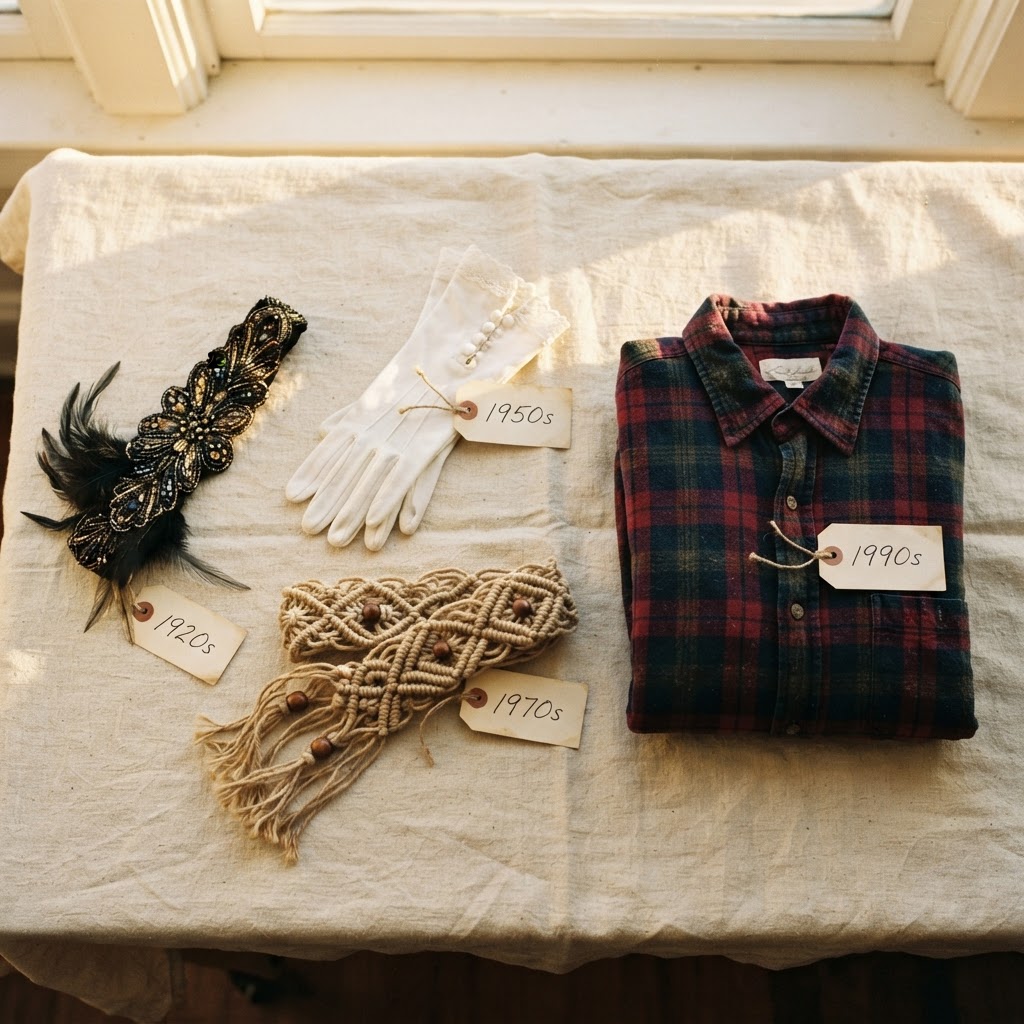
Vintage, Antique, or Retro? The Ultimate Guide to Fashion Terminology You Need to Know
If you've ever browsed a fashion marketplace and wondered whether that '70s wrap dress is truly 'vintage' or just 'retro,' you're not alone. The words get tossed around interchangeably, but they actually mean very different things. Understanding the distinction can make you a sharper shopper, a more confident seller, and a genuinely savvy style historian.
Why the Labels Matter More Than You Think
Walk into any thrift store, scroll through any online marketplace, or flip through the rack at a curated pop-up, and you'll encounter the same three words plastered on tags, listings, and lookbooks: vintage, antique, and retro. They sound glamorous. They evoke nostalgia. But here's the thing — they are not synonyms, and using them incorrectly can lead to real confusion, mismatched expectations, and even overpaying for something that doesn't meet your collecting standards.
Whether you're hunting for a beaded flapper dress from the Roaring Twenties or a neon windbreaker from 1988, knowing your terminology is your first power move. Let's break it all down.
What Does "Vintage" Actually Mean?
The word vintage is borrowed from the wine world, where it refers to the specific year a wine was produced. In fashion, the term has evolved to describe clothing and accessories that were made during a specific era of the past, generally defined as items that are at least 20 years old but less than 100 years old.
So as of 2025, anything produced between approximately 1925 and 2005 could technically qualify as vintage — yes, that includes your early-2000s low-rise jeans and your velour tracksuit from 2003. The term spans an enormous range, from the structured elegance of 1940s tailoring to the grunge flannel of the early '90s.
However, not everything old is automatically vintage in the meaningful sense. True vintage pieces are valued not just for their age, but for their authenticity, craftsmanship, and cultural context. A mass-produced polyester blouse from 1995 is technically vintage by age, but a hand-beaded cocktail dress from the same era — or a Halston original from the '70s — carries far greater historical and monetary weight.
Key markers of genuine vintage clothing include:
- Union labels or country-of-origin tags specific to certain eras
- Construction techniques like hand-stitching, metal zippers, or specific seam finishes
- Fabric compositions (natural fibers were more common pre-1960s)
- Brand labels whose fonts, logos, and care instruction formats changed over decades
What Makes Something "Antique"?
If vintage is the territory between 20 and 100 years old, antique is everything that crosses that century threshold. By the most widely accepted definition — used by customs agencies, auction houses, and collectors worldwide — an item must be at least 100 years old to be classified as antique.
In the world of fashion, this means we're currently talking about pieces from 1925 and earlier: Edwardian lace blouses, Victorian corsets, Civil War-era mourning dress, and the earliest years of flapper fashion. These aren't just old clothes — they are textile artifacts, windows into the social, economic, and political climates of their time.
Antique garments come with unique challenges and responsibilities. Fabrics from this era are often fragile, having endured a century or more of wear, storage, humidity, and light exposure. Silk can shatter. Beading can fall. Lace can disintegrate with improper handling. Collectors and wearers of antique fashion often treat these pieces more like museum objects than wardrobe staples.
That said, the market for antique clothing is passionate and growing. Early 20th-century pieces — think 1920s drop-waist dresses with hand-embroidered hemlines or 1910s tea gowns with yards of hand-tatted lace — represent some of the most coveted and irreplaceable garments in fashion history.
At Ensemble, our collection proudly begins at the 1920s, which means we're operating right at the thrilling intersection of antique and vintage. That flapper-era beaded dress? It's crossing into antique territory — and it deserves to be treated with the reverence of a collector's find.
So What Is "Retro"?
Here's where things get interesting — and often misunderstood. Retro is the wildcard of the trio, and it has nothing to do with a garment's actual age.
Retro fashion refers to new or modern clothing that is deliberately designed to evoke the aesthetic of a past era. It is, at its core, an act of stylistic homage rather than historical preservation. That '50s-inspired swing dress you bought brand new from a contemporary indie brand? That's retro. The reproduction victory rolls hairstyle tutorial you followed on YouTube? Very retro. The modern denim jacket with an intentionally vintage wash and '80s-style oversized cut? Retro.
Retro is nostalgic by design. It says, "I love the look of that era," without necessarily offering the craftsmanship, materials, or history of a genuine period piece. There's absolutely nothing wrong with retro fashion — it's fun, accessible, and often more affordable. But it is fundamentally different from owning an authentic item from the decade it's referencing.
Think of it this way:
- A 1962 Jackie Kennedy-style pillar-box red shift dress found in a consignment shop = vintage
- An 1890s silk evening gown sold through an estate auction = antique
- A brand-new midi dress designed to look like 1962, sold on Etsy = retro
The Gray Areas (And Why They're Actually the Most Fun)
Of course, the fashion world loves a gray area. Consider the Y2K aesthetic — pieces from 1999 to 2004 are now squarely in vintage territory, yet brands are simultaneously producing retro Y2K-inspired pieces right now. You can find both authentic butterfly clips from 2001 and newly manufactured ones that look identical. Only one is vintage.
Similarly, '90s streetwear has become one of the hottest vintage segments on the market. An original Champion reverse weave hoodie from 1994 commands very different respect (and price) than a modern Champion hoodie designed to look like the '94 version. Both are valid purchases — but they are categorically different products.
The savvy fashion shopper learns to ask: Is this piece from the era, or inspired by the era? Condition reports, provenance, labels, and stitching don't lie.
How to Shop Smarter Using These Definitions
Now that you've got the terminology down, here's how to apply it practically:
1. Read listings carefully. Legitimate sellers will specify the decade and origin of a piece. Be cautious of vague language like "vintage-style" — that's often code for retro reproduction.
2. Look for era-specific labels. Learning how to date a garment by its label is one of the most powerful skills a vintage collector can develop. RN numbers, union labels, and washing instruction formats all changed across decades.
3. Ask about provenance. Especially for antique pieces, knowing where a garment came from adds to its story — and its value.
4. Understand what you're buying for. Are you a collector? A daily wearer? A costume enthusiast? Antique pieces may be too delicate for regular wear, while retro reproduction might be perfect for an event.
5. Price accordingly. An authentic 1940s gabardine suit and a modern 1940s-inspired suit should have very different price points. If they don't, ask why.
Conclusion: Dress With Intention
Fashion is one of the most intimate forms of human expression, and the clothes we choose to wear — especially pieces with history — carry meaning beyond fabric and thread. Understanding the difference between vintage, antique, and retro isn't pedantry. It's respect: for the makers, the wearers, the eras, and the stories stitched into every seam.
At Ensemble, we believe that every decade from the 1920s through the 2010s has something extraordinary to offer. Our marketplace is built on authenticity — carefully curated, thoughtfully described, and lovingly sourced pieces that represent the real thing. Whether you're drawn to the art deco glamour of the '20s, the psychedelic prints of the '60s, or the power shoulders of the '80s, you'll find genuine history here, not just a nod to it.
Shop with knowledge. Wear with intention. And let the past dress you beautifully.