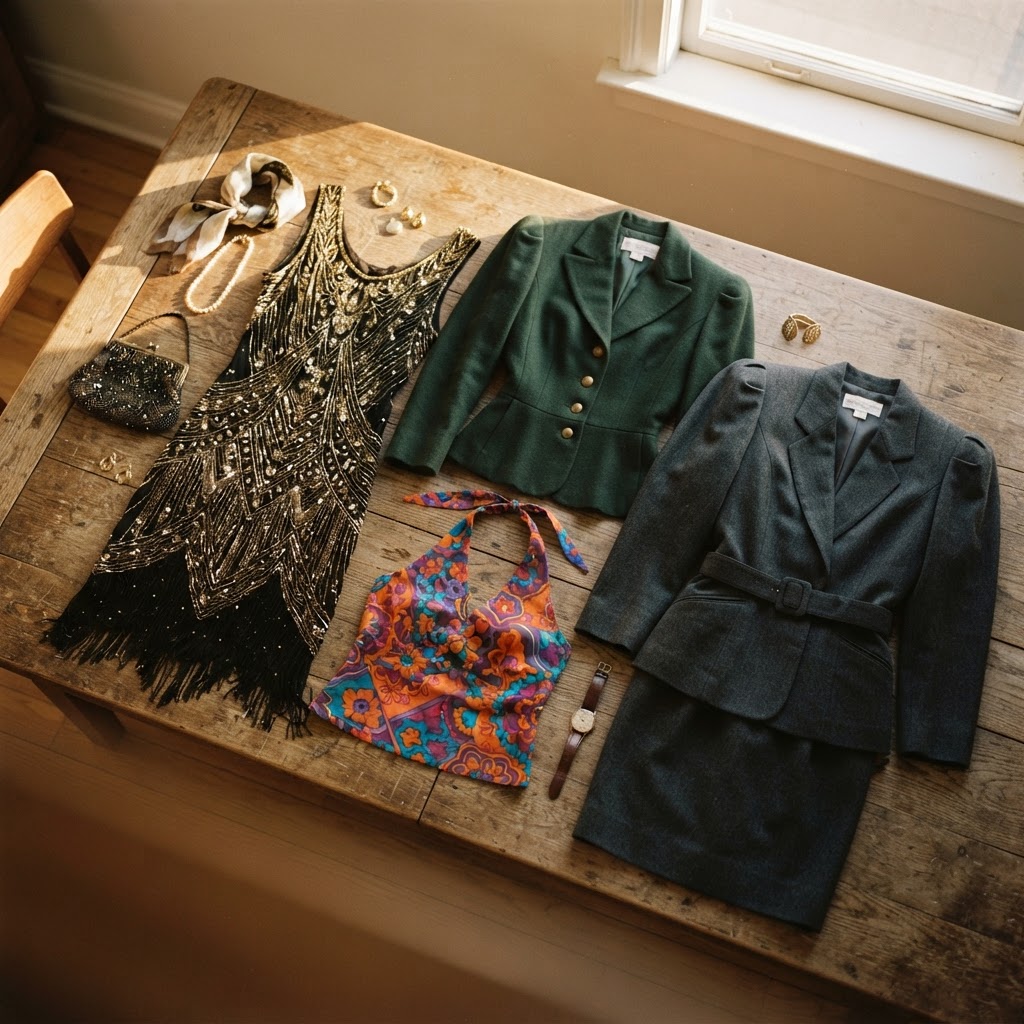
Vintage, Antique, or Retro? The Ultimate Guide to Fashion Terminology You Need to Know
If you've ever called a '90s slip dress 'antique' or referred to a genuine 1940s gown as 'retro,' you're not alone — but there's a big difference. Understanding the language of fashion history isn't just for collectors and curators; it's essential for any style lover who wants to shop smarter and dress more intentionally. Let's break down exactly what these terms mean and why they matter.
The Words We Use Matter
Walking through a flea market, scrolling through an online marketplace, or chatting with a seasoned thrift store owner, you'll hear the words vintage, antique, and retro tossed around almost interchangeably. But in the world of fashion collecting and historical dress, these terms carry very specific meanings — and confusing them can lead to misguided purchases, inaccurate listings, and a whole lot of missed context.
Whether you're a first-time buyer dipping your toes into pre-owned fashion or a devoted collector hunting for a pristine Halston piece, understanding these distinctions will sharpen your eye, deepen your appreciation, and help you communicate with confidence. Here's your definitive guide.
What Does "Vintage" Actually Mean?
The word vintage is perhaps the most misused term in the secondhand fashion world. Borrowed originally from the wine industry — where it describes the year a particular bottle was produced — vintage in fashion refers to clothing and accessories that are at least 20 years old but generally no more than 100 years old.
So, as of today, a genuine vintage piece would date from roughly the 1920s through the early 2000s. That '90s baby tee with the faded logo? Technically vintage. A sleek mod shift dress from 1967? Absolutely vintage. A beautifully tailored blazer from 1985 with shoulder pads that could double as airplane wings? Vintage gold.
The key distinguishing factor of vintage clothing is that it reflects the authentic design, construction, and cultural moment of its era. Vintage pieces were made during the period they represent — they weren't reproduced later in homage to that time. This is what makes them historically significant and, often, exceptionally well-crafted. Many vintage garments were constructed using techniques and materials that simply aren't used in mass production today: hand-rolled hems, natural fiber linings, original metal zippers, and couture-level finishing.
When shopping for vintage, always look for clues of authenticity: union labels, country of origin tags ("Made in USA" labeling laws changed in the 1970s), vintage care instruction labels (these weren't required until 1971 in the U.S.), and construction details like the number of stitches per inch and the weight of the fabric.
Antique Fashion: The Century Mark
If vintage is the broad category, antique is the elite tier. In most collecting communities — including fine art, furniture, and fashion — an item must be at least 100 years old to be classified as antique.
For clothing, this means we're currently talking about pieces from the early 1920s and earlier: Edwardian blouses with intricate lace insertions, Victorian mourning gowns in heavy silk crepe, 1910s tea dresses with their distinctive high waists and soft drape. Antique fashion is rare, fragile, and historically invaluable.
Antiqu garments require special care and conservation — many are too delicate to wear regularly, if at all. Cotton and silk from the 19th and early 20th centuries can become brittle and shatter with handling. Beaded evening wear from the 1920s, sitting right at that 100-year threshold, often has fragile thread structures holding thousands of glass beads in place.
For collectors and museums, antique clothing is a primary historical document. A surviving 1880s bustle dress tells us about silhouette ideals, class structures, textile trade, and the lives of the women who wore (and often made) them. When you hold an antique garment, you're quite literally holding history.
Because of their age and fragility, antique pieces command significant prices and should always be sourced from reputable sellers who can speak to provenance, condition, and authenticity.
Retro: The Style, Not the Era
Here's where many people get tripped up: retro is not an age classification. It's a style descriptor.
A piece of clothing is retro when it is newly made but deliberately designed to evoke the aesthetic of a past era. Think of a brand-new polka-dot swing dress cut in the style of the 1950s, or a freshly manufactured wide-lapel suit inspired by 1970s fashion. These items are retro — they're modern products wearing a costume of the past.
Retro fashion has enormous commercial appeal. Fast fashion brands regularly mine decades like the '70s, '80s, and '90s for silhouettes, prints, and details that feel nostalgic and fresh simultaneously. And there's nothing wrong with loving retro fashion — it's accessible, often more affordable, and designed to fit contemporary bodies and sizing standards.
But retro is not vintage, and the distinction matters when you're spending money. A retro '50s-style dress might cost $60 at a boutique; an authentic 1955 dress could cost $150–$600 depending on the maker, condition, and rarity. Both are beautiful. Only one is the real thing.
The easiest way to identify retro clothing: check the label. Modern care symbols, synthetic fabric blends described in contemporary terminology, and country-of-origin labels from current manufacturing hubs are all telltale signs of a new garment in vintage clothing's clothing.
Why These Distinctions Matter for Shoppers
Understanding these three categories isn't pedantry — it has real practical value:
- Pricing transparency: Knowing whether something is genuinely vintage or retro-inspired helps you evaluate whether a price is fair.
- Sustainability impact: Authentic vintage and antique clothing is the ultimate in sustainable fashion — no new resources were consumed in its creation. Retro/reproduction pieces are new production, with the associated environmental footprint.
- Investment value: Genuine vintage and antique pieces, especially from notable designers or significant decades, can appreciate in value over time. Retro reproductions generally do not.
- Cultural appreciation: Wearing authentic vintage is a form of living history. Each piece carries a story — of its maker, its original wearer, the cultural moment it was born into.
A Quick Reference Guide
Here's a simple breakdown to keep in your back pocket:
| Term | Age Requirement | Origin | Purpose | |------|----------------|--------|---------| | Vintage | 20–99 years old | Made in its era | Authentic historical garment | | Antique | 100+ years old | Made in its era | Museum-quality historical artifact | | Retro | New (any age) | Modern production | Evokes past aesthetic |
Tips for Spotting Authentic Vintage at a Glance
Even experienced shoppers can be fooled by well-made reproductions. Here are a few quick checks:
- Examine the zipper: Metal teeth zippers often indicate pre-1960s garments. Nylon coil zippers became widespread in the late 1960s.
- Read the label language: Phrases like "Wash and Wear" or "Drip Dry" are hallmarks of 1950s–60s labels. Modern washing symbols weren't standardized until the 1970s.
- Feel the fabric: Authentic vintage often features heavier, denser weaves and natural fibers like wool, cotton, silk, and rayon.
- Check the construction: Hand-stitching, bound buttonholes, and weighted hems are signs of skilled craftsmanship from earlier decades.
- Look for sizing inconsistencies: Vintage sizing runs small by contemporary standards. A vintage "size 14" is roughly equivalent to a modern size 8–10.
Conclusion: Shop With Clarity, Style With Intention
Fashion history is rich, nuanced, and endlessly fascinating — and the language we use to talk about it should be equally precise. Whether you're drawn to the beaded glamour of the 1920s, the structured elegance of the 1950s, the free-spirited exuberance of the 1970s, or the bold maximalism of the 1980s, knowing the difference between vintage, antique, and retro empowers you to shop with confidence and wear with purpose.
At Ensemble, we're passionate about connecting you with authentic pieces that span nearly a century of fashion history — from genuine 1920s flapper-era treasures to carefully curated Y2K-era finds. Every listing on our marketplace is vetted for authenticity, so you always know exactly what era you're bringing home. Because great style isn't just about how you look — it's about knowing the story behind what you wear.
Explore our curated collections at Ensemble and find your piece of history today.