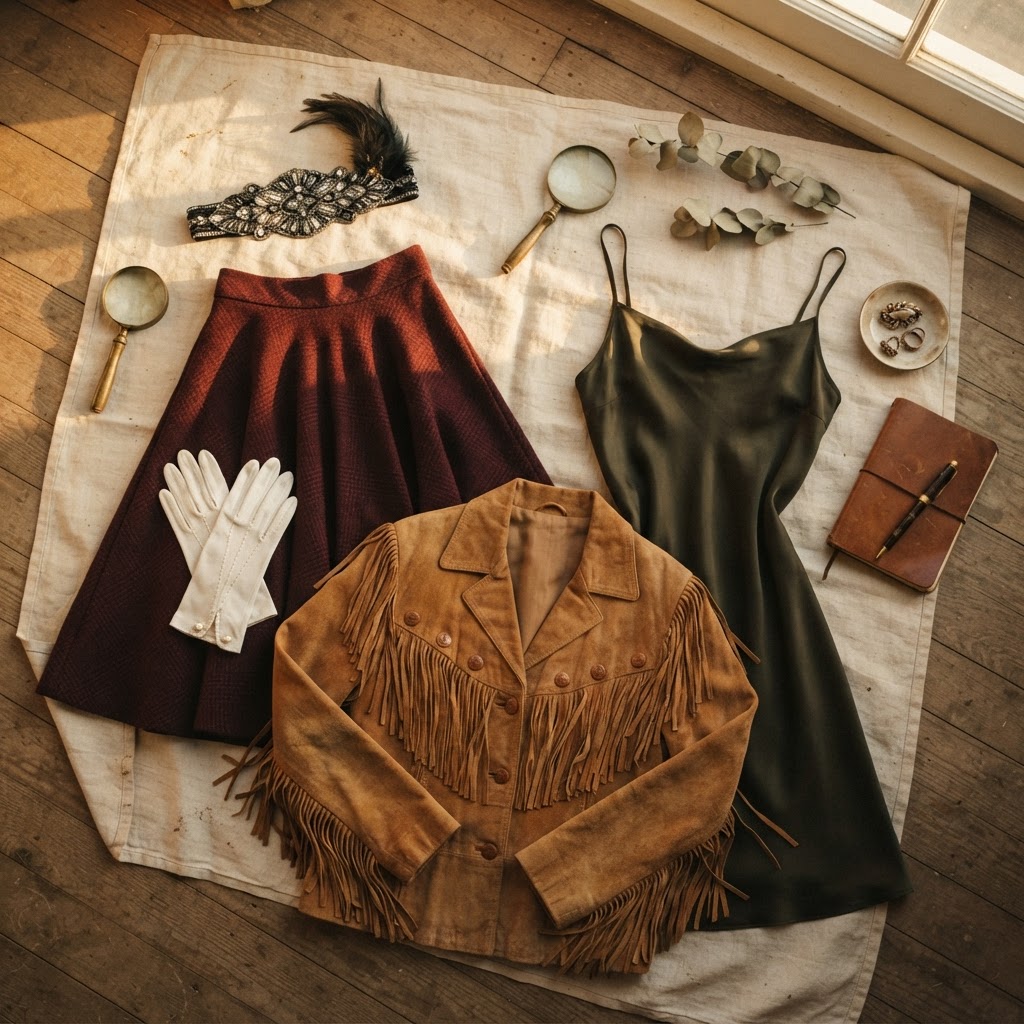
Vintage, Antique, or Retro? The Ultimate Guide to Fashion Terminology Explained
If you've ever called a 1980s blazer 'antique' or described a new floral dress as 'vintage,' you're not alone — but there's a real difference. Understanding the language of pre-loved fashion can sharpen your style, boost your thrifting instincts, and help you shop smarter. Here's everything you need to know.
Why the Labels Actually Matter
Walk into any secondhand shop, scroll through any resale marketplace, or flip through a fashion magazine and you'll encounter three words used almost interchangeably: vintage, antique, and retro. Yet each term carries a distinct meaning with roots in history, collecting culture, and the fashion industry itself. Using them correctly isn't just about sounding knowledgeable at a dinner party — it affects how you search for pieces, what you pay, and what you actually bring home.
Let's break down each term, once and for all.
What Does "Vintage" Really Mean?
The word vintage is arguably the most misused term in the fashion lexicon. Borrowed from the wine world — where it refers to a specific year's harvest — fashion vintage has a more nuanced definition.
In the fashion and collecting community, a garment is generally considered vintage if it is at least 20 years old but less than 100 years old. That means, as of 2025, anything produced between roughly 1925 and 2005 can technically qualify. Yes, that includes your early-2000s Von Dutch trucker hat and those low-rise flares you donated in 2010.
But age alone isn't enough. True vintage pieces are also expected to be authentic to their era — meaning they reflect the silhouettes, fabrics, construction methods, and cultural context of the time in which they were made. A 1970s Halston jersey gown, a 1950s circle skirt with original label intact, a 1990s Calvin Klein slip dress — these are vintage not just because of their age, but because they are genuine artifacts of their moment in fashion history.
Why it matters when you shop: Sellers who use the word loosely may list brand-new items with a "vintage aesthetic" as vintage. Always check construction details, labels, and fabric content to confirm authenticity.
What Makes Something "Antique"?
If vintage is the teenager of pre-loved fashion, antique is the elder statesman. The widely accepted threshold for antique status — in fashion as in furniture and fine art — is 100 years or older.
That means, today, truly antique clothing dates to 1925 or earlier: Edwardian lace blouses, Edwardian-era corsets, early 1920s beaded flapper dresses, Victorian mourning gowns. These are rare, fragile, and often more suited to museum display cases or serious collectors than everyday wardrobes.
Antique garments require special care. Natural fibers like silk, wool, and cotton degrade over a century, and dyes can fade or become unstable. Storage in acid-free tissue, away from light and humidity, is essential. If you're fortunate enough to own or acquire antique clothing, having it assessed by a textile conservator is a worthy investment.
From a marketplace perspective, antique fashion commands premium prices — and rightly so. You are holding a piece of living history, something that survived two World Wars, the Great Depression, and decades of changing tastes. The craftsmanship in antique garments, particularly hand-stitched seams, hand-embroidered details, and custom-fitted construction, is extraordinary by modern standards.
Why it matters when you shop: Pieces approaching or crossing the 100-year threshold should come with provenance information where possible. Ask sellers about the garment's history, condition, and any restoration work that has been done.
So What Is "Retro" Fashion?
Here's where things get interesting — and where most people trip up. Retro is not about age at all. The word comes from the Latin retro, meaning "backward" or "in past times," and in fashion it refers to new clothing designed to evoke or imitate a previous era.
A brand-new midi skirt sewn in 2024 with a 1950s silhouette and a Peter Pan collar? That's retro. A freshly manufactured bomber jacket styled after 1980s varsity culture? Retro. Fast fashion brands release entire "retro-inspired" collections every season, leaning on nostalgia for everything from 1970s bohemia to 1990s grunge.
Retro fashion can be incredible fun and highly accessible, but it is not the same as wearing an actual vintage garment. The difference lies in authenticity. Retro is an aesthetic; vintage is a historical artifact. Both have their place in a well-rounded wardrobe, but conflating the two does a disservice to genuine vintage pieces and the people who preserve them.
That said, retro styling — mixing new retro-inspired pieces with authentic vintage finds — is one of the most creative approaches to personal style. Knowing what is retro and what is vintage allows you to blend them intentionally.
A Quick Reference Guide
Still fuzzy? Here's a simple breakdown:
| Term | Age | Authenticity | Examples | |------|-----|-------------|----------| | Vintage | 20–99 years old | Original, era-authentic garments | 1960s mod shift dress, 1980s power suit | | Antique | 100+ years old | Original, era-authentic garments | 1920s beaded flapper gown, Edwardian blouse | | Retro | New (any age) | New, era-inspired design | 2024 dress with 1970s silhouette |
How to Date a Garment
Knowing these definitions is only half the battle. The real skill — and real joy — of vintage fashion lies in learning to authenticate and date pieces yourself. A few practical tips:
- Check the label: Union labels in American garments can be cross-referenced to specific date ranges. Country of origin labels ("Made in USA" vs. "Made in China") shifted over decades and offer clues.
- Examine the zipper: Metal zippers dominated until the 1960s, when nylon zippers became common. A metal side zipper on a skirt? Likely pre-1965.
- Study the silhouette: Fashion silhouettes shifted dramatically decade by decade. The nipped waist of the 1950s, the boxy drop-shoulder of the 1980s, the grunge-era oversized flannel of the 1990s — each era has a visual signature.
- Feel the fabric: Polyester and synthetic blends became widespread in the late 1960s and 1970s. All-natural fibers often indicate a pre-1960s garment.
- Look at the construction: Pre-1950s garments often feature hand-finishing details, French seams, and fitted lining that mass production later eliminated.
Why Authentic Vintage Beats Fast Fashion Every Time
Beyond semantics, understanding these distinctions connects to a larger conversation about sustainability, quality, and cultural memory. Every authentic vintage garment you choose is one that has already been made — no new resources consumed, no new carbon emitted in its production. Vintage fashion is, by its nature, the original circular economy.
More than that, vintage clothing tells stories. The hand-sewn hem of a 1940s dress, the disco-era sequins on a 1970s halter top, the acid-washed denim of the late 1980s — these are threads of cultural history you wear on your body. Retro fashion can nod to that history, but it cannot replicate the feeling of wearing something that was truly there.
Shop Smarter, Style Better
Now that you can distinguish between a genuine antique treasure, an authentic vintage score, and a stylish retro homage, you're equipped to build a wardrobe with real intention and historical depth.
At Ensemble, we've built our entire marketplace around this kind of informed passion. Every piece in our curated collection — spanning authentic fashion from the 1920s through the 2010s — is verified for era authenticity, so you always know exactly what you're getting. Whether you're hunting for a rare 1930s bias-cut gown, a bold 1980s statement jacket, or a perfectly preserved Y2K-era piece that just crossed into vintage territory, Ensemble is your trusted source. Because great style isn't just about how something looks — it's about knowing exactly what it is.