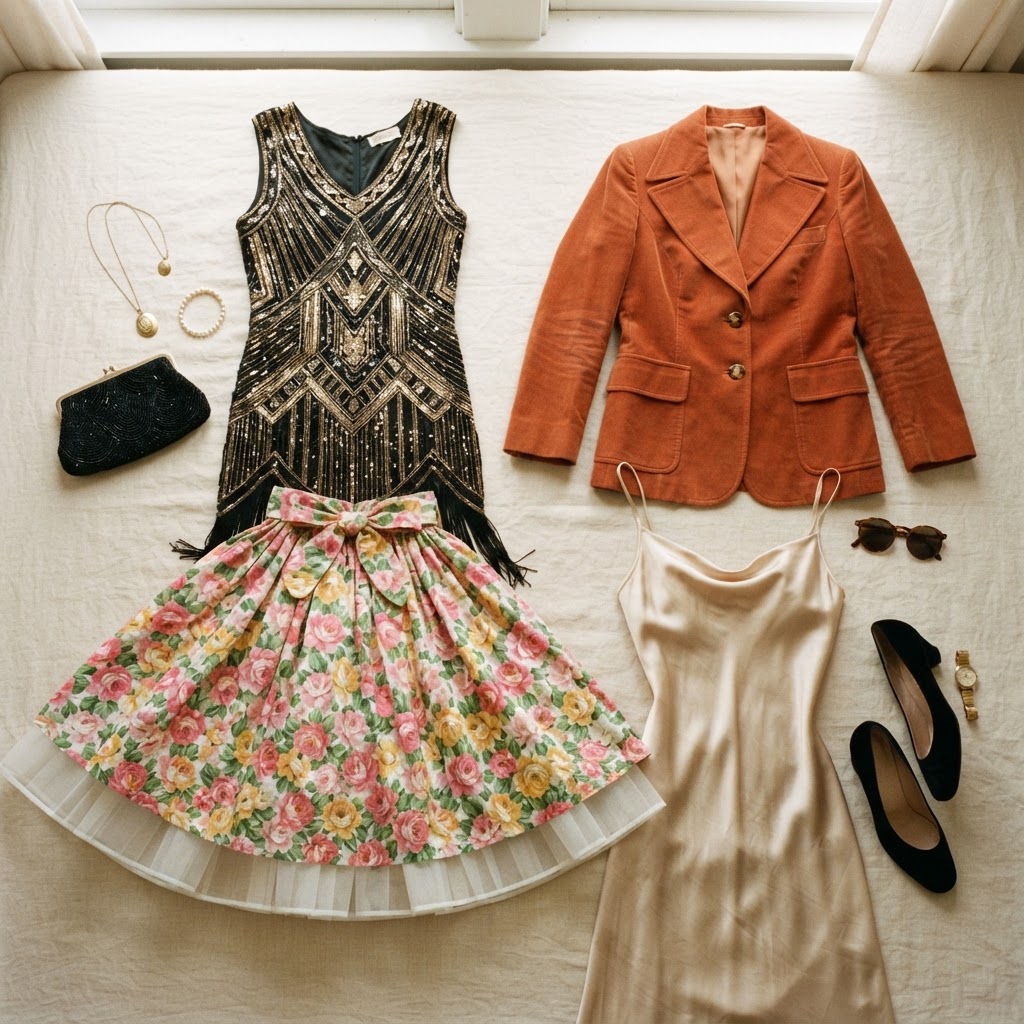
Vintage, Antique, or Retro? The Ultimate Guide to Fashion Terminology
Shopping for pre-loved fashion is thrilling — but the terminology can be confusing. Are you hunting for vintage, antique, or retro pieces? Understanding the difference isn't just semantic trivia; it directly affects what you're buying, what it's worth, and where to find it. Let's break it all down.
Why the Labels Matter
Walk into any secondhand shop, scroll through any resale marketplace, or flip through a fashion magazine, and you'll encounter three words used constantly — sometimes interchangeably, often incorrectly: vintage, antique, and retro. Each term carries a specific meaning that affects authenticity, value, and the story behind the garment. Whether you're a seasoned collector or a first-time buyer, knowing exactly what these labels mean will make you a smarter, more confident shopper.
What Does "Vintage" Actually Mean?
In the fashion world, vintage refers to clothing and accessories that are at least 20 years old and are considered representative of the era in which they were made. So in 2024, any garment produced before 2004 could technically qualify as vintage.
But there's more nuance here. True vintage pieces aren't just old — they reflect the aesthetic, construction techniques, and cultural spirit of their era. A 1970s wrap dress by Diane von Furstenberg, a pair of 1980s power-shoulder blazers, or a 1990s slip dress with lace trim: these are all vintage because they authentically capture the design language of their time.
Vintage fashion is prized for several reasons:
- Craftsmanship: Older garments were often made with superior materials and hand-finishing techniques that are rare in modern fast fashion.
- Uniqueness: You're unlikely to show up to a party wearing the same dress as someone else.
- Sustainability: Buying vintage is one of the most eco-conscious fashion choices you can make.
- Investment value: Certain vintage pieces — especially those from recognized designers — appreciate in value over time.
When shopping for vintage, always check for original labels, period-appropriate hardware (like zippers and buttons), and construction details such as seam finishing and lining quality. These details verify authenticity and help date a piece accurately.
What Makes Something "Antique" Fashion?
If vintage means at least 20 years old, antique raises the bar significantly. In the fashion and collectibles world, an item is generally considered antique when it is 100 years old or more. In 2024, that means anything made before 1924 qualifies — we're talking Edwardian blouses, Victorian corsets, early 1920s flapper dresses, and Art Nouveau jewelry.
Antique clothing is extraordinarily rare and requires special care. Fabrics deteriorate over decades, and finding antique garments in wearable condition is genuinely challenging. Many antique fashion pieces live in museum collections, estate sales, and specialized auction houses rather than everyday resale shops.
Key things to understand about antique fashion:
- Fragility: Natural fibers like silk, wool, and cotton from a century ago can be extremely delicate. Even storage conditions matter enormously.
- Historical significance: Antique pieces are primary sources of fashion history. They tell us about the social roles, beauty standards, and textile industries of their time.
- Sizing differences: Bodies and sizing conventions were very different a century ago. Most antique garments run significantly smaller by modern standards.
- Value and authentication: Antique fashion often requires professional authentication. Provenance — documented ownership history — dramatically increases value.
If you're lucky enough to own or find antique clothing, handle it with clean hands or cotton gloves, store it acid-free, and consult a textile conservator before attempting any cleaning or repair.
So What Is "Retro" Fashion?
Here's where many people get tripped up. Retro is perhaps the most misused term in fashion. Unlike vintage or antique, retro does not refer to the actual age of a garment. Instead, retro describes new or modern clothing that is deliberately designed to look like it came from a past era.
Think of a brand-new 1950s-style circle skirt sold at a contemporary retailer, or a modern band tee printed with a faded, worn-in aesthetic to mimic the 1980s. These are retro — they evoke nostalgia and borrow heavily from historical aesthetics, but they were made recently.
Retro fashion serves an important role:
- Accessibility: Retro pieces let you achieve a vintage-inspired look without the fragility, rarity, or price tag of genuine vintage.
- Sizing and fit: Modern retro clothing is cut to contemporary sizing standards, making it easier to find the right fit.
- Trend cycles: Fashion is cyclical. Designers constantly revisit past decades, and retro styles allow everyday consumers to participate in those trends affordably.
The key distinction to remember: retro is inspired by the past but made in the present. Vintage is actually from the past. Antique is very old and from the past. Retro is a costume, in the most affectionate sense of the word.
A Handy Cheat Sheet
Still feeling fuzzy? Here's a quick reference:
| Term | Age | Origin | Key Characteristic | |---|---|---|---| | Retro | New/modern | Contemporary production | Designed to look old | | Vintage | 20–99 years | Original era | Authentic period piece | | Antique | 100+ years | Original era | Rare, fragile, historical |
How to Spot Mislabeled Items
Unfortunately, the secondhand and resale marketplace is full of mislabeled items — sometimes through honest confusion, sometimes through deliberate misrepresentation. Here are red flags to watch for:
- A retro item sold as vintage: Check care labels. Modern care instruction labels (with washing symbols) were standardized in the 1970s in the US. Polyester blends and synthetic fibers became widespread in the 1960s–70s. A garment claiming to be from the 1950s that contains 100% polyester is almost certainly retro.
- Reproduction labels: Some sellers attach vintage-looking labels to new garments. Research what authentic labels from specific brands looked like in specific decades.
- Wrong decade aesthetic: Fashion historians and enthusiasts develop a sharp eye for silhouettes, hemlines, collar shapes, and zipper placements that are era-specific. When in doubt, research the decade.
Why It Matters When You're Shopping
Understanding these distinctions helps you in three very practical ways:
-
You pay the right price. Genuine vintage and antique pieces command higher prices for good reason. If you're paying vintage prices for a retro piece, you're overpaying. Conversely, if you find authentic vintage underpriced because it was mislabeled as retro, that's a find.
-
You care for your pieces correctly. A genuine 1940s rayon blouse needs very different care than a 2010 retro-inspired reproduction. Knowing what you have protects your investment.
-
You connect with the real story. There's something deeply meaningful about wearing a garment that someone actually wore to a dance in 1965, or a blazer that saw the shoulder-pad revolution of 1983. Authenticity carries history.
Conclusion: Shop Smarter with Ensemble
Whether you're drawn to the beaded glamour of the 1920s, the free-spirited prints of the 1970s, or the grunge-inflected minimalism of the 1990s, understanding the language of pre-loved fashion transforms you from a casual browser into a confident collector.
At Ensemble, every listing is carefully verified and accurately described — so you'll always know exactly what era you're buying from, whether that's a genuine 1930s crepe evening gown or a lovingly preserved 2000s Y2K statement piece. We believe transparency and authenticity are the foundation of great vintage shopping. Browse our curated collections today, and find the piece that doesn't just fit your body — it fits your story.