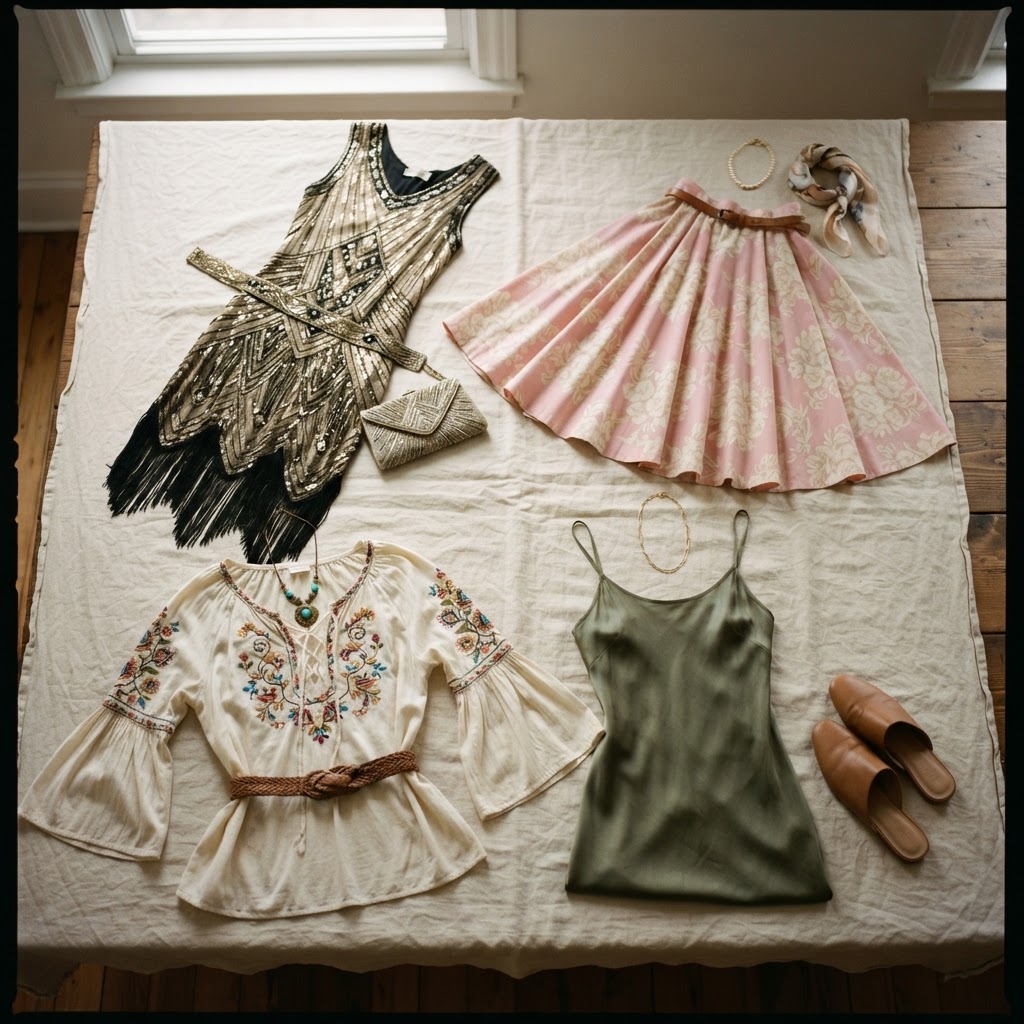
Vintage, Antique, or Retro? The Ultimate Guide to Fashion Terminology
If you've ever scrolled through a secondhand marketplace and wondered whether that 1960s mod dress is truly 'vintage' or simply 'retro,' you're not alone. The world of pre-loved fashion is rich with terminology that can confuse even seasoned shoppers. Let's break down exactly what these labels mean — and why getting them right matters for your wardrobe and your wallet.
Why Terminology Matters in Fashion
When it comes to buying and selling pre-loved clothing, words carry weight. A single label — vintage, antique, or retro — can change a price tag dramatically, set buyer expectations, and even determine whether a piece is considered a collectible or simply a costume. Yet these three terms are routinely misused, swapped interchangeably, and misunderstood by casual shoppers and seasoned collectors alike.
Understanding the distinction isn't just a matter of fashion snobbery. It's about knowing what you're buying, appreciating the history stitched into every seam, and building a wardrobe with intention. So let's get into it.
What Does 'Vintage' Actually Mean?
The word vintage is the most commonly used — and most commonly abused — term in secondhand fashion. Originally a wine term referring to the year a grape was harvested, it has evolved to describe clothing and accessories that come from a specific, recognizable era of the past.
In the fashion world, the general consensus is that vintage clothing is any garment that is at least 20 years old and no more than 100 years old. This means that as of today, pieces from the early 2000s are technically beginning to enter vintage territory — a thought that may make some of us feel wonderfully or terrifyingly old.
But vintage isn't just about age. Truly vintage pieces carry the hallmarks of their era: the silhouettes, fabrics, construction techniques, and even the label typography of their time. A 1970s wrap dress by Diane von Furstenberg, a structured 1980s power-suit shoulder pad blazer, or a delicate 1950s circle skirt with crisp cotton poplin — these are vintage because they genuinely originated in and reflect their decade.
What vintage is NOT: A brand-new dress with a retro-inspired print sold today is not vintage, no matter how much it looks the part. Age and authenticity are non-negotiable.
Diving Deeper: The Sub-Categories of Vintage
Within the broad umbrella of vintage, collectors and sellers often use more specific decade-based language. You'll hear terms like 'true vintage' to describe pieces that are authentically from their stated era, as opposed to reproductions. You may also encounter the phrase 'designer vintage,' which refers to authenticated pieces from recognized fashion houses — think a 1960s Chanel bouclé jacket or a 1980s Yves Saint Laurent evening gown.
Condition also plays a huge role in vintage valuation. Pieces described as 'deadstock vintage' are items that were manufactured in a past era but were never worn or used — essentially new-old-stock still in original packaging or with original tags. These are the holy grail for collectors.
What Is Antique Fashion?
If vintage is the broad category, antique is the elite inner circle. In most collecting disciplines — furniture, jewelry, ceramics — an item must be at least 100 years old to be classified as an antique. Fashion follows the same rule.
This means that antique clothing currently refers to garments from the 1920s and earlier: Edwardian blouses with their intricate lace insertions, Victorian mourning gowns in jet-black silk, 1920s beaded flapper dresses that shimmer with a century of stories. These are not just clothes — they are wearable artifacts.
Because of their age, antique garments require special care. Natural fibers like silk, wool, and cotton degrade over time, and the dyes used in earlier centuries can be particularly fragile. Many antique pieces are better suited for display or very occasional wear rather than everyday use.
At Ensemble, our earliest offerings begin in the 1920s, placing our most historic inventory right at the cusp of antique classification. A genuine 1920s beaded evening cape is not simply a fashion statement — it's a museum-quality piece you can actually own.
So What Does 'Retro' Mean?
Here's where things get interesting. Retro is arguably the most misunderstood term of the three, and ironically, it has nothing to do with actual age.
Retro fashion refers to contemporary or recent clothing that is deliberately styled to evoke a past era. It is, by definition, a reproduction or homage — not the real thing. A new dress cut in a 1950s silhouette with a full skirt and sweetheart neckline, manufactured last year? That's retro. A band tee printed to look worn and faded, sold at a fast fashion retailer? Also retro.
Retro is about aesthetic nostalgia, not historical authenticity. And there's nothing wrong with that — retro fashion is fun, accessible, and often much easier to wear and care for than genuine vintage. But when you're paying for history, you want the real article.
The confusion arises because sellers — sometimes innocently, sometimes not — use 'retro' as a synonym for vintage to make newer reproductions sound more valuable. Always check the garment's label, construction, and provenance before assuming a retro-styled piece is genuinely old.
A Quick Reference: Side by Side
To make this crystal clear, here's a simple breakdown:
- Antique: 100+ years old. Authentic to its era. Requires special care.
- Vintage: 20–99 years old. Authentic to its era. The sweet spot for collectors and wearers.
- Retro: Any age, but styled to mimic a past era. Not necessarily old. A style choice, not a historical fact.
How to Authenticate Vintage and Antique Pieces
Knowing the terminology is one thing; applying it in the real world is another. Here are a few pro tips for spotting the real deal:
Check the label. Union labels, care instruction formats, and brand typography all changed dramatically across decades. A garment claiming to be from the 1960s but bearing a care label with modern washing symbols (introduced in the U.S. after 1971) raises an immediate red flag.
Examine the construction. Pre-1960s garments were often fully lined and hand-finished. Look for French seams, hand-sewn hems, and the weight of quality fabric that fast fashion simply doesn't replicate.
Study the zipper. Metal zippers dominated until the 1960s, when nylon became widespread. A metal zipper branded 'Talon' or 'Lightning' is a strong indicator of authentic mid-century origin.
Know your silhouettes. Each decade had defining shapes: the dropped waist of the 1920s, the nipped waist of the 1950s, the boxy minimalism of the 1990s. True vintage pieces conform to these proportions naturally because they were built for the body ideals of their time.
Building a Wardrobe That Spans the Decades
One of the greatest joys of shopping vintage is the ability to curate a wardrobe that tells a story across time. A 1940s utility jacket paired with 1970s wide-leg trousers and 1990s chunky loafers creates a look that is entirely modern precisely because it draws from so many different chapters of fashion history.
Understanding whether each piece is vintage, antique, or retro helps you make smarter purchasing decisions, care for your garments appropriately, and speak with confidence about what you own. It transforms shopping from a transaction into a conversation with the past.
Conclusion: Shop Smarter with Ensemble
At Ensemble, we believe that every garment has a story worth preserving. Our marketplace is dedicated exclusively to authentic clothing from the 1920s through the 2010s, which means every piece listed carries genuine history — no reproductions, no retro impostors dressed up as the real thing.
Whether you're searching for a rare antique 1920s silk chemise, a pristine piece of 1980s designer vintage, or a genuinely worn-in 1990s denim jacket, knowing your terminology empowers you to shop with clarity and confidence. Vintage fashion isn't just about looking good — it's about wearing history with intention.
Explore our curated collections at Ensemble and find the decade that speaks to you.