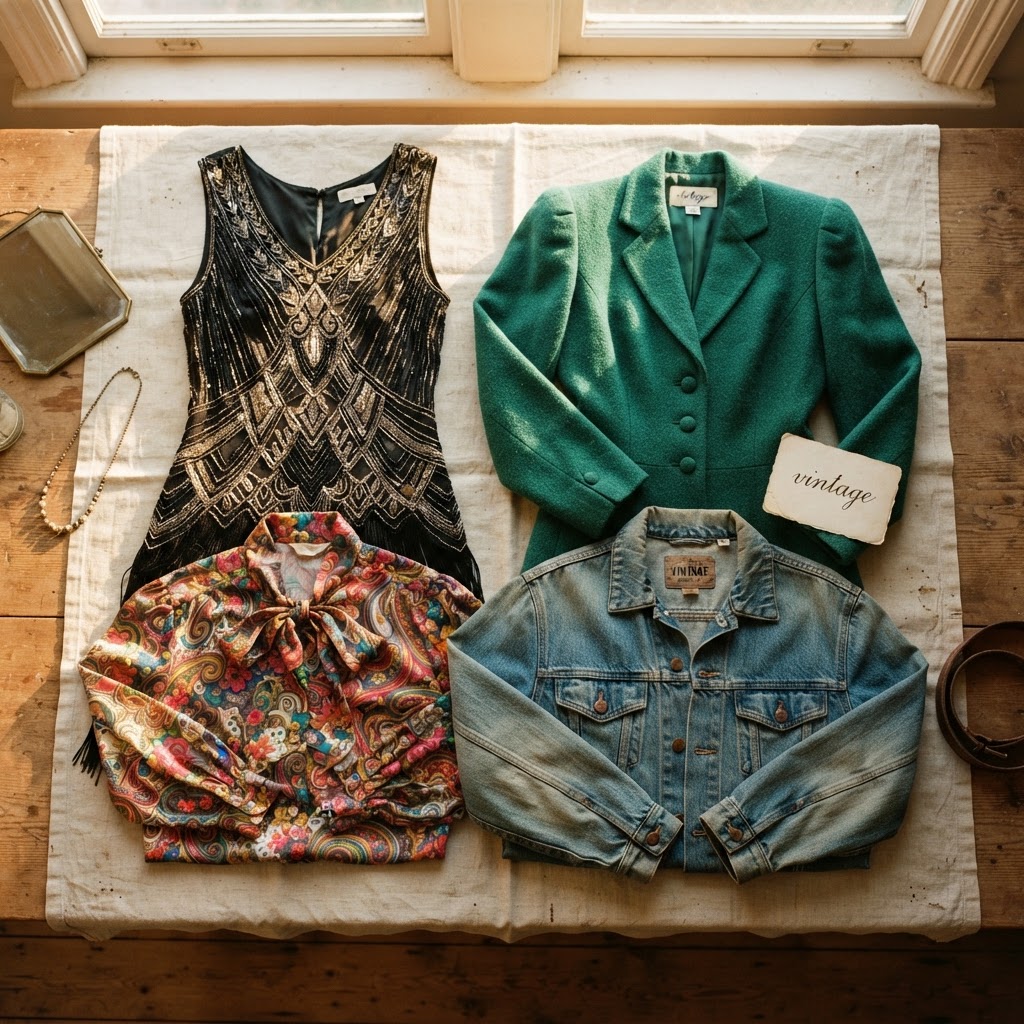
Vintage, Antique, or Retro? The Ultimate Guide for Fashion Sellers (and Shoppers)
If you've ever listed a piece on a resale platform and paused over whether to call it 'vintage' or 'retro,' you're not alone. These three terms get tossed around interchangeably, but they actually mean very different things — and using the wrong one can cost you sales. Here's everything you need to know before you write your next listing.
Why the Labels Matter More Than You Think
In the world of fashion resale, words are currency. A buyer searching for vintage clothing isn't necessarily looking for the same thing as someone hunting for retro pieces — and a collector seeking antique garments is in an entirely different league. Misusing these terms doesn't just confuse buyers; it can erode trust in your shop, lead to returns, and ultimately hurt your reputation as a seller.
Understanding the distinctions is one of the simplest, highest-impact upgrades you can make to your listings. Let's break each term down.
What Does "Vintage" Actually Mean?
The word vintage is probably the most misused term in the secondhand fashion world. Borrowed from the wine industry — where it refers to the specific year a wine was produced — vintage in fashion has a generally accepted meaning: a garment that is at least 20 years old and authentically from that era.
So as of 2025, anything produced in 2005 or earlier technically qualifies as vintage. That means your early-2000s low-rise jeans and your butterfly clips? Officially vintage. Yes, really.
But there's an important nuance: vintage implies authenticity. A vintage piece must have actually been made during the era it represents. It's not a reproduction, a costume, or a modern item designed to look old. The stitching, the fabric, the label, the cut — all of it should reflect the manufacturing standards and aesthetic sensibilities of its time.
Key Vintage Eras at a Glance
- 1920s–1930s: Art Deco glamour, bias-cut silk, beaded embellishments
- 1940s–1950s: Wartime utility followed by full-skirted New Look silhouettes
- 1960s–1970s: Mod miniskirts, psychedelic prints, bohemian maxi dresses
- 1980s–1990s: Power shoulders, neon sportswear, grunge flannel
- Early 2000s: Y2K aesthetics, velour tracksuits, denim-on-denim
When you list a piece as vintage on Ensemble, buyers expect authenticity. Include the approximate decade, any visible label information, and condition notes to build confidence.
What Makes Something "Antique"?
If vintage is the broad category, antique is the deep end of the pool. In most collecting communities — including fashion — a piece is considered antique when it is 100 years old or more. In 2025, that means garments made before 1925.
Antique clothing is rare, fragile, and often requires specialized knowledge to identify, store, and sell responsibly. We're talking about Edwardian lace blouses, Victorian mourning dresses, 1910s beaded evening gowns, and early 1920s flapper-era pieces that are just crossing the antique threshold right now.
Selling antique fashion comes with a higher burden of proof. Buyers at this level are often serious collectors who will scrutinize:
- Fabric composition (silk, wool, cotton, early synthetics like rayon)
- Construction methods (hand-stitching vs. early machine sewing)
- Provenance — do you know who owned it or where it came from?
- Labels and maker's marks — though many antique pieces predate modern labeling requirements
If you're lucky enough to have antique pieces in your inventory, photograph them extensively, handle them with clean cotton gloves, and be transparent about any fragility or wear. These pieces deserve extra care in your listings — and on Ensemble, a detailed, honest description will attract exactly the right buyer.
So What Is "Retro" Fashion?
Here's where sellers most commonly go wrong. Retro does not mean old. Retro refers to new items designed to evoke the style of a past era. That mod-inspired mini dress made in 2023 with a 1960s silhouette? Retro. The wide-leg trousers your favorite fast-fashion brand released to capitalize on the 70s revival? Also retro.
The word itself comes from the Latin retro, meaning "backward" — and that's essentially what retro fashion does. It looks backward for inspiration while being produced in the present (or recent past).
Retro pieces can absolutely be fun, stylish, and worth selling. But they should never be listed as vintage. Doing so is considered misrepresentation in the resale community and will quickly damage your seller credibility.
How to Tell Retro from Genuine Vintage
This is a skill that develops over time, but here are some quick checks:
- Check the label. Modern care labels include fiber content percentages and country-of-origin information — requirements that didn't exist before the 1970s in the U.S. A dress with a label reading "100% Polyester — Made in China — Machine Wash Cold" is almost certainly not vintage 1960s.
- Examine the zipper. Metal zippers suggest pre-1960s. Nylon coil zippers became common in the late 1960s and beyond. Invisible zippers are largely a post-1990s development.
- Feel the fabric. True vintage polyester from the 1970s has a distinct weight and sheen that differs from modern reproductions. Vintage denim fades and wears differently than new denim artificially distressed.
- Research the silhouette and construction. Does the internal finishing match the era? Vintage garments often have more complex inner construction — bound seams, boning, built-in slips — compared to modern reproductions that cut corners.
A Quick Reference Summary
| Term | Age Requirement | Key Characteristic | |---|---|---| | Retro | New or recent | Styled to evoke a past era | | Vintage | 20+ years old | Authentically from that era | | Antique | 100+ years old | Rare, collectible, fragile |
Practical Tips for Sellers on Ensemble
Now that you know the difference, here's how to put it to work in your listings:
- Be specific about decades. "1970s vintage suede jacket" is far more searchable and trustworthy than just "vintage jacket."
- Use retro accurately and proudly. Retro pieces have their own buyer base. Lean into the term — "retro 1950s-inspired circle skirt, made in 2010" is a perfectly compelling listing.
- Don't guess on antiques. If you think something might be antique but aren't sure, say so. "Appears to be early 20th century construction — possible 1910s–1920s" is honest and intriguing.
- Include label photos. Always. A label photo builds instant credibility and helps buyers do their own research.
- Describe condition with era context. A 1940s dress with slight underarm fading is expected and acceptable. Be honest, but also help buyers understand that age-appropriate wear is part of the charm.
Conclusion: Precision Builds Trust
The fashion resale world runs on trust, and trust is built one accurate listing at a time. When you call something vintage, your buyer believes they're getting a piece of genuine history. When you correctly identify something as retro, you're serving a buyer who loves the aesthetic of a bygone era but isn't necessarily concerned with provenance. And when you handle antique pieces with the care and transparency they deserve, you position yourself as a serious, knowledgeable seller.
At Ensemble, we built our marketplace around the idea that authentic vintage fashion deserves an authentic selling experience. Whether you're listing a Y2K slip dress or a 1930s bias-cut gown, using the right language is the first step toward connecting your piece with the buyer who will truly treasure it. Take the time to get it right — your shop's reputation, and the history woven into every seam, is worth it.