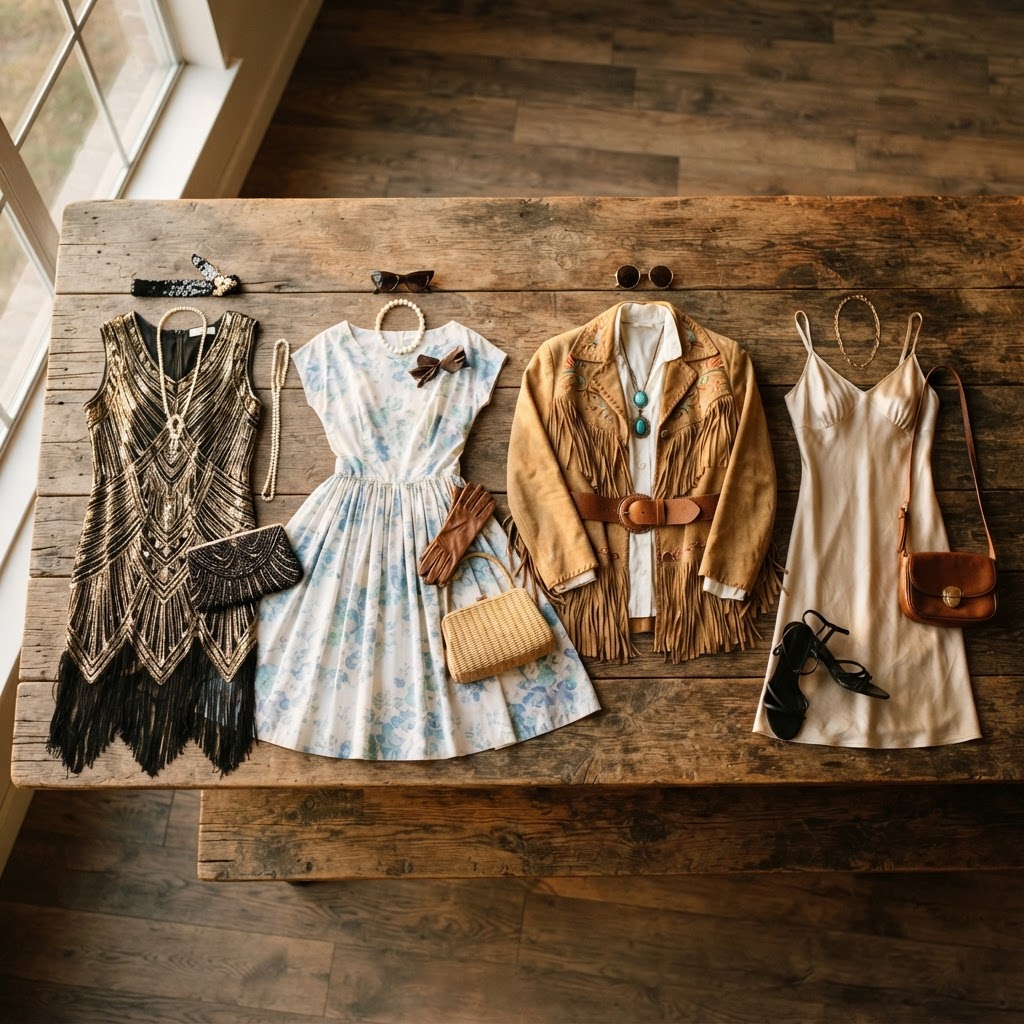
Vintage, Antique, or Retro? The Fashion Terms You Need to Know Before You Shop
If you've ever browsed a secondhand rack and wondered whether that beaded dress is truly 'vintage' or just 'retro-inspired,' you're not alone. The world of pre-loved fashion is full of terminology that even seasoned shoppers mix up. Let's break down exactly what these labels mean — and why getting them right can change everything about how you shop and style.
Why Terminology Matters in Fashion
When it comes to fashion, words carry weight — and price tags. Calling a garment vintage, antique, or retro isn't just a matter of aesthetic preference; each term carries a specific meaning that affects authenticity, value, and styling potential. Whether you're hunting for a 1940s swing coat or a 1990s slip dress, understanding the vocabulary of pre-loved fashion empowers you to shop smarter, spend wisely, and build a wardrobe with real historical depth.
Let's take these three terms apart, one stitch at a time.
What Does "Vintage" Actually Mean?
The word vintage is arguably the most misused term in the secondhand fashion world. Borrowed from the wine industry — where it refers to the year a particular wine was produced — vintage in fashion has a generally accepted definition: clothing that is at least 20 to 25 years old, but less than 100 years old.
That means, as of 2024, anything made between approximately 1924 and 2004 can legitimately be called vintage. Yes, that includes your Y2K-era low-rise jeans and your aunt's power-shouldered 1980s blazer. The term spans an enormous range of eras, silhouettes, and cultural moments.
The key is authenticity. A true vintage piece was actually made and worn during its era — it isn't a modern reproduction designed to look old. When you pick up a genuine 1970s halter top, you're holding a garment that lived through disco, Watergate, and the birth of punk. That history is woven into every thread.
What to look for when verifying vintage:
- Union labels (common in American garments through the mid-1970s)
- Care label absence (pre-1971 U.S. garments weren't required to have them)
- Fabric composition and construction methods (hand-stitching, metal zippers, natural fibers)
- Brand labels and their known date ranges
So What Is "Antique" Fashion?
If vintage is the broad category, antique is the elite tier. In fashion, a garment is generally considered antique when it is 100 years old or more. This means true antique clothing dates from the 1920s and earlier — Edwardian tea gowns, Victorian corsets, 1920s flapper dresses dripping with beading and fringe.
Antique clothing is rare, fragile, and often treated more as wearable art or collectible textile history than everyday fashion. The fabrics — silk charmeuse, fine wool crepe, hand-tatted lace — were made to different standards and have lived through a century or more of existence. Proper storage, handling, and even wearing require special care.
For collectors and serious vintage enthusiasts, antique garments represent the pinnacle of the market. A genuine 1920s beaded flapper dress, for instance, can command thousands of dollars at auction. But for the fashion-forward shopper, antique pieces also offer something priceless: an unmistakable originality that simply cannot be replicated.
Tips for handling antique fashion:
- Store flat or on padded hangers, away from light
- Avoid dry cleaning with harsh chemicals
- Consult a textile conservator for repairs
- Consider wearing replicas for regular use and reserving originals for special occasions
And "Retro" — The Impersonator?
Here's where many shoppers get tripped up. Retro does not mean old — it means new clothing made to look old. The word comes from the Latin retro, meaning "backward," and in fashion, it describes contemporary garments that deliberately reference, mimic, or are inspired by past decades.
Think of a brand-new dress with a 1950s-style full skirt and cap sleeves. It's retro. A freshly manufactured band tee printed to look worn and faded from the 1970s? Retro. A modern swimsuit with 1940s-style high-waisted cuts and polka dots? Also retro.
Retro fashion is not lesser fashion — it can be beautifully made and a fantastic way to channel the aesthetics of a beloved era without the fragility or cost of an authentic piece. But it is not vintage, and conflating the two is one of the most common mistakes in secondhand shopping.
Retro vs. Vintage at a glance: | Feature | Vintage | Retro | |---|---|---| | Age | 20–99 years old | New or recent | | Origin | Made in its era | Modern reproduction | | Price | Often higher | Typically lower | | Authenticity | Historical artifact | Style inspiration |
The Gray Areas: Pre-Owned, Secondhand, and "Vintage-Inspired"
Beyond the big three, the fashion resale world comes with a few more terms worth knowing.
Pre-owned or secondhand simply means a garment has had a previous owner — it makes no claim about age. A two-year-old dress from a fast fashion brand is secondhand, but it is not vintage.
Vintage-inspired is a marketing term used by modern brands to signal that their new designs draw heavily from historical silhouettes and details. Like retro, vintage-inspired pieces are contemporary products, not authentic artifacts.
And then there's deadstock — a delicious niche category referring to new-old-stock: garments that were manufactured in a past era but never sold or worn. Deadstock pieces are original to their period (making them technically vintage) but in pristine, unworn condition, often still bearing original tags. They're among the most sought-after finds for collectors.
Why This Matters When You Shop
Understanding these distinctions isn't just academic — it has real consequences for your wallet and your wardrobe.
When a seller labels something vintage, they're asserting that it is an authentic artifact of a past era. If you're paying vintage prices, you deserve vintage authenticity. Knowing how to verify age through labels, construction, and provenance protects you from paying a premium for something that's actually a modern reproduction.
Conversely, if you love the look of a particular decade but aren't concerned with owning an original, retro and vintage-inspired pieces offer enormous value. They're easier to find, often more affordable, and built to modern sizing and care standards.
For those building a curated vintage wardrobe, mixing authentic vintage pieces with thoughtfully chosen retro accents is a common and stylish approach. A genuine 1960s mod shift dress paired with retro go-go boot reproductions? Absolutely iconic.
The Century Spectrum: From Flapper to Y2K
One of the most exciting things about the current vintage market is just how wide the spectrum has become. The 2000s are now firmly vintage territory, joining the beloved decades that came before them. Each era carries its own codes:
- 1920s–1930s: Bias-cut silhouettes, Art Deco beading, early Hollywood glamour — antique territory, rare and precious
- 1940s–1950s: Utility tailoring, full skirts, sweater sets — classic vintage at its most collectible
- 1960s–1970s: Mod geometry, boho florals, denim culture — endlessly wearable and widely available
- 1980s–1990s: Power dressing, grunge, minimalism — fast-growing and increasingly valuable
- 2000s: Y2K aesthetics, logomania, low-rise everything — the newest vintage frontier
Conclusion: Shop Smarter with Ensemble
Whether you're chasing the ghost of a 1930s evening gown or hunting down a perfect 1990s slip dress, knowing your terminology is the foundation of great vintage shopping. Vintage is authentic and aged 20–99 years. Antique is a century or more old. Retro is new but nostalgic in spirit. Each has its place — and its own kind of magic.
At Ensemble, our marketplace is built on authenticity, transparency, and a deep love for the full sweep of fashion history, from the roaring 1920s through the expressive 2010s. Every listing is carefully categorized so you always know exactly what you're getting. Browse our curated collections and find the piece that speaks to you — because every great wardrobe has a story, and yours deserves to be told.