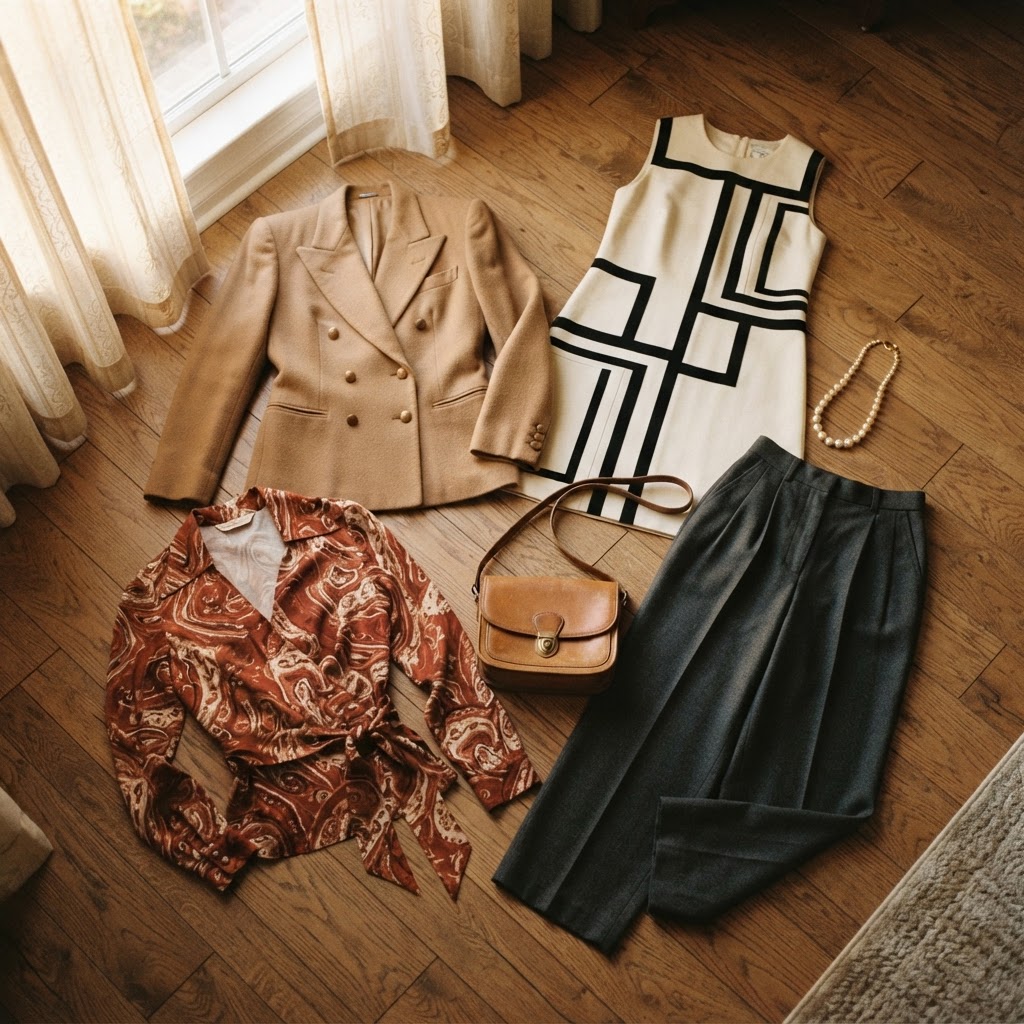
The Art of Building a Capsule Wardrobe with Authentic Vintage Pieces
Forget fast fashion's endless churn — the most sophisticated wardrobes are built on a foundation of carefully chosen authentic vintage pieces that transcend trend cycles entirely. A vintage capsule wardrobe isn't just an aesthetic choice; it's a philosophy of dressing with intention, history, and unmatched quality. Here's how to curate yours, decade by decade.
Why Vintage Belongs at the Heart of Your Capsule Wardrobe
The capsule wardrobe concept — a tightly edited collection of versatile, timeless pieces — was famously championed by designer Donna Karan in the 1980s. But the truth is, the building blocks of the perfect capsule have existed for a century. Authentic vintage clothing brings something no contemporary fast-fashion piece can replicate: provenance, craftsmanship, and a singular identity that sets your wardrobe apart from the algorithmically generated sameness flooding today's closets.
When you build a capsule around genuine vintage finds — a 1940s wool crepe blazer, a 1970s silk wrap dress, a perfectly proportioned 1990s minimalist trouser — you're not chasing trends. You're curating a wardrobe that tells a story and, crucially, one that lasts.
Understanding the Capsule Framework Before You Shop
Before you dive into the intoxicating world of vintage markets and online archives, establish your framework. A classic capsule wardrobe typically contains between 10 and 30 pieces, all of which work together seamlessly. For a vintage capsule specifically, consider organizing your selections around three pillars:
- Foundation pieces — neutral, structural items that anchor every outfit
- Character pieces — era-specific statement items that inject personality
- Accent pieces — accessories and layering items that tie looks together
This structure prevents the common vintage shopping pitfall: buying beautiful one-off items that never actually get worn because they don't connect to anything else you own.
Sourcing by Decade: What Each Era Brings to the Mix
One of the great joys of authentic vintage is that each decade offers a distinct design vocabulary. Understanding what each era does best helps you shop with purpose.
The 1930s–1940s: The Architecture of Elegance
Garments from this era were built to endure wartime fabric rationing and still look impeccable. Bias-cut silhouettes, structured shoulders, and high-quality wool and rayon blends define the period. A 1940s gabardine suit or a draped crepe evening blouse functions as an extraordinary foundation piece — it telegraphs authority and grace in equal measure. Because sizing ran small and construction was meticulous, these pieces reward careful shoppers who take the time to have them professionally assessed.
The 1950s–1960s: The Golden Age of Tailoring
If capsule wardrobes have a spiritual home, it might be mid-century American and European tailoring. The 1950s gave us nipped waists, full skirts, and the kind of cotton shirtwaist dresses that work for virtually every occasion. The 1960s pivoted toward mod geometry — shift dresses, clean A-lines, and graphic color blocking. Both decades produced ready-to-wear at a quality standard that modern manufacturing rarely matches. A 1960s wool shift dress in a neutral colorway is perhaps the single most versatile vintage capsule piece you can own.
The 1970s: Texture, Drape, and Effortless Bohemia
The 1970s introduced natural fiber renaissance — linen, raw silk, and genuine leather took center stage. This is the decade to mine for your capsule's character pieces. A 1970s wrap blouse in printed silk, a suede fringe jacket, or a pair of wide-leg trousers in a muted earth tone can anchor an entire aesthetic. The decade also produced some of the finest knitwear ever made — look for label names like Missoni, Halston, or lesser-known domestic brands whose quality rivals the legends.
The 1980s–1990s: Power and Minimalism
These decades feel surprisingly contemporary, which makes them tactically valuable for capsule building. 1980s power suiting — oversized blazers with strong shoulders — has cycled back into full cultural relevance, but the authentic versions carry a weight and tailoring quality that contemporary revivals simply can't match. The 1990s minimalism movement, driven by designers like Calvin Klein and Jil Sander, produced clean-lined trousers, slip dresses, and relaxed blazers that slot effortlessly into modern wardrobes. These pieces are often the most accessible price point for new vintage collectors.
The 2000s–2010s: Emerging Vintage Territory
It might feel strange to call Y2K or early-aughts fashion "vintage," but these decades are now firmly in the rearview mirror — and their most distinctive pieces are already appreciating in value. Early 2000s logomania, 2010s structured minimalism, and the first wave of sustainable fashion labels all produced collectible items. Getting ahead of this curve is the savvy capsule builder's move.
The Rules of Vintage Capsule Curation
Building a cohesive wardrobe from pieces made across nine decades requires discipline. Here are the principles that separate a curated vintage capsule from a chaotic collection:
Anchor everything to a consistent color palette. Choose two or three neutrals — ivory, camel, navy, black — and ensure every foundation piece lands within that range. Your character pieces can deviate, but the core must cohere.
Prioritize fit above all else. Vintage sizing is notoriously inconsistent. A piece that fits impeccably will always outperform a more spectacular piece that doesn't. Build a relationship with a skilled vintage-specialist tailor who understands period construction techniques.
Verify fiber content. Authentic vintage pieces in natural fibers — wool, silk, cotton, linen — will outlast synthetic alternatives by decades. When shopping, learn to do the burn test or rely on trusted sellers who authenticate materials.
Resist the impulse purchase. The golden rule of capsule building is that every new piece must work with at least three existing items in your wardrobe. Vintage shopping is emotionally charged — a beautiful piece can override your judgment. Apply the three-item rule ruthlessly.
Document as you go. Keep a simple inventory — photos, era, fiber content, care notes — of every piece in your capsule. This makes getting dressed easier and helps you identify gaps when you're ready to add new items.
The Sustainability Case You Already Knew Was Coming
We won't belabor the point, but it bears stating clearly: authentic vintage is the most sustainable fashion choice available. No new resources are extracted. No new carbon is emitted in production. The garment's environmental cost was paid decades ago, and by wearing it, you're extending its useful life by another generation. A vintage capsule wardrobe is, by its very nature, a low-impact wardrobe — and one that gets better with age rather than pilling and fading after six washes.
Where Ensemble Fits In
Building this kind of wardrobe requires access to authenticated, well-curated pieces — and that's precisely what Ensemble exists to provide. Our marketplace spans authentic clothing from the 1920s through the 2010s, with every piece vetted for era accuracy, condition, and construction quality. Whether you're anchoring your capsule with a 1950s cashmere twinset, adding character with a 1980s Norma Kamali power blazer, or hunting for a 1990s minimalist slip dress that slots perfectly between your other neutrals, Ensemble's curated sellers bring the depth and trust that random thrift-store hunting simply can't guarantee.
Your capsule wardrobe should feel like it was always yours — assembled with patience, worn with intention, and built to last. Start with one perfect piece, let it tell you what it needs beside it, and trust the process. The most beautiful wardrobes aren't built in a weekend. They're built over a lifetime — one extraordinary vintage find at a time.