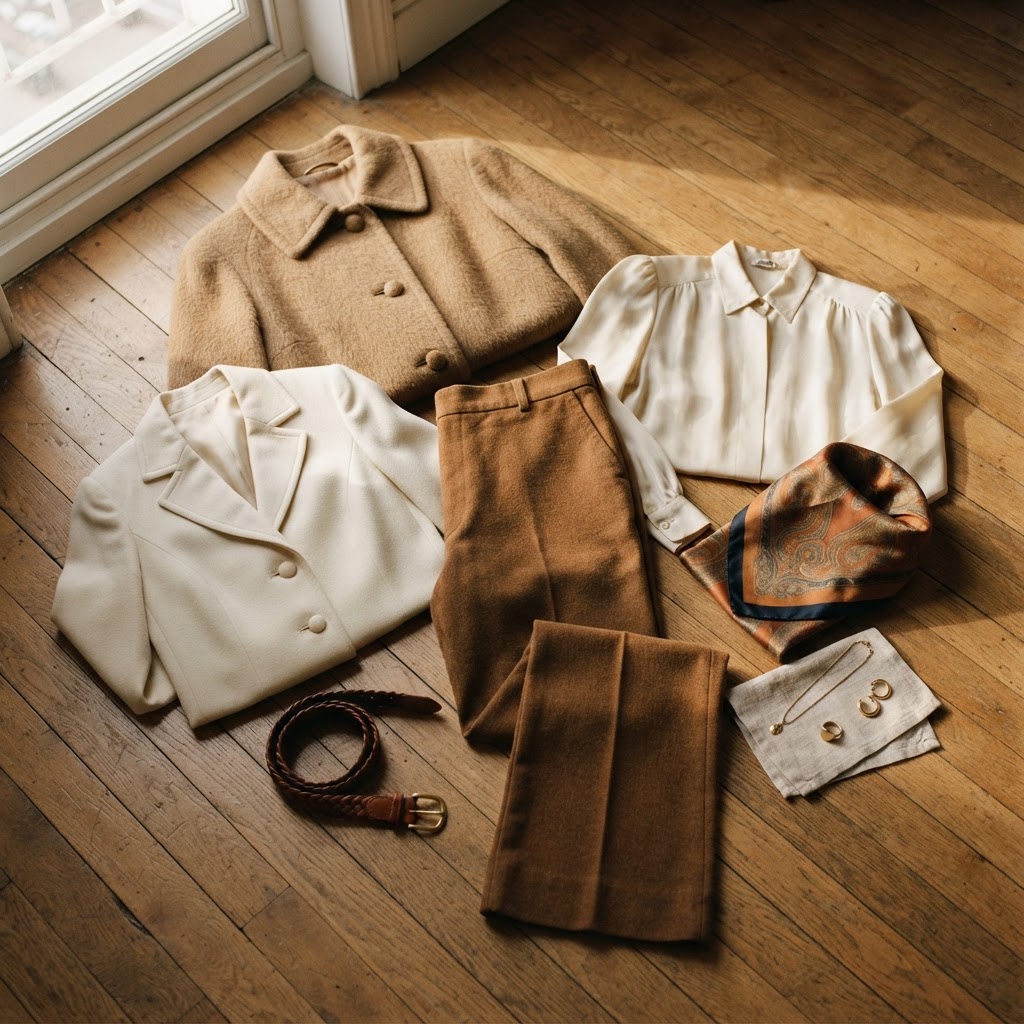
The Art of Building a Capsule Wardrobe with Authentic Vintage Pieces
Forget fast fashion and trend-chasing — the most intentional wardrobes are built on pieces that have already stood the test of time. A vintage capsule wardrobe combines the timeless philosophy of 'less is more' with the unmatched craftsmanship of decades past. Here's how to curate a collection of authentic vintage pieces that work harder, last longer, and tell a richer story than anything on a contemporary rack.
What Is a Capsule Wardrobe, and Why Does Vintage Make It Better?
The concept of a capsule wardrobe was popularized in the 1970s by London boutique owner Susie Faux, who argued that a small collection of high-quality, versatile garments was the foundation of true style. The idea was refined further when Donna Karan launched her legendary 'Seven Easy Pieces' collection in 1985 — a moment that cemented minimalist dressing as a power move rather than a compromise.
Today, the capsule wardrobe philosophy has never felt more relevant. But here's the twist that most modern style guides miss: authentic vintage clothing is the ultimate capsule ingredient. Why? Because vintage pieces have already proven their longevity. A wool blazer from the 1960s that still holds its shape, a 1940s silk blouse with hand-stitched details that haven't unraveled — these garments were built to last. Contemporary fast fashion simply cannot compete with the construction standards of decades past.
Building a capsule wardrobe with vintage pieces also means embracing intentional consumption. Every item you choose carries a history, a silhouette, and a character that mass production cannot replicate. The result is a wardrobe that feels genuinely personal.
Choosing Your Anchor Decades
One of the most exciting aspects of building a vintage capsule wardrobe is deciding which eras will anchor your aesthetic. Rather than randomly collecting whatever catches your eye, think about the silhouettes and sensibilities that resonate with your lifestyle.
- 1940s–1950s: Structured tailoring, nipped waists, and a sense of occasion in everyday dressing. Pieces from this era project polish and authority. A 1950s wool pencil skirt or a 1940s gabardine trench coat can anchor an entire wardrobe.
- 1960s–1970s: Shift dresses, wide-leg trousers, and earthy tones define these decades. The construction quality from this period, particularly in American and British ready-to-wear, remains exceptional. A 1970s suede jacket or a mod-era A-line dress brings effortless cool.
- 1980s–1990s: Power dressing meets downtown edge. Oversized blazers, silk blouses, and minimalist slip dresses from this era are having an enormous cultural moment right now — and for good reason. These pieces photograph beautifully and translate across casual and formal contexts.
The key is restraint. Choose one or two anchor decades that feel authentic to your personality, then build outward from there. A capsule wardrobe built around 1970s earth tones, for example, can be accented with a single statement piece from the 1950s without losing its cohesion.
The Core Pieces: A Vintage Capsule Blueprint
While your specific selections will depend on your style and anchor decades, every strong vintage capsule wardrobe should include the following category pillars:
1. The Tailored Blazer or Jacket
This is the hardest-working piece in any wardrobe. A well-cut vintage blazer — whether it's a 1960s mod double-breasted style or a 1980s power-shoulder silhouette — instantly elevates any outfit. When shopping vintage, pay close attention to the lining, the stitching at the lapels, and whether the shoulder seams sit correctly on your body. Slight alterations are always worth the investment.
2. The Foundational Trouser
High-waisted trousers have been a capsule staple across nearly every decade since the 1930s. A pair of 1970s wide-leg trousers in a neutral wool blend or a set of 1940s-style pleated pants offers both elegance and comfort. Look for natural fibers — they breathe better, press more cleanly, and last indefinitely with proper care.
3. The Versatile Dress
One beautifully constructed vintage dress can function as a standalone outfit or, when layered, become the foundation for multiple looks. A 1960s shift dress can be belted for daytime or worn clean and unadorned for evening. A 1970s wrap dress — Diane von Furstenberg's era — remains one of the most flattering and adaptable silhouettes ever designed.
4. The Statement Outerwear
Vintage coats are among the best investments you can make. The wool content in mid-century coats far exceeds what you'll find today, and the construction — hand-sewn buttonholes, structured interlinings — is extraordinary. A 1950s camel hair coat or a 1960s mod coat in a bold geometric print immediately elevates even the simplest outfit underneath.
5. The Classic Knitwear
Sweaters and cardigans from the 1950s through the 1980s offer textures and patterns that contemporary knitwear rarely achieves. Look for cashmere twin sets from the 1950s, intarsia knits from the 1970s, or the luxuriously chunky hand-knits that characterize 1980s British fashion.
How to Shop Vintage with Capsule Thinking
The biggest mistake vintage shoppers make is buying emotionally rather than strategically. A spectacular 1920s beaded gown is a treasure — but if you have nowhere to wear it and nothing to pair it with, it belongs in a display case, not a capsule wardrobe.
Before making any vintage purchase, ask yourself three questions:
- Does this piece work with at least three other items I already own?
- Is it in wearable condition, or will restoration costs make it impractical?
- Does it fit my anchor decade aesthetic, or am I buying it purely on impulse?
Also pay close attention to fabric and construction. Natural fibers — wool, silk, cotton, linen — are your allies. They age gracefully, respond well to tailoring, and carry an authenticity that synthetic blends rarely achieve. Check seams, zippers (metal zippers are often a hallmark of pre-1960s garments), and any areas prone to wear: underarms, collar edges, and hemlines.
Caring for Your Vintage Capsule
Authentic vintage clothing requires more attentive care than contemporary garments, but the effort pays dividends. A few guiding principles:
- Store properly: Use padded hangers for structured pieces and fold knits flat to prevent stretching. Avoid plastic garment bags, which trap moisture.
- Clean sparingly: Over-washing degrades vintage fabrics. Spot clean where possible, and reserve full washes or dry cleaning for genuinely soiled garments.
- Address repairs promptly: A loose button or a small seam separation is easy to fix early and catastrophic if ignored.
- Use cedar over mothballs: Cedar blocks and lavender sachets protect natural fibers without the chemical smell that mothballs leave behind.
Treating your vintage capsule wardrobe as an ongoing curation rather than a one-time purchase is the mindset shift that makes everything click. Add pieces slowly, remove what no longer serves, and resist the urge to fill every gap immediately.
A Wardrobe With a Story
There is something quietly radical about choosing to build your wardrobe around pieces that were loved and worn before you found them. Every authentic vintage garment is a small act of preservation — a choice to honor craft, to reject disposability, and to dress with genuine intention.
A vintage capsule wardrobe is not a costume. It is a considered collection of garments that reflect your values as much as your taste. The 1940s blazer you wear to a meeting and the 1970s silk blouse you save for weekends are not just clothing — they are evidence that great design is genuinely timeless.
At Ensemble, we believe that the best wardrobe is one built slowly, chosen wisely, and worn with confidence. Our marketplace brings together authenticated pieces from the 1920s through the 2010s, making it easier than ever to find the foundational vintage garments your capsule wardrobe deserves. Browse our curated collections and start building something that lasts — because the best fashion already has.