How to Spot the Real Deal: A Complete Guide to Shopping for Authentic Vintage Handbags
A stunning vintage handbag can elevate any outfit and tell a story that no modern accessory ever could — but only if it's the genuine article. With the resale market booming, fakes and misrepresented pieces are more common than ever. Here's everything you need to know to shop smart and bring home a true treasure.
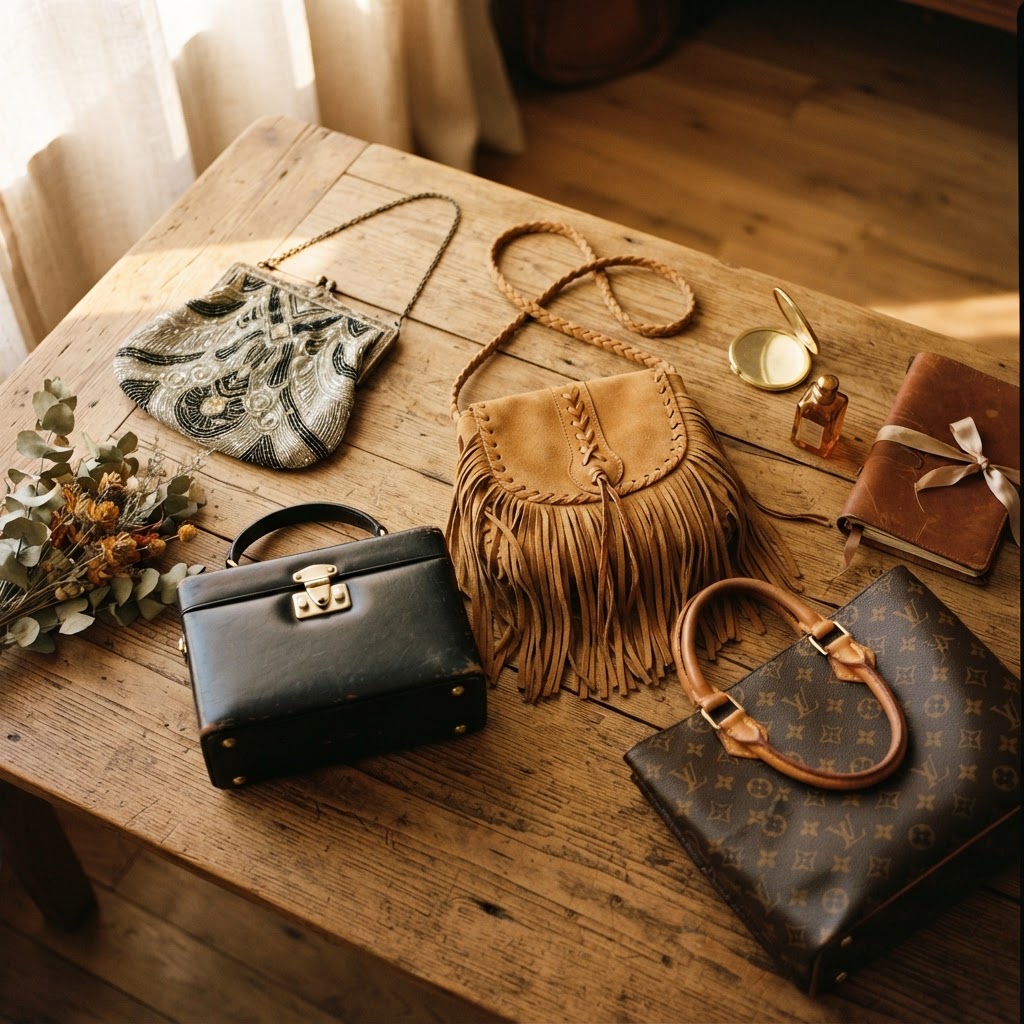
There's something undeniably magical about holding a handbag that once accompanied a woman through the 1940s or swung from the arm of a disco queen in 1976. Vintage handbags are time capsules — and the authentic ones carry an irreplaceable weight of history, craftsmanship, and style. But shopping for them requires a trained eye and a little know-how. Whether you're hunting for a 1950s structured box bag or a 1980s logo-laden power piece, this guide will walk you through exactly what to look for.
Start With the Hardware
One of the quickest ways to assess authenticity is to examine the hardware closely. Vintage metal fittings were typically made from brass, gold-plated brass, or sterling silver — materials that age in very specific, recognizable ways. Authentic vintage hardware develops a patina: a subtle dulling or warm discoloration that cannot be easily faked. If the hardware looks uniformly shiny and new on a bag claimed to be from the 1960s, that's a red flag.
Also look at the weight and feel of clasps, zippers, and chain straps. Pre-1980s zippers were often made by Talon, Éclair, or Opti — brand names you can actually find stamped on the zipper pull itself. If a bag claims to be from the 1950s but sports a modern YKK plastic zipper, something doesn't add up.
Examine the Interior Lining and Stitching
The inside of a vintage bag tells you just as much as the outside. Authentic vintage linings were commonly made from silk, rayon, grosgrain ribbon fabric, or cotton twill — materials that feel distinctly different from the synthetic polyester used in modern reproductions. Run your fingers along the lining. Does it feel luxuriously thin and slightly fragile, or plasticky and uniform?
Stitching quality is another major tell. Genuine vintage bags, especially those from high-end houses like Gucci, Hermès, or Chanel, feature extraordinarily even, tight hand-stitching or early machine stitching that has a particular rhythm and tension. Loose threads, uneven spacing, or stitching that looks machine-perfect in a suspiciously modern way can indicate a replica or a much later production.
Know Your Labels and Date Codes
For designer vintage bags, interior labels and date codes are critical. Each major house has its own system, and learning even the basics can save you from a costly mistake.
- Louis Vuitton began using date codes in the early 1980s. Bags claimed to be from before that era won't have them — but bags from the '80s onward should. The format changed multiple times, so cross-reference any code with a reliable vintage authentication guide.
- Chanel introduced its authenticity cards and hologram stickers in 1984. A Chanel bag allegedly from 1978 should not have one.
- Gucci bags from the 1960s and '70s often feature a double-G logo on a red and green stripe interior label, while later decades shifted the design significantly.
For non-designer vintage bags, look for country of origin labels. "Made in USA," "Made in France," or "Made in England" labels with specific typography styles can help you date a piece. "Made in China" labels on a bag supposedly from the 1950s are an immediate giveaway of a fake or misattributed piece.
Assess the Materials: Leather, Fabric, and Beyond
Understanding period-appropriate materials is essential. Here's a quick decade-by-decade cheat sheet:
- 1920s–1930s: Look for beaded mesh bags, petit point needlepoint, alligator, and early Bakelite hardware.
- 1940s: Wartime rationing meant creative materials — look for wooden frames, lucite clasps, and fabric bodies.
- 1950s: Structured leather box bags, patent leather, and novelty bags in wicker or fabric dominated this era.
- 1960s–1970s: Mod plastics, suede fringe, croc-embossed leather, and bold geometric shapes were everywhere.
- 1980s: Power bags — oversized, heavily logo-printed, often in monogram canvas or quilted leather.
- 1990s–2000s: Minimalist nylon, micro bags, and the rise of the "It Bag" in buttery calf leather.
Authentic leather from earlier decades has a very specific smell and texture — a deep, slightly earthy or tannic quality that aged synthetic leather simply cannot replicate. When in doubt, bend the leather gently. Vintage leather flexes with a certain suppleness or, in older pieces, a slight stiffness that differs from modern hides.
Look for Honest Wear and Patina
A little wear is actually a good sign. Authentic patina on vintage bags includes corner scuffing, slight fading along edges, oxidized hardware, and the natural darkening of leather at handles where oils from hands have accumulated over decades. This kind of aging is consistent and logical — it appears where use and time would naturally create it.
Be suspicious of bags that claim to be 50 years old but look absolutely pristine unless they come with a credible provenance story (a deadstock find, long-term storage, estate sale, etc.). Conversely, be equally wary of artificial distressing — scuffs that appear on unusual places, uniform fading that looks painted on, or hardware that looks corroded rather than naturally patinated.
Ask the Right Questions When Buying
Whether you're shopping online or in person, always ask the seller:
- Where did this bag come from? A compelling provenance — estate sale, original owner, long-time collection — adds credibility.
- Do you have any supporting documentation? Receipts, original dust bags, authenticity cards, or even old photographs can be golden.
- Has it been restored or repaired? Professional restoration is fine and often adds value, but undisclosed repairs can hide damage or inauthenticity.
- Can I see detailed photos of the hardware, lining, label, and stitching? Any reputable seller will be happy to provide these.
The Importance of Reputable Sourcing
Perhaps the single most important factor in buying authentic vintage handbags is who you buy from. The vintage resale market is vast and, in some corners, unregulated. Buying from curated, vetted marketplaces dramatically reduces your risk.
Look for sellers who specialize in vintage fashion, not general secondhand goods. Specialists know the difference between a genuine 1965 Gucci bamboo bag and a 1990s reproduction. They've handled enough pieces to recognize the subtle tells that generalist sellers often miss.
Trust Your Instincts — And Do Your Research
If a price seems too good to be true for a high-end vintage bag, it probably is. Authentic vintage designer handbags — especially from Hermès, Chanel, and Louis Vuitton — hold and often increase in value. A Birkin from 1993 is not going to turn up for $80.
Build your eye by visiting museum costume collections, browsing auction house archives, and studying sold listings on reputable platforms. The more authentic pieces you examine, the sharper your instincts will become.
Shop with Confidence at Ensemble
At Ensemble, we do the hard work of authentication so you don't have to worry. Every vintage handbag listed on our marketplace has been carefully reviewed for period-appropriate materials, construction, labels, and hardware. Our sellers are passionate specialists who stand behind every piece they list. Whether you're searching for a structured 1950s Kelly-style bag or a slouchy '90s minimalist clutch, Ensemble is your trusted source for vintage handbags that are exactly what they claim to be — beautiful, authentic, and full of history waiting to be continued.