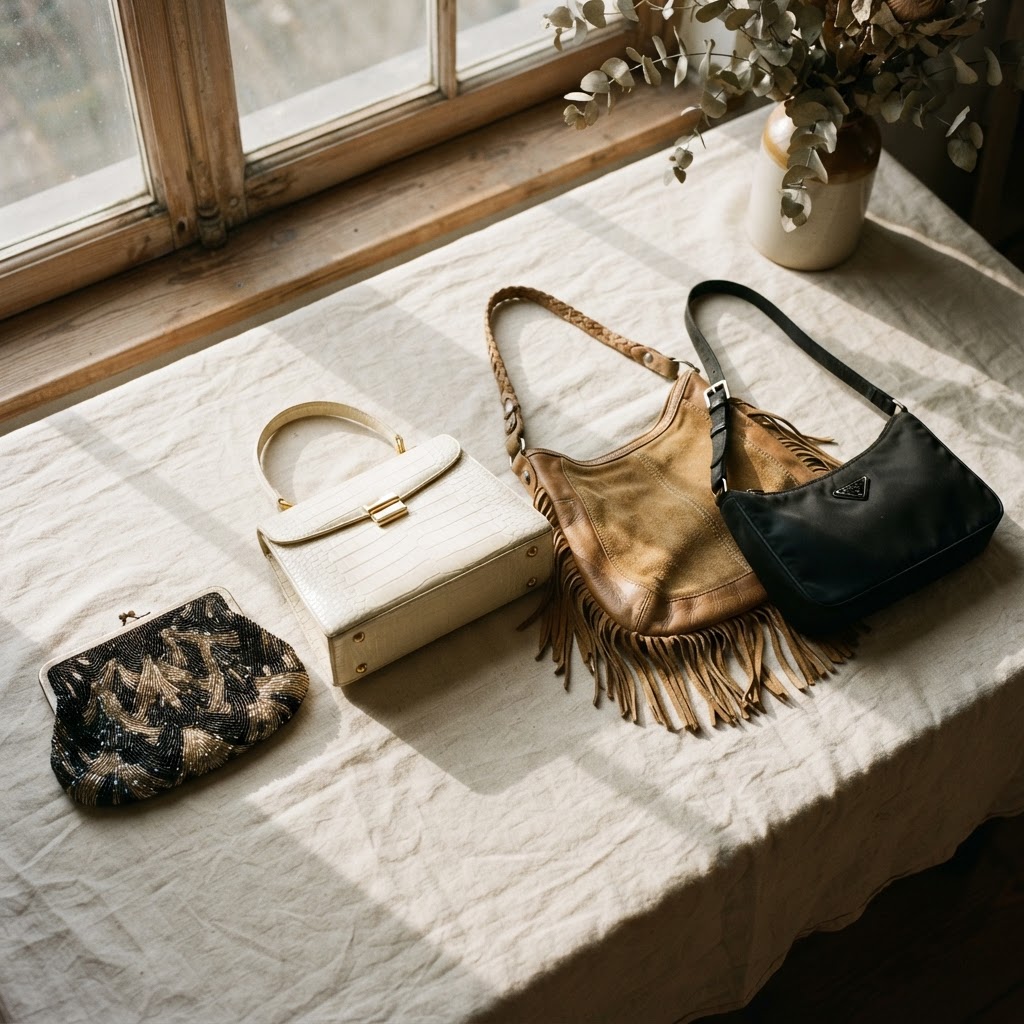
How to Spot an Authentic Vintage Handbag: The Ultimate Buyer's Guide
Vintage handbags are more than accessories — they're wearable history. But with the market flooded with reproductions and misattributed pieces, knowing what to look for before you buy can mean the difference between a genuine treasure and a costly mistake. Here's everything you need to know to shop with confidence.
Why Authentic Vintage Handbags Are Worth the Hunt
From the structured leather satchels of the 1940s to the logo-emblazoned status bags of the 1990s, vintage handbags tell the story of how women moved through the world — what they carried, what they valued, and how they expressed themselves. Collecting authentic vintage bags isn't just a fashion choice; it's an investment in craftsmanship that modern mass production rarely replicates.
But authenticity is everything. A stunning bag loses its value — monetary and sentimental — if it turns out to be a later reproduction or a clever fake. Whether you're hunting for a 1960s Gucci bamboo handle tote or a slouchy 1980s Coach leather hobo, the same core principles apply. Let's break them down.
Start With the Hardware
One of the first things experienced collectors examine is the hardware — zippers, clasps, buckles, and feet. Authentic vintage bags from the 1920s through the 1970s almost universally feature solid brass or sterling silver hardware, which carries a satisfying weight and develops a natural patina over time. If the metal feels light, looks uniformly shiny, or shows signs of plating flaking away to reveal a silver-toned base underneath, you're likely looking at a much later piece.
Zipper pulls are particularly telling. Before the 1960s, Talon zippers were the standard for American-made bags. European bags of the same era often feature Éclair or Opti zippers. The presence of a YKK zipper, which became dominant in the 1970s, can help you date a bag — or expose a fake claiming to be older than it is. Look closely at the zipper pull's font and finish; worn, slightly irregular lettering is actually a good sign of genuine age.
Read the Labels and Stamps
Interior labels are a goldmine of dating information — if you know how to read them. Country-of-origin labeling laws changed significantly over the decades. In the United States, the Tariff Act of 1930 required imported goods to be marked with their country of origin, so any bag labeled "Made in France" or "Made in Italy" likely postdates this era. Bags labeled simply "France" or "England" without the word "Made" often date to between roughly 1921 and 1930.
For designer bags, study the font, spacing, and stitching around the label obsessively. Authentic Chanel bags, for instance, use very specific serif fonts on their interior medallions that changed across decades. Hermès serial numbers follow a precise coding system tied to year and craftsperson. There are detailed reference guides available online for most major houses — bookmark them before you shop.
For non-designer vintage bags, look for maker's marks stamped into the leather lining or pressed into the frame. American manufacturers like Koret, Myles, and Morris Moskowitz were prolific mid-century makers whose stamps confirm both origin and era.
Examine the Leather (or Fabric)
Authentic vintage leather has a character that's genuinely difficult to fake. Full-grain or top-grain leather from the mid-20th century was typically sourced and tanned differently than modern hides, resulting in a texture that feels supple yet substantial. Run your fingers across the surface: good vintage leather often has subtle, natural variations in grain — no two sections look machine-perfect.
For fabric bags — a staple from the 1940s through the 1960s in particular — look for barkcloth, tapestry weaves, or structured needlepoint in patterns consistent with the era. Atomic-age geometric prints, floral chintz, and novelty prints depicting landmarks or animals were enormously popular in postwar American fashion. Fabric should show age-appropriate fading and wear, not artificially distressed damage.
Lining materials are equally important. Early 20th-century bags were often lined in watered silk or moiré taffeta. By the 1950s and 60s, leather linings and structured fabric became common. The 1970s introduced suede linings in higher-end pieces. If a bag claiming to be from the 1940s has a polyester lining, walk away — polyester fabric wasn't commercially available until the early 1950s and didn't become widespread until the 1960s.
Check the Stitching
Hand stitching versus machine stitching tells you a great deal about both the age and the quality of a bag. High-end vintage bags, particularly those made before the 1950s, were constructed largely by hand. Look for slightly irregular stitch spacing — this is a mark of authenticity, not poor quality. Perfect, machine-uniform stitching on a bag claiming to be hand-sewn from the 1930s is a red flag.
The thread color and material also matter. Linen thread was standard through the mid-century. Waxed linen in particular was used by premium makers for its durability. Synthetic thread, while not disqualifying on its own in later decades, should match the claimed era of the piece.
Know Your Silhouettes by Decade
Even before you inspect the details, the overall shape and construction of a bag can tell you roughly when it was made. Understanding these silhouettes protects you from misattributed pieces:
- 1920s–1930s: Small, boxy minaudieres and beaded evening bags; simple envelope clutches; structured frame bags with kiss-lock closures.
- 1940s: Utilitarian structured totes and boxy satchels, often in fabric due to wartime leather rationing; practical, no-frills hardware.
- 1950s: Ladylike top-handle bags; structured boxy shapes in pastel leathers; novelty bags in lucite, wicker, or fabric.
- 1960s: Mod geometric shapes; go-go white patent leather; the rise of shoulder bags; chain handles debut.
- 1970s: Slouchy bohemian hobo bags; earth tones; tooled leather; the boom of the designer logo bag.
- 1980s: Power shoulders translated to power bags — structured, oversized, with bold hardware and status branding.
- 1990s–2000s: Minimalist nylon, the "It bag" era, logomania at its peak.
If the silhouette doesn't match the claimed decade, ask questions.
Ask for Provenance When You Can
When shopping from reputable sellers, always ask about provenance — the documented history of a piece. A bag sold with original receipts, period photographs, or auction house records is worth significantly more and carries substantially less risk. Even a simple note about where the seller acquired the piece adds a layer of trust.
Reputable vintage sellers should also be willing to discuss condition honestly — noting replaced straps, resoled feet, restored hardware, or relined interiors. These repairs don't necessarily diminish value, but they should be disclosed.
Trust Your Instincts — and Your Research
The more authentic vintage bags you handle, examine, and study, the sharper your instincts become. Spend time with reference books, museum collections, and trusted online archives. Compare hardware finishes, smell the leather (aged leather has a distinctive, complex scent no synthetic can truly replicate), and hold the bag — authentic craftsmanship has a physical presence that speaks for itself.
Shop Smarter With Ensemble
At Ensemble, every vintage handbag listed in our marketplace has been evaluated for authenticity, with detailed condition notes, decade attribution, and provenance information where available. Our curated selection spans the 1920s through the 2010s, so whether you're after a beaded flapper evening bag or a 90s minimalist crossbody, you can shop with the confidence that comes from a community built on transparency and a genuine love for fashion history. Your next great find is waiting.