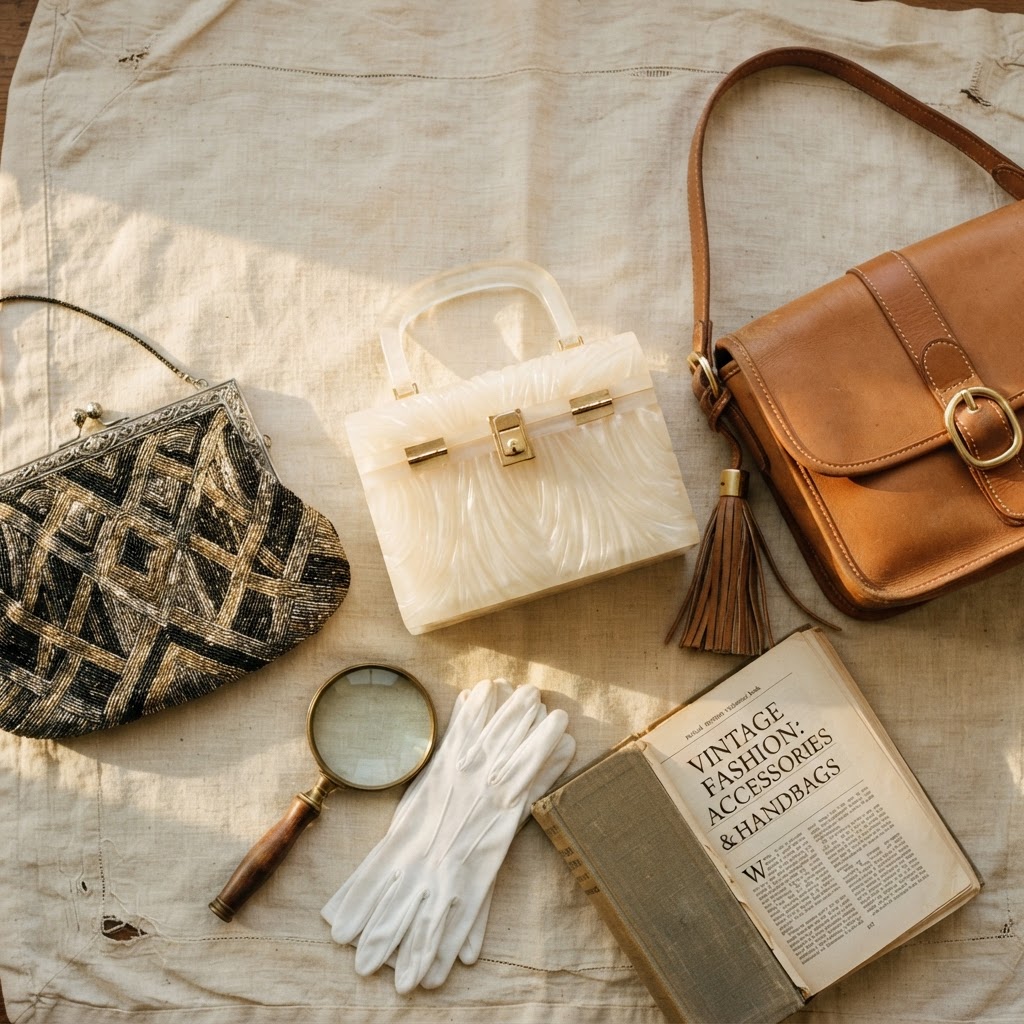
How to Spot an Authentic Vintage Handbag: A Seller's Guide to Dating, Authenticating, and Valuing Your Pieces
Vintage handbags are among the most coveted items in the secondhand fashion world — but they're also among the most misrepresented. Whether you've inherited a closet full of mid-century treasures or you're sourcing pieces to sell, knowing how to authenticate a vintage handbag can mean the difference between a confident sale and a costly mistake. Here's everything you need to know before you list.
How to Spot an Authentic Vintage Handbag: A Seller's Guide to Dating, Authenticating, and Valuing Your Pieces
Vintage handbags tell stories. A structured 1960s box clutch once snapped shut in a Manhattan cocktail lounge. A beaded 1920s evening bag dangled from a gloved wrist at a jazz supper club. When you sell vintage, you're not just moving inventory — you're passing those stories along. But first, you have to make sure the story is real.
Authentication can feel intimidating, especially if you're new to the vintage market. The good news? Handbags leave behind a remarkable paper trail of clues: hardware stamps, lining fabrics, zipper brands, stitching patterns, and more. Once you know what to look for, spotting an authentic vintage piece becomes second nature.
Start With the Hardware
Hardware is one of the most reliable dating tools a vintage seller has. Examine every metal element on the bag — clasps, feet, rings, zippers, and locks — and look for manufacturer markings.
For designer pieces, hardware often bears the brand name or logo. On authentic Gucci bags from the 1970s, for example, you'll find the interlocking GG monogram stamped cleanly into gold-tone metal. Chanel's CC turn-lock wasn't introduced until 1955, making it a useful lower boundary for dating. If someone is selling a "1940s Chanel flap bag" with a CC clasp, something doesn't add up.
Pay attention to the patina and aging of metal. Authentic vintage hardware will show consistent, even oxidation or wear patterns. Reproduction hardware tends to look artificially distressed or, conversely, suspiciously bright. Feel the weight, too — older pieces frequently used solid brass or other heavy metals, while modern reproductions often use lightweight zinc alloy.
Read the Zipper Like a Book
If hardware is a chapter, the zipper is a paragraph all its own. Zipper brands are remarkably useful for establishing manufacturing dates.
- Talon zippers were widely used in American-made bags from the 1930s through the 1970s. A Talon zip with "Talon" stamped on the pull is a strong sign of mid-century American origin.
- Opti zippers are commonly found on European bags from the 1950s–1970s.
- Riri zippers — Swiss-made and considered luxury — appear on high-end European pieces from the 1950s onward and are still used today.
- YKK zippers became globally dominant from the 1960s onward. Their presence doesn't confirm or deny vintage status, but their absence before the 1960s is expected.
A bag claiming to be from the 1940s with a YKK zipper is a red flag. Always cross-reference zipper brand with the rest of the bag's evidence.
Examine the Lining
The interior of a handbag is a treasure map. Lining materials changed dramatically by decade, giving you useful context clues.
In the 1920s and 1930s, evening bags were often lined with silk, moiré, or watered taffeta. Structured daytime bags might feature suede or leather interiors. By the 1940s and 1950s, rayon and early synthetic linings began appearing, especially in American-made bags. The 1960s and 1970s saw a surge in nylon, vinyl, and synthetic suede linings. 1980s bags frequently featured bold-colored or logo-print canvas linings.
Look also at stitching patterns inside the bag. Handstitching on interior seams suggests pre-1950s construction. Even machine stitching with slight irregularities is consistent with pre-computerized manufacturing (pre-1980s). Perfectly uniform, computerized stitching points to a more modern origin.
Investigate the Label and Maker's Mark
Interior labels are gold mines of information — but they must be read carefully, because labels were often updated even when bag designs weren't.
For American-made bags, look for union labels. The ILGWU (International Ladies' Garment Workers' Union) label changed its design multiple times, and collectors have mapped these changes to specific date ranges. A bag with an ILGWU label using the post-1959 design format cannot be from the 1940s, regardless of its style.
For European designer bags, research the specific font, spelling, and placement conventions used by the house in different eras. Louis Vuitton, for instance, changed the spelling on its "made in" stamps from "Made in France" to including city names at specific points in history. Hermès serial numbers encode the year and workshop of manufacture — once you learn the system, dating becomes straightforward.
For non-designer bags, look for "Made in" country labels. "Made in Occupied Japan" dates a piece to 1945–1952. "Made in West Germany" places it between 1949 and 1990. These geographic labels are among the most reliable anchors you'll find.
Assess the Materials
Materials science is authenticity science. Certain materials simply did not exist before certain dates.
- Bakelite hardware and frames were used from the late 1920s through the 1940s. You can test Bakelite by rubbing it vigorously with your thumb — genuine Bakelite produces a faint formaldehyde smell when warmed.
- Lucite (clear acrylic) bags were a hallmark of the 1950s, especially in the United States. Brands like Wilardy and Llewellyn produced iconic box bags in colored and pearlescent Lucite.
- PVC and vinyl bags became widely available in the 1960s, popularized by designers like Mary Quant as part of the mod aesthetic.
- Genuine leather in older bags will feel different from modern leather — often stiffer, with a drier hand and a distinctive aged smell. True vintage leather develops a patina that is difficult to replicate.
Be especially cautious with bags claiming to predate the materials they're made from. A clear vinyl bag "from the 1940s" is almost certainly not what it claims to be.
Check the Condition Honestly
Authenticity and condition are separate questions, but they're connected when it comes to pricing and trust. Honest condition reporting builds your reputation as a seller.
For vintage handbags, inspect:
- Strap integrity: Are original straps intact, or have they been replaced? Replacement straps can still be vintage, but document what you know.
- Interior odor: Musty smells can often be addressed; chemical or mildew smells may indicate deeper damage.
- Closure function: Do clasps, zippers, and magnetic snaps work as intended?
- Structural integrity: Is the frame bent or cracked? Has the bag lost its shape?
Minor wear consistent with age is expected — and often desirable. It's part of the bag's authenticity. What matters is that you describe it accurately.
Know When to Consult an Expert
For high-value pieces — think designer handbags from houses like Hermès, Chanel, Louis Vuitton, or Gucci — consider professional authentication before listing. Services like Authenticate First, Real Authentication, and REAL offer certificates of authenticity that can significantly increase buyer confidence and justify premium pricing.
For mid-range collectible bags by brands like Judith Leiber, Enid Collins, Koret, or Morris Moskowitz, deep-dive into collector communities and reference books. Facebook groups, forums like Purse Forum, and specialist vintage dealers are invaluable resources.
Putting It All Together
Authenticating vintage handbags is part detective work, part material history, and part pattern recognition. No single clue tells the whole story — it's the convergence of evidence across hardware, zippers, lining, labels, and materials that builds a confident attribution. When the details don't align, trust your instincts and do more research before listing.
At Ensemble, we believe that every authentic vintage piece deserves to be accurately represented — and that buyers deserve to know exactly what they're getting. When you list your vintage handbags on Ensemble, you're joining a community of sellers who take that responsibility seriously. Detailed descriptions, honest condition notes, and confident authentication aren't just good ethics — they're good business. Start building your reputation on Ensemble today, one beautiful, authenticated piece at a time.