How to Spot an Authentic Vintage Handbag: A Decade-by-Decade Shopping Guide
Vintage handbags are among the most coveted accessories in the secondhand fashion world — but they're also among the most frequently misrepresented. Whether you're hunting for a buttery 1940s structured clutch or a logo-emblazoned 1990s nylon mini, knowing what to look for can mean the difference between a treasure and a costly mistake. Here's everything you need to know before you buy.
Why Vintage Handbags Deserve Extra Scrutiny
Handbags occupy a unique space in vintage fashion. Unlike a wool coat or a silk blouse, a handbag endures constant handling — it's opened and closed hundreds of times, set on floors, stuffed with keys and lipstick and receipts. That means authentic vintage bags carry real wear patterns that tell a story. It also means that spotting a reproduction, a heavily restored piece, or an outright fake requires a trained eye and a little historical knowledge.
The good news? Once you know what to look for — decade by decade, material by material — shopping for authentic vintage handbags becomes one of the most rewarding pursuits in all of vintage fashion.
The 1920s–1940s: Craftsmanship as Proof of Authenticity
Bags from this era were made to last generations. If you're lucky enough to encounter one, your first job is to assess construction quality. Pre-war and wartime bags were handmade or made with early industrial machinery, which means you'll often find slightly irregular stitching that is nonetheless incredibly tight and durable. This irregularity is a good sign.
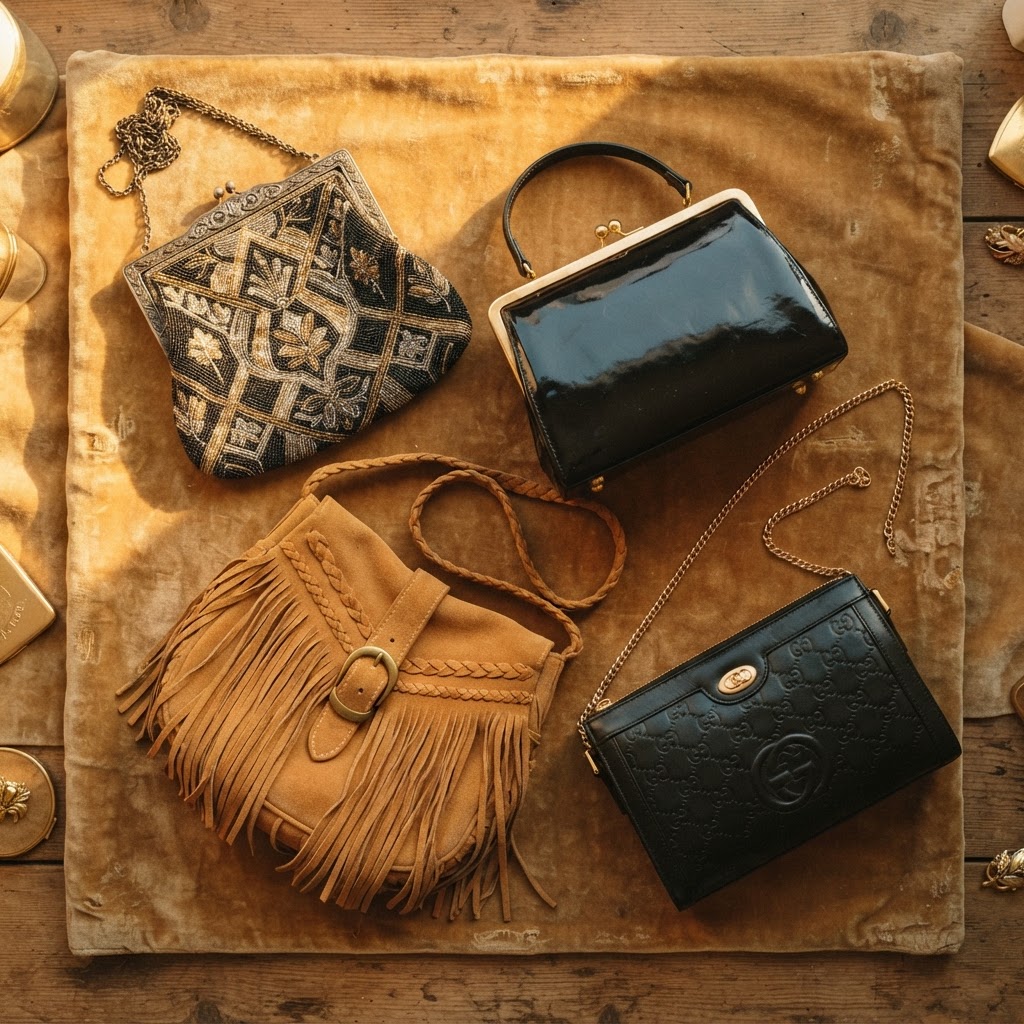
Look closely at the frame hardware — the hinged metal clasps and kiss-lock closures that defined bags of this period. Authentic pieces will show a patina consistent with age: slight tarnishing, minor surface scratching, and occasionally a looseness in the hinge that comes from decades of use. Be wary of frames that look polished and bright without any refinishing explanation.
Materials to know: Bakelite clasps and decorative elements were enormously popular through the 1940s. Test suspected Bakelite by rubbing it vigorously — authentic Bakelite emits a faint, distinctive formaldehyde-like smell when warm. Mesh bags (often called whiting and davis mesh) from the 1920s should feel heavy and drapey, with each tiny ring hand-soldered or early machine-linked.
Interior linings in this era were typically silk, satin, or fine cotton. Check for age-appropriate discoloration — a light golden yellowing or very slight brittleness is normal. A lining that looks crisp and new on a claimed 1930s bag is a red flag unless the seller has documented a professional restoration.
The 1950s–1960s: The Golden Age of the Structured Bag
The postwar boom brought a surge of structured, ladylike handbags that remain some of the most collectible pieces on the vintage market today. Brands like Koret, Lesco, and American department store exclusives produced bags of remarkable quality during this period.
Authenticity markers in 1950s bags center on box construction and rigidity. These bags were built around internal frames, and the exteriors — typically leather, patent leather, or early vinyl — were stretched and secured over that foundation. Press gently on the sides of any claimed 1950s structured bag: there should be a satisfying firmness, not a soft collapse.
For the 1960s, as fashion shifted toward mod aesthetics and synthetic experimentation, lucite and hard plastic bags became iconic. Authentic 1960s lucite should show micro-scratching consistent with age — a completely scratch-free lucite bag may be a later reproduction. Hinges on lucite bags are often a weak point; check that they operate smoothly but show appropriate wear.
Check the labels. Many mid-century American bags carried interior labels naming the manufacturer, the material, and sometimes the country of origin. "Made in USA" labels on leather bags are a positive authenticity indicator for this era. If the label looks machine-embroidered with a modern font, be cautious.
The 1970s: Leather, Suede, and the Boho Frontier
The 1970s brought a more relaxed, earthy aesthetic, and handbags followed suit. Slouchy hobo bags, fringed suede pouches, and natural leather satchels defined the decade. Authentic 1970s leather should feel supple but show its age — slight surface cracking along fold lines is completely normal and actually confirms genuine leather rather than vinyl.
Smell matters more than people realize. Authentic vintage leather carries a deep, complex scent that's difficult to fake — a combination of the tanning process, natural aging, and use. Synthetic materials from any era have a distinctly different odor profile.
For 1970s bags, also examine stitching thread color. Beige, tan, and rust-colored thread was fashionable and era-appropriate. Bright white or perfectly matched thread on an aged exterior may indicate later repair — not necessarily a dealbreaker, but worth knowing.
The 1980s–1990s: Logos, Luxury, and the Authentication Challenge
This is where vintage handbag shopping gets complicated — and where counterfeits are most prevalent. The explosion of logo-driven luxury in the 1980s and 1990s created a massive counterfeit industry that has never fully gone away.
For designer bags from this period, hardware engravings and stampings are your first line of defense. Authentic pieces from major houses will have clean, deeply struck engravings on clasps, feet, and zipper pulls. Shallow, slightly smeared, or unevenly spaced lettering is a major warning sign.
Stitching count is another key authenticator for luxury bags of this era. Research the specific model you're considering — most major houses maintained strict, documented stitch-per-inch standards. A bag claiming to be from a luxury house but showing irregular stitch counts or skipped stitches is almost certainly not authentic.
For non-designer vintage from the 1980s and 1990s — the equally collectible world of novelty bags, beaded evening bags, and early nylon sportswear bags — focus on condition assessment over authentication. These bags are rarely faked, so your primary questions should be about storage wear, hardware corrosion, and lining integrity.
The 2000s–2010s: Recent Vintage and What "Aged" Really Looks Like
Bags from this era are increasingly entering the vintage market, and with them comes the challenge of distinguishing genuine wear from artificial distressing. Authentic early-2000s bags showing decade-plus wear will have consistent wear patterns: the bottom corners darken and scuff first, handles develop a deeper patina at their attachment points, and interior linings accumulate the kind of staining that comes from real life — lipstick transfers, pen marks, the ghost of a spilled perfume sample.
Artificially distressed bags often show wear in the wrong places — evenly applied "antiquing" across an entire surface, or scuffs in areas that wouldn't logically receive contact during normal use.
Universal Authentication Tips for Any Era
- Trust your nose. Genuine aged materials smell different from new materials made to look old.
- Examine the interior as carefully as the exterior. Authentic vintage interiors show age-appropriate wear, and many carry maker's marks, material labels, or retailer stamps inside pockets.
- Research before you buy. Spend time with reference books and collector communities specific to the decade and type of bag you're pursuing.
- Ask about provenance. A bag with a documented history — even just a seller who can describe where and when they acquired it — is more trustworthy than one with no story at all.
- When in doubt, consult an expert. For high-value pieces, a professional authentication service is worth the investment.
Shop with Confidence at Ensemble
At Ensemble, every vintage handbag listed on our marketplace has been reviewed for accurate decade attribution and condition transparency. Our sellers are vetted vintage specialists who know their eras — and our community of shoppers brings decades of collective expertise to every transaction. Whether you're searching for a jet-beaded 1920s evening bag or a structured patent leather 1960s box clutch, Ensemble is where authentic vintage handbags find their next devoted owner. Browse our curated Decade Deep Dive collections and shop the history you love — with confidence.