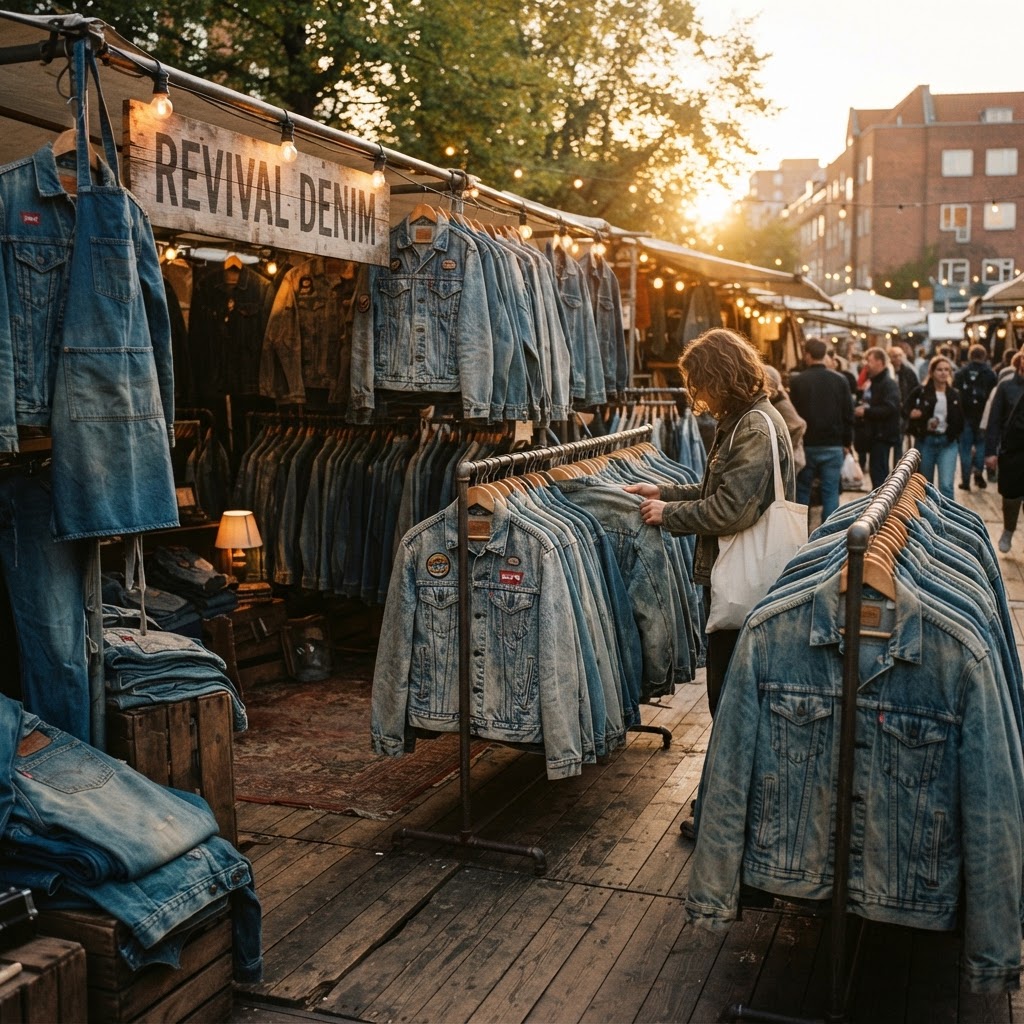
How to Price and Sell Vintage Denim Jackets Online: The Ultimate Guide for Sellers
Vintage denim jackets are some of the most sought-after pieces in the secondhand market, but pricing them correctly can make or break your sale. Whether you're clearing out a collection or building a resale business, knowing what buyers want — and what they'll pay — is everything. Here's your complete guide to pricing and selling vintage denim jackets online with confidence.
Why Vintage Denim Jackets Are Having a Moment
From the Type I Levi's trucker of the 1950s to the oversized acid-washed silhouettes of the late 1980s, denim jackets have never really gone out of style — they've just evolved. Today's buyers are hungry for authenticity, and vintage denim delivers exactly that: craftsmanship, character, and a story stitched into every seam. Online platforms have made it easier than ever to connect sellers with collectors across the globe, but that also means more competition. To stand out and sell well, you need to understand what you have, what it's worth, and how to present it.
Know Your Eras: Decade-by-Decade Value Guide
Not all denim jackets are created equal. The decade a jacket comes from has a massive impact on its desirability and price point.
- 1920s–1940s: Pre-war and wartime denim workwear is extraordinarily rare and commands serious collector prices. Look for selvedge denim, riveted construction, and utilitarian details. These pieces belong in the premium tier.
- 1950s–1960s: The golden age of American denim. Levi's 506XX and 507XX jackets from this era are holy grails for collectors. Single-stitch construction, Big E red tabs, and hidden rivets are key authentication markers.
- 1970s: Denim went counterculture. Heavily patched, embroidered, or painted jackets from this decade carry strong folk-art appeal. Big E Levi's continued into the early '70s before transitioning to the small 'e' tab around 1971 — a critical detail for dating.
- 1980s: Acid wash, distressed finishes, and oversized fits defined this era. Lee, Wrangler, and Levi's all produced iconic styles. Band-branded or pop-culture-adjacent pieces (think tour merch customizations) can fetch premium prices.
- 1990s: Grunge and hip-hop aesthetics made denim a canvas. Oversized Levi's 90s Trucker jackets and Japanese denim reproductions are especially hot right now with younger buyers.
- 2000s–2010s: Still emerging as collectible territory, but branded pieces from Diesel, G-Star Raw, and early streetwear labels are beginning to attract interest.
How to Authenticate Before You Price
Authentication is the foundation of fair pricing. Misrepresenting a jacket's age — even accidentally — can damage your reputation as a seller. Here's what to examine:
Levi's Specifics:
- Red Tab font: All-caps "LEVI'S" indicates pre-1971 (Big E); mixed case "LeVI'S" is post-1971.
- Care labels: Introduced in the late 1960s. No care label strongly suggests pre-1971.
- Hidden rivets: Used in the 1950s and early 1960s on the back cinch and crotch rivet areas.
- Single vs. double stitching: Earlier jackets used single-needle stitching; double needle became more common in the 1970s.
General Authentication Tips:
- Check for selvedge denim (a clean, woven edge on interior seams) — a hallmark of older, higher-quality production.
- Look at hardware material: brass hardware typically indicates older or higher-end production.
- Examine union labels — the presence and style of union-made tags can help date a garment precisely.
Pricing Strategies: Finding the Sweet Spot
Pricing vintage denim is part research, part intuition. Here's a tiered framework:
Research Comparable Sales First Before you set a price, search sold listings on major platforms. Filter by "sold" or "completed" listings to see what buyers actually paid, not just what sellers are asking. Search using specific terms: brand, decade, size, and condition.
Condition Grading Use a consistent grading scale:
- Mint / Deadstock (NWT): Add a 30–50% premium over average sold price.
- Excellent Used: Standard market rate.
- Good / Normal Wear: Discount 15–25%.
- Fair / Heavy Wear or Repairs: Discount 30–50%, or market as a "project piece."
The Rarity Premium Certain features justify higher asking prices regardless of condition: unusual colorways, rare sizing (very small or very large), limited regional releases, or documented provenance (a jacket with a backstory — worn by someone notable, part of a known collection — can command multiples of standard value).
Factor in Your Costs Don't forget to account for platform fees, shipping materials, and your time sourcing the piece. A good rule of thumb: your asking price should be at least 3x your acquisition cost to build in room for negotiation and fees.
Photography That Sells
In online vintage sales, photography is your storefront. Poor photos kill sales, even on great pieces.
- Shoot on a clean, neutral background — white, cream, or concrete work well for denim.
- Always photograph flat lay AND on a hanger or mannequin. Buyers want to see drape and structure.
- Capture close-ups of: labels, hardware, stitching, any distressing, fading, repairs, and all four sides of the jacket.
- Use natural light whenever possible. It renders the true color of denim far better than artificial lighting.
- Show flaws honestly. A clear photo of a small repair builds trust; hiding it destroys it.
Writing Listings That Convert
Your listing copy should answer every question a buyer might have before they have to ask.
Include in every listing:
- Brand and specific model (e.g., Levi's Type III Trucker)
- Estimated decade or production date
- Materials (cotton percentage, selvedge or not)
- Measurements — chest, shoulder width, sleeve length, body length. Vintage sizing runs small; measurements matter more than the size tag.
- Condition notes — be specific and honest
- Provenance or story if available
Use era-specific keywords naturally in your description. Phrases like "Big E Levi's," "acid wash 80s," "selvedge denim trucker," and "grunge era oversized" help buyers find your listings through search.
Shipping and Packaging
Denim jackets are sturdy, but presentation still matters. Fold neatly, use tissue paper for higher-end pieces, and always use a poly mailer or box depending on the jacket's value. For anything over $100, require signature confirmation and always purchase shipping insurance. Photograph your packaged item before sealing — it protects you in dispute situations.
Building Your Reputation as a Seller
In the vintage marketplace, trust is currency. Respond to buyer questions quickly, describe items accurately, and ship promptly. Over time, positive reviews compound into higher visibility and buyer confidence — which means less price negotiation and faster sales.
Consider bundling complementary pieces — a denim jacket listed alongside vintage tees or workwear trousers from the same era can increase average order value and attract collectors looking to build cohesive looks.
Conclusion: Start Selling Smarter on Ensemble
Vintage denim jackets are more than clothing — they're wearable history, and the right buyer will pay accordingly. The key is doing your homework: know your eras, authenticate carefully, price competitively, and present your pieces with the care they deserve.
If you're ready to connect with a community of buyers who truly appreciate authentic vintage clothing, Ensemble is the place to list your pieces. Our marketplace is built specifically for vintage fashion from the 1920s through the 2010s, meaning every buyer who browses your listing is already primed to value exactly what you're selling. List your vintage denim jackets on Ensemble today and put your collection in front of the audience it deserves.