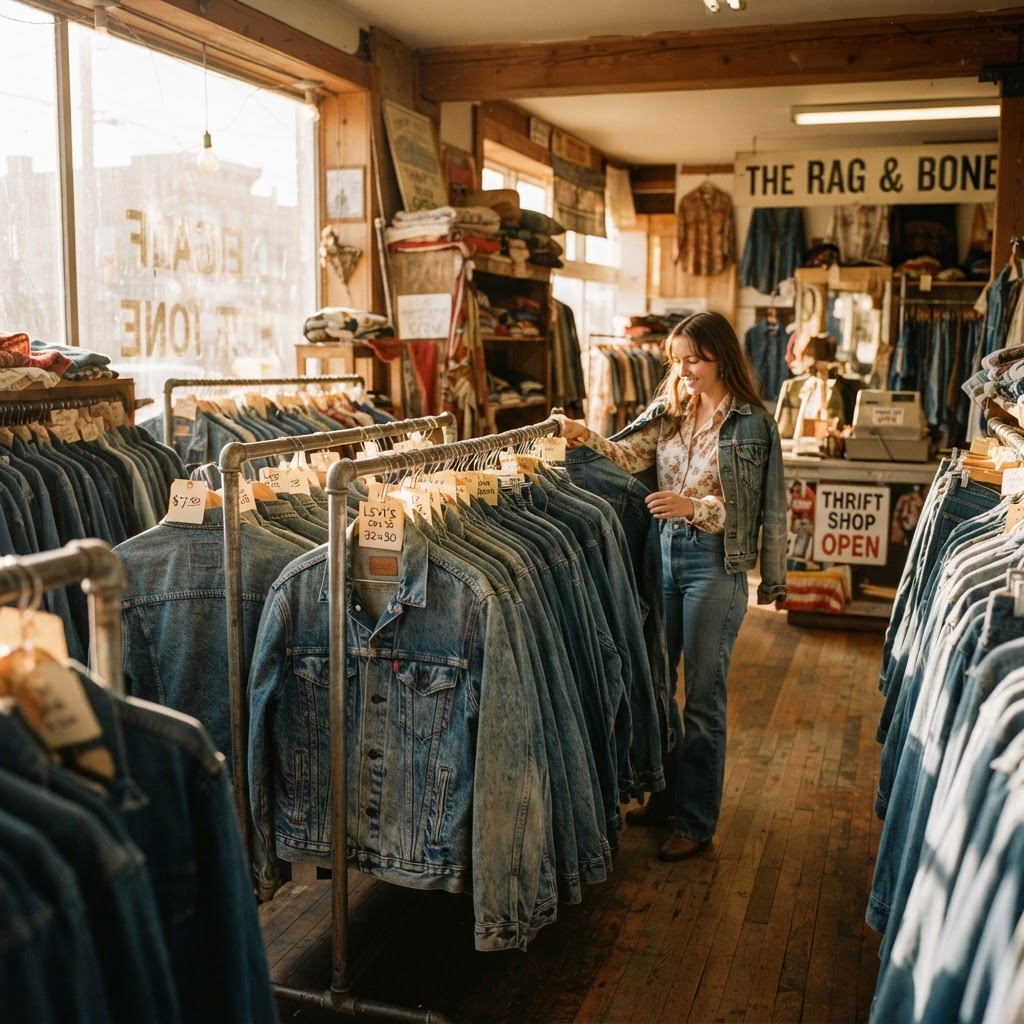
How to Price and Sell Vintage Denim Jackets Online: The Ultimate Guide for Resellers
Vintage denim jackets are among the most sought-after pieces in the secondhand fashion market, commanding prices from $40 to over $500 depending on era, brand, and condition. Whether you're clearing out a thrifted haul or building a serious resale business, knowing how to price and present your denim correctly can mean the difference between a quick sale and a listing that collects digital dust. Here's everything you need to know to sell vintage denim jackets with confidence.
Why Vintage Denim Jackets Are Having a Moment
Denim never really goes out of style — but right now, vintage denim jackets are experiencing a full-blown renaissance. From 1970s Levi's Type III trucker jackets to 1990s oversized grunge-era blanks, buyers across every demographic are hunting for authentic, worn-in pieces that tell a story. The global resale market is projected to reach $350 billion by 2027, and denim consistently ranks among the top-performing categories. If you have vintage denim sitting in your inventory, there has never been a better time to list it.
But pricing vintage denim isn't guesswork — it's a skill. Price too low and you leave serious money on the table. Price too high and you'll stall your turnover. This guide will walk you through the key factors that determine value, how to research comparable sales, and how to write listings that convert browsers into buyers.
Understanding the Decades: Which Era Are You Selling?
The first step to pricing any vintage denim jacket is correctly identifying its decade of origin. Each era has its own aesthetic signatures, collector demand, and price ceiling.
- 1950s–1960s: True rarities. Early Levi's 507XX and Big E labels are grail-level pieces that can fetch $300–$1,000+. Look for selvage denim, single-stitch construction, and redline selvedge on the inseam. These require careful authentication.
- 1970s: The golden era for trucker jackets. Levi's Type III, Lee Storm Rider, and Wrangler 11MJ jackets from this decade are extremely collectible. Expect pricing between $80–$400 depending on condition and customization.
- 1980s: A wide range of styles, from stone-washed acid wash jackets to structured workwear-inspired cuts. Branded pieces from Calvin Klein, Jordache, and Gloria Vanderbilt carry strong nostalgia value. Pricing typically lands between $45–$180.
- 1990s: Currently one of the hottest segments in the market. Oversized silhouettes, distressed finishes, and grunge-era aesthetics drive enormous demand from Millennial and Gen Z buyers. Well-preserved 90s denim jackets regularly sell for $60–$250.
- 2000s: Still emerging as a collectible category, but Y2K denim — think flap pockets, embroidered details, and low-rise proportions — is gaining traction fast. Prices range from $30–$120.
Key Factors That Affect Pricing
Once you've identified the era, evaluate these five core value drivers:
1. Brand
Brand identity is the single biggest pricing lever in vintage denim. Levi's dominates the market, but sub-labels matter enormously — a Levi's Big E (pre-1971) is worth significantly more than a standard red tab from the same silhouette. Other high-value brands include Lee, Wrangler, Carhartt (for workwear crossover appeal), Diesel, and Edwin. Designer denim from Versace, Dolce & Gabbana, and Helmut Lang occupies its own premium tier.
2. Condition
Use a consistent grading system in your listings:
- Excellent / Mint: No visible flaws, retains original hardware and labels.
- Very Good: Minor wash fade, no structural damage.
- Good: Light wear, possible small repairs or fading consistent with age.
- Fair: Visible distress, repairs, or missing hardware — price accordingly and disclose everything.
Buyers will scrutinize photos obsessively, so condition transparency is non-negotiable.
3. Original Hardware and Labels
Intact original buttons, rivets, zippers (look for YKK, Talon, or Scovill markings), and interior care labels all add value. A jacket with a cracked original button replaced by a modern substitute loses collector appeal immediately.
4. Fit and Silhouette
Market demand shifts with fashion cycles. Right now, oversized and boxy fits from the late 80s and 90s are outselling slim cuts from the 2000s. Research current fashion trends before pricing — a jacket's cut can either amplify or suppress its market value by 20–40%.
5. Unique Details and Customization
Original customization — embroidery, patches, hand-painted graphics, or studwork applied during the jacket's era — can dramatically increase value, especially for buyers seeking wearable art. Post-purchase customization by an unknown hand is a trickier sell; disclose it clearly and price conservatively unless the work is exceptional.
How to Research Comparable Sales
Don't price from instinct alone. Use sold listing data to anchor your pricing in reality.
- eBay Sold Listings: Filter by "Sold Items" to see real transaction prices, not just asking prices. This is your most reliable data source for mainstream vintage denim.
- Depop and Poshmark: Useful for gauging Gen Z demand and styling trends, though prices skew slightly lower than eBay.
- 1stDibs and Chairish: Benchmark for premium and designer denim — helpful for understanding ceiling prices on rare pieces.
- Ensemble Marketplace: Browse recently sold pieces on Ensemble to understand how authenticated, curated vintage denim is priced in a trusted environment.
Search for your exact brand, approximate era, and style and look at a sample of 10–15 comparable sold items. Calculate the median — not the average — to avoid outliers skewing your perception.
Writing Listings That Convert
Great pricing means nothing if your listing doesn't inspire confidence. Here's how to write copy that sells:
Lead with the decade and brand: "1970s Levi's Type III Trucker Jacket" tells buyers immediately what they're looking at.
Include all measurements: Chest (pit to pit x2), shoulder width, sleeve length, and body length. Vintage sizing is notoriously inconsistent, and measurements prevent returns.
Describe the denim fabric: Note the weight, wash, and any visible fading patterns. Phrases like "beautiful natural fade" or "even honeycombed wear at elbows" appeal to denim connoisseurs.
Photograph obsessively: Shoot front, back, interior label, all hardware, any flaws, and a flat lay alongside a measuring tape. Natural lighting on a neutral background is the gold standard.
Use era-specific keywords: Buyers search for terms like "Big E," "single stitch," "made in USA," "acid wash," and "grunge era." Incorporate these naturally into your title and description.
Shipping and Packaging Tips
Denim jackets are bulky and heavy, so accurate shipping calculations protect your margins. In the US, most denim jackets fall into the 1.5–3 lb range when packaged. Use a postal scale before listing and build shipping costs into your price if offering free shipping — buyers respond well to free shipping and you can often absorb the cost into a slightly higher list price.
Fold jackets carefully, wrap in tissue paper, and ship in a poly mailer or box depending on the jacket's value. For pieces over $100, always use tracked and insured shipping.
Conclusion: Sell Smarter on Ensemble
Pricing and selling vintage denim jackets successfully comes down to research, transparency, and presentation. When you know your decades, understand your value drivers, and write listings that give buyers the confidence to click "buy," you'll find that the right price isn't just fair — it's magnetic.
If you're ready to reach a community of serious vintage buyers who appreciate authenticity, Ensemble is built for exactly this. As a marketplace dedicated to genuine vintage clothing from the 1920s through the 2010s, Ensemble connects knowledgeable sellers with buyers who understand and respect the value of a great piece of denim history. List your vintage denim jackets on Ensemble today and put your pieces in front of the audience they deserve.