How to Photograph Vintage Clothing for Resale: Lighting and Styling Tips That Sell
A stunning piece of vintage clothing deserves a photograph that does it justice — but snapping a quick shot in dim lighting won't cut it in today's competitive resale market. Whether you're listing a 1940s swing dress or a 1990s windbreaker, the way you photograph your pieces can mean the difference between a quick sale and a listing that lingers. Here's everything you need to know to shoot vintage clothing like a pro.
Selling vintage clothing online is as much about visual storytelling as it is about the garment itself. Buyers can't touch the fabric, check the stitching in person, or try it on before committing — so your photographs have to do all of that work for them. Great product photography builds trust, communicates authenticity, and makes your listings irresistible. Let's break down how to get it right.
Understand the Light: Natural vs. Artificial
Natural light is your best friend when it comes to vintage photography. It renders colors accurately, flatters textures, and gives images a soft, editorial quality that feels right at home with period clothing. The golden rule: shoot near a large window during the golden hour (the first hour after sunrise or before sunset) or on an overcast day, when the light is diffused and even.
Direct sunlight, however, is your enemy. Harsh midday sun creates blown-out highlights and deep shadows that obscure embroidery, beading, or delicate fabric weaves — details that vintage buyers specifically look for. If you're shooting outside, find open shade.
If natural light isn't an option, invest in a continuous LED softbox kit. These mimic the quality of window light and give you consistent results regardless of time of day. Set up two softboxes at 45-degree angles to your subject to eliminate harsh shadows and create a balanced, professional look.
Avoid using your camera's built-in flash at all costs. It flattens garments, washes out color, and can make even the most exquisite 1920s silk blouse look like a thrift store castoff.
Choose the Right Background
Your background should complement the garment, not compete with it. For most vintage pieces, a clean white or off-white backdrop works beautifully — it's neutral, keeps the focus on the clothing, and photographs well under natural or artificial light.
That said, don't be afraid to get creative with era-appropriate styling. A 1970s macramé blouse might sing against a warm terracotta wall. A sleek 1980s power blazer could look incredible against a cool gray seamless paper backdrop. Think about the decade the piece comes from and ask yourself: what environment would this garment have inhabited?
Avoid busy patterns, overly saturated backgrounds, or cluttered rooms. Buyers need to focus on the clothing, not decode the background.
Flat Lay, Hanger, or Human: Which Presentation Works Best?
There are three primary ways to display a garment for resale photography, and each has its strengths.
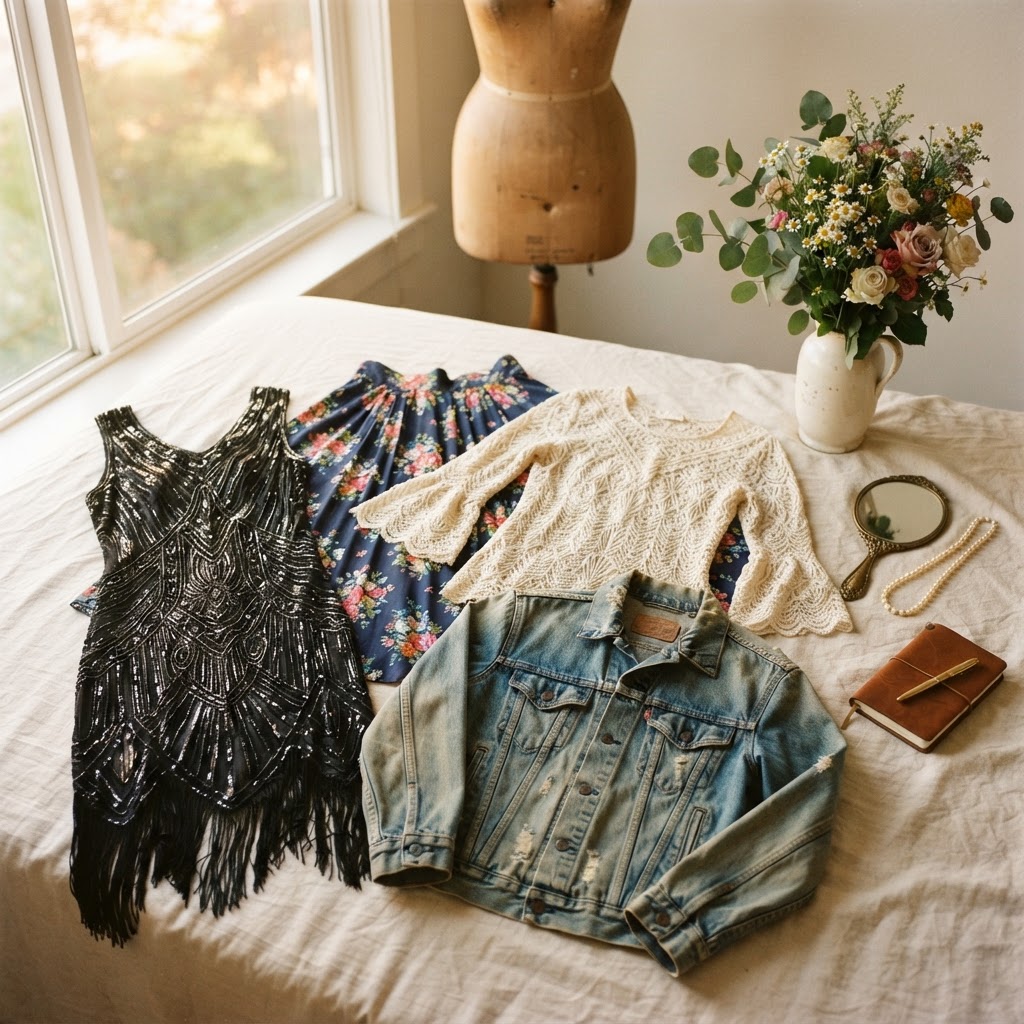
Flat lays are ideal for accessories, knitwear, and structured pieces like denim jackets or graphic tees. Lay the garment on a clean surface, smooth out any wrinkles, and shoot directly overhead. Use a step ladder or position your camera above with a tripod to get a perfectly straight, undistorted shot. Flat lays are clean, easy to execute, and perform well on platforms like Instagram and Pinterest.
Hanger shots are the most common format for online marketplaces and the easiest to replicate consistently. Use a slim, velvet hanger in a neutral color — wire hangers create shoulder distortion and cheap plastic ones look unprofessional. Hang the piece on a hook against your backdrop, smooth the fabric, and shoot at eye level. For structured garments like blazers or coats, consider a dress form or mannequin to better communicate the silhouette.
On-body photography is the gold standard for selling vintage clothing. Seeing a garment worn shows potential buyers exactly how it moves, drapes, and fits. You don't need a professional model — a friend, a family member, or even yourself in front of a mirror can work. Style the full look thoughtfully: pair that 1960s mod shift dress with period-appropriate accessories, or layer a 1990s flannel the way it would have been worn. This kind of lifestyle photography builds emotional connection and dramatically increases conversion rates.
Steaming and Prepping Your Pieces
No amount of good lighting can save a wrinkled garment. Before you photograph anything, steam every piece thoroughly. A handheld garment steamer is an essential tool for any vintage seller — it relaxes fibers gently without the risk of scorching that comes with an iron, and works beautifully on delicate fabrics like silk, rayon, and vintage wool.
Also inspect the garment under bright light before shooting. Spot-clean any visible marks, remove loose threads, and gently reshape collars, cuffs, and lapels. The more polished the garment looks in photos, the more confident buyers will feel about their purchase.
Shooting the Details That Matter
Vintage buyers are detail-obsessed — and for good reason. They want to see the label, the stitching, the hardware, and any unique embellishments that make a piece special. Don't skip the detail shots.
For every listing, include:
- A full-length front shot
- A full-length back shot
- A close-up of the label or maker's mark
- Detail shots of buttons, zippers, embroidery, prints, or any noteworthy features
- Photos of any flaws, wear, or repairs — transparency builds buyer trust
Switch your camera or phone to macro mode for close-up shots to ensure sharp, in-focus detail images. If you're using a smartphone, tap the screen where you want the camera to focus before shooting.
Color Accuracy: Getting It Right in Camera and in Editing
One of the most common complaints in vintage resale is receiving a garment that looks nothing like the photos. Color accuracy is non-negotiable. To nail it:
- Shoot in natural or balanced white light
- Set your camera's white balance manually to match your light source
- If editing, use a color calibration card in one shot to correct your edits across a batch
When editing, keep it minimal. Adjust exposure, contrast, and white balance as needed, but resist the urge to over-saturate or apply heavy filters. Apps like Lightroom Mobile (free) offer professional-grade editing tools and are more than sufficient for marketplace photography.
Telling the Decade's Story Through Styling
One of the greatest advantages of selling vintage over fast fashion is the narrative. Every piece carries history, and your photos can hint at that story without saying a word.
For a 1920s beaded flapper dress, photograph it draped over a velvet chair with a string of pearls nearby — evoke the Jazz Age without overdoing it. A 1950s circle skirt looks magical photographed mid-twirl in a sunlit backyard. A 1980s oversized blazer practically demands a power pose against a graphic geometric backdrop.
Styling doesn't require a full wardrobe of props. A single well-chosen accessory, a thoughtful background, or a confident pose can transport a buyer to the era and make them feel the romance of the piece.
Conclusion: Photograph with Intention, Sell with Confidence
Great vintage photography isn't about having expensive equipment — it's about intention, preparation, and an eye for detail. With good light, a clean backdrop, a steamed garment, and a few well-composed shots, you can create listings that stop scrollers in their tracks and convert browsers into buyers.
At Ensemble, we believe that every vintage piece deserves to be seen in its best light — literally. Whether you're a seasoned seller or just getting started, taking the time to photograph your pieces thoughtfully is one of the most powerful investments you can make in your shop. Browse our marketplace, get inspired by how our top sellers present their pieces, and start building listings that tell the full, beautiful story of the clothing you love.