How to Photograph Vintage Clothing for Resale: Lighting and Styling Tips That Sell
A stunning photograph is the difference between a scroll-past and a sale. Whether you're listing a 1940s swing dress or a 1990s denim jacket, the right lighting and styling can make your vintage pieces irresistible to buyers. Here's everything you need to know to shoot vintage clothing like a pro—no expensive studio required.
Selling vintage clothing online is part curation, part storytelling, and a whole lot of photography. Buyers can't touch the fabric, check the drape in a mirror, or hold the piece up to the light—so your photos have to do all of that work for them. The good news? You don't need a professional camera or a rented studio to create images that convert browsers into buyers. You need good light, thoughtful styling, and a few tricks that seasoned resellers swear by.
Understanding Light: Your Most Powerful Tool
Of all the variables in clothing photography, light is the single most important element. It determines color accuracy, texture visibility, and the overall mood of your image.
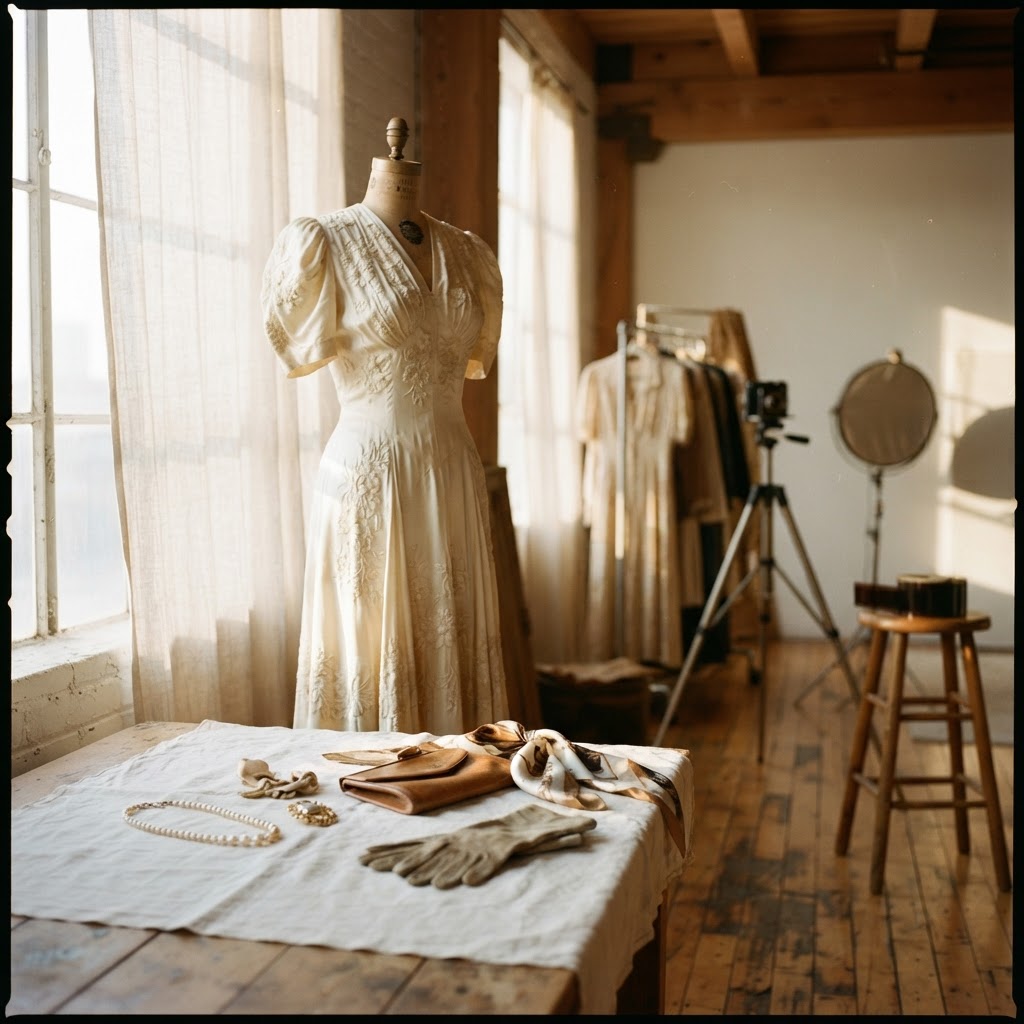
Natural light is your best friend and it costs nothing. Position your shooting area near a large north- or east-facing window, which provides soft, consistent light without the harsh shadows created by direct sunlight. Overcast days are actually ideal—clouds act as a giant diffuser, wrapping your subject in even, flattering light that renders colors faithfully and reveals fabric texture beautifully.
Avoid shooting in direct midday sun. It bleaches color, creates blown-out highlights, and hides the delicate details—a hand-stitched hem, a beaded collar, a faded graphic—that make vintage pieces valuable. If you must shoot in bright sunlight, hang a sheer white curtain or tape white tissue paper over the window to diffuse the harshness.
Artificial lighting can work well if you invest in the right tools. A pair of softbox LED lights placed at 45-degree angles on either side of your subject creates the classic "clamshell" lighting setup used in professional apparel photography. LED panels are preferable to incandescent bulbs because they produce consistent, daylight-balanced color (look for bulbs rated at 5500K) that won't cast a yellow or green tint over your carefully sourced garments.
Always avoid mixing light sources—a window on one side and a warm lamp on the other will leave you with mismatched shadows and skewed colors that no amount of editing can fully fix.
Choosing Your Background
The background is a supporting character—it should complement your clothing without stealing attention from it. A clean, neutral background is almost always the right choice for resale photography. Matte white, warm cream, or light gray work for most eras and aesthetics. Avoid glossy surfaces that create glare.
For pieces with strong historical character—a 1920s beaded flapper dress, a 1970s boho maxi skirt—a contextual background can add atmosphere and help tell the garment's story. A weathered wooden floor, a vintage velvet sofa, or a garden wall can elevate your listing from "item for sale" to "piece of history." Just make sure the background never visually competes with the garment.
Keep a consistent backdrop style across your shop listings. Visual consistency builds brand trust and makes your Ensemble storefront look professional and curated rather than haphazard.
Flat Lay vs. On-Body vs. Hanger Shots
Each presentation method has its strengths, and the best resellers use more than one per listing.
Flat lay photography is popular because it's controlled, easy to set up, and works well for folded knitwear, accessories, and pieces with graphic prints. Lay the garment on your chosen surface, smooth out every wrinkle, and shoot directly overhead using a stepladder or mounting your phone to a tripod pointed downward. Symmetry matters here—take time to arrange sleeves and hems intentionally.
On-body photography is the gold standard for resale because it shows buyers how a piece actually fits and moves. You don't need a professional model. Ask a friend to help, or use a dress form that approximates real body proportions. If you're photographing on yourself, a self-timer and a few test shots go a long way. Shoot from multiple angles: front, back, three-quarter turn, and a close-up of any notable details.
Hanger shots are practical for high-volume sellers. Use a clean, slim wooden or velvet hanger—never a wire one—and hang the piece against your backdrop. A hanger shot won't have the drama of an on-body photo, but it's better than nothing and works well as a secondary image in a multi-photo listing.
Styling Tips by Era
The decade a piece comes from should subtly inform how you present it. A little era-appropriate styling goes a long way in helping buyers connect emotionally with a garment.
- 1920s–1940s pieces: Keep styling minimal and elegant. Let the craftsmanship speak. Use accessories sparingly—perhaps a pair of white gloves or a simple strand of pearls placed beside the garment in a flat lay.
- 1950s–1960s pieces: Full skirts benefit from crinoline underneath to show their intended silhouette. Bright, optimistic colors from this era pop against white or pastel backgrounds.
- 1970s pieces: Earthy tones and flowing silhouettes work beautifully in outdoor or textured-background shots. Natural props like dried flowers or woven baskets reinforce the era's bohemian spirit.
- 1980s–1990s pieces: Lean into contrast and boldness. High-saturation backgrounds or urban settings can complement the graphic energy of 80s and 90s fashion. Don't be afraid of attitude in your styling.
- 2000s–2010s pieces: These are close enough to the present that buyers want clean, contemporary presentation. Minimalist backgrounds and sharp, well-lit detail shots work best.
Detail Shots: Sell the Story
Never underestimate the power of a well-composed detail shot. Close-up photography builds buyer confidence and reduces return rates because shoppers know exactly what they're getting.
For every listing, photograph:
- The label—brand, size, and country of manufacture tell buyers a lot about age and authenticity
- Any wear, fading, or damage—honesty builds trust and protects your seller reputation
- Special features—beading, embroidery, unusual buttons, lining fabric, and hardware deserve their own frame
- The fabric texture—a macro shot of velvet, wool, or silk helps buyers assess quality
A detailed listing with eight to ten photos will always outperform one with two or three, no matter how beautiful those two photos are.
Editing: Enhance, Don't Deceive
Light editing is your friend; heavy filtering is your enemy. The goal of post-processing is to make the image look like the garment looks in person under good light—not better, not worse.
Adjust exposure to brighten underlit shots, correct white balance to render true colors, and increase clarity or texture slightly to bring out fabric detail. Apps like Lightroom Mobile, Snapseed, and VSCO offer precise controls for free or low cost. Avoid Instagram-style filters that shift color temperature or add artificial grain—they mislead buyers and lead to disappointed customers.
If your background has gone slightly gray or uneven, a gentle boost to the whites and highlights will clean it up without altering the garment's color.
A Final Word
Great photography is one of the most valuable investments you can make as a vintage reseller. It signals care, expertise, and respect for the pieces you've worked hard to find—and it signals the same things to your buyers.
At Ensemble, we believe every vintage garment carries a history worth honoring. Our marketplace connects buyers and sellers who understand that fashion from the 1920s through the 2010s isn't just clothing—it's culture, craft, and memory. When you photograph your pieces with intention and skill, you're not just making a sale. You're passing a story along to someone who will love it as much as you do. List your pieces on Ensemble today and let your photography do the talking.