How to Care for and Preserve Vintage Clothing at Home: A Complete Guide
Vintage clothing carries decades of history in every seam and stitch — but without the right care, those irreplaceable pieces can fade, fray, or fall apart. Whether you've just unboxed a 1940s silk blouse or a 1980s leather jacket, knowing how to properly store and clean your finds is essential. This guide will walk you through everything you need to keep your vintage wardrobe looking beautiful for years to come.
How to Care for and Preserve Vintage Clothing at Home
Vintage clothing is more than fashion — it's a wearable archive of craftsmanship, culture, and personal history. But unlike modern garments engineered for easy-care living, pieces from the 1920s through the early 2000s were made with materials, dyes, and construction methods that demand a little extra attention. The good news? With the right habits, you can preserve your collection at home without a professional conservator on speed dial.
Understand What You're Working With
Before you wash, hang, or store a single piece, you need to identify the fabric. Fiber content determines everything — how a garment reacts to water, heat, light, and even the air around it.
- Natural fibers like silk, wool, cotton, and linen were dominant from the 1920s through the 1950s. They breathe beautifully but can shrink, yellow, or become brittle with improper care.
- Early synthetics such as rayon and acetate appeared widely in the 1930s and 1940s. These are notoriously delicate — rayon can shrink dramatically when wet, and acetate dissolves in acetone-based products (including some nail polish removers).
- Nylon, polyester, and blends became common from the 1950s onward and are generally more durable, though they can retain odors and attract static.
- Specialty materials like beaded fabrics, velvet, lace, and leather each require unique handling.
Always check for a care label — but remember, garments made before the mid-1970s in the United States were not required by law to include them. When in doubt, treat the item as though it were the most delicate thing you own.
Cleaning Vintage Clothing the Right Way
The cardinal rule of vintage care: when in doubt, do less. Over-cleaning is one of the fastest ways to degrade a vintage piece.
Spot Cleaning First
For minor stains or freshening up between wears, spot cleaning is your best friend. Use a clean white cloth dampened with cold water, or a gentle solution of water and a drop of mild, pH-neutral soap. Always test on an inconspicuous area — an interior seam or hem — before treating a visible spot. Blot, never rub.
Hand Washing
For items that can tolerate moisture, hand washing in cold water is far safer than machine washing. Use a detergent specifically formulated for delicates, such as Woolite or a soap designed for silk. Submerge the garment gently, swish it softly, and never wring or twist. Roll it in a clean towel to remove excess water, then reshape and lay flat to dry.
Avoid hand washing beaded pieces, structured garments, anything with metallic thread, or items with glued embellishments. The stress and moisture can cause beads to fall off, interfere with boning or padding, and dissolve adhesives.
Dry Cleaning — Use Sparingly
Dry cleaning solvents can be harsh on aged fibers and may accelerate deterioration over time. Reserve professional dry cleaning for heavily soiled items, structured tailoring, or fabrics like velvet and heavily embellished pieces that cannot be safely wet-cleaned. When you do go this route, seek out a dry cleaner with experience in vintage or couture garments.
Dealing with Odors
Musty smells are common in vintage finds. Before reaching for a spray bottle, try airing the garment outside in indirect sunlight for a few hours — UV light naturally neutralizes some odors without the risk of chemical damage. For persistent smells, placing the folded garment in a sealed bag with baking soda or activated charcoal sachets (not touching the fabric directly) can work wonders over a few days.
Drying and Pressing Vintage Pieces
Never put vintage clothing in a dryer. The heat and tumbling action are catastrophic for aged fibers and construction. Always air dry, either flat on a clean towel or hung carefully on a padded hanger — never a wire hanger, which can distort shoulders and rust.
When pressing, use the lowest heat setting appropriate for the fabric. Place a pressing cloth (a thin cotton muslin works perfectly) between the iron and the garment to prevent scorching or flattening delicate textures. For velvet, steam from the reverse side or use a velvet board to avoid crushing the pile. Avoid pressing directly over any embellishments, beading, or printed designs.
Storing Your Vintage Collection
Proper storage is arguably more important than cleaning. Many garments survive decades in excellent condition simply because they were stored well.
Choose the Right Environment
Light, humidity, and temperature are the enemies of vintage textiles. Store your pieces in a cool, dry, dark space — a climate-controlled closet is ideal. Avoid attics (too hot), basements (too damp), and exterior walls (too much temperature fluctuation).
Keep items away from direct sunlight. Even brief, repeated exposure will fade dyes and weaken fibers over time. If your closet has a window, keep garments covered.
Hanging vs. Folding
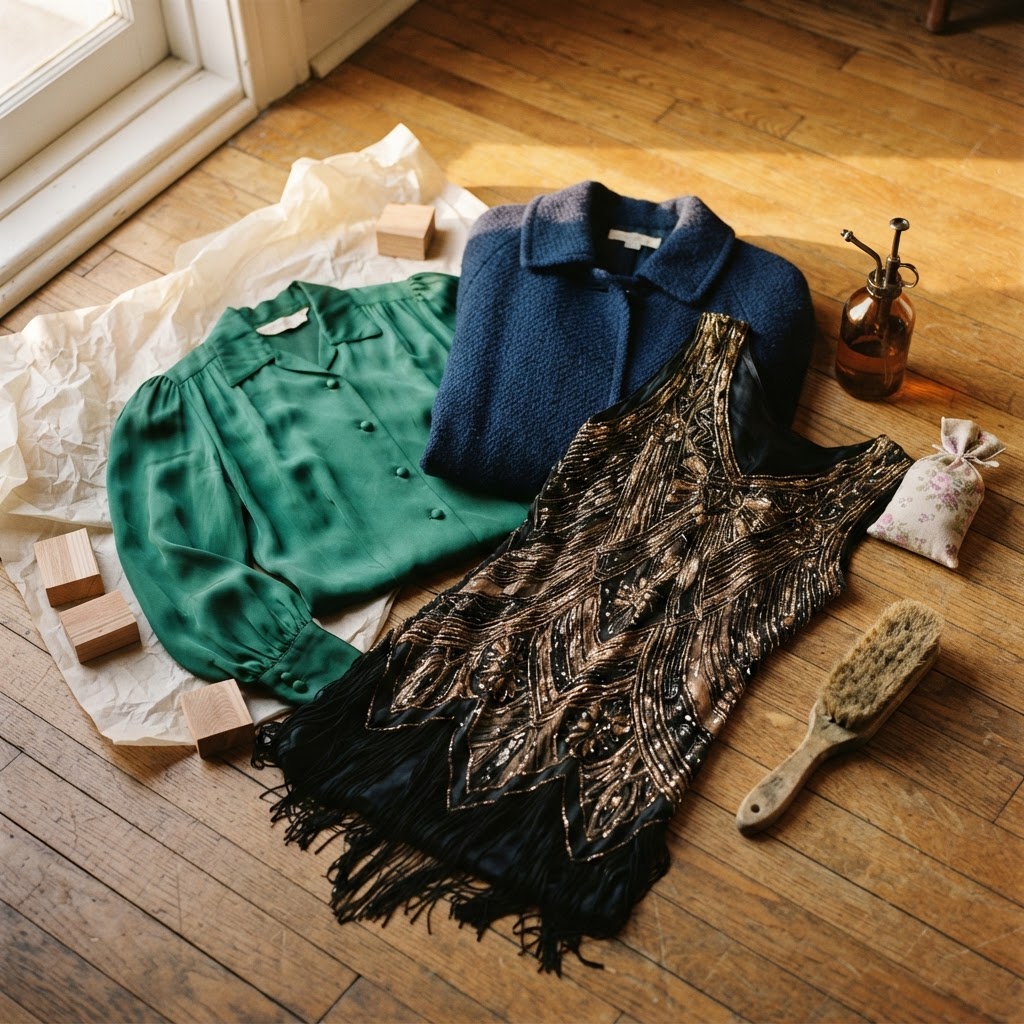
Not everything should be hung. Heavy items — beaded gowns, wool coats, heavily structured jackets — can stretch, distort, or tear at the shoulders under their own weight over time. These are better folded and stored flat, ideally with acid-free tissue paper layered between folds to prevent crease lines from becoming permanent.
Lighter items like cotton blouses or polyester dresses can be hung, but always use padded or wide wooden hangers to distribute weight evenly. Avoid plastic bags from the dry cleaner — they trap moisture and off-gas chemicals. Instead, use breathable cotton garment bags or old cotton pillowcases.
Protecting Against Pests
Moths and silverfish are the silent destroyers of vintage wardrobes. Cedar blocks and lavender sachets are gentler, safer alternatives to mothballs (which contain naphthalene or paradichlorobenzene — both harmful to humans and potentially damaging to certain dyes). Replace cedar blocks annually by lightly sanding the surface to reactivate the scent.
Always clean garments before storing them for any extended period. Insects are attracted to body oils, food residue, and perspiration — a clean garment is far less appealing.
Long-Term Storage for Precious Pieces
For your most treasured items — a 1930s bias-cut gown, a hand-embroidered 1950s cocktail dress — consider museum-quality storage practices. Acid-free boxes and tissue paper are available from archival suppliers and make a significant difference in preventing yellowing and fiber degradation. Re-fold stored items every year or two to prevent permanent crease damage.
Wearing Vintage Responsibly
Preservation doesn't mean keeping pieces locked away forever — vintage clothes were made to be worn. A few simple habits protect garments during wear:
- Apply perfume, hairspray, and deodorant before dressing, and allow them to dry completely. Alcohol and aluminum compounds in these products can stain and degrade fabric.
- Use dress shields or underarm liners in delicate items to protect against perspiration.
- Be mindful of jewelry that may snag — rhinestone brooches and delicate lace are not always compatible.
- Air garments out after wearing before returning them to storage.
Conclusion
Caring for vintage clothing is an act of respect — for the makers who crafted these pieces, the wearers who treasured them, and the story each garment carries. With a little knowledge and consistent habits, you can maintain your collection in remarkable condition for decades to come.
At Ensemble, we believe every vintage piece deserves a second life and a caretaker who appreciates it. When you shop with us, you're not just buying clothing — you're becoming the next chapter in a garment's history. Browse our curated marketplace of authenticated vintage pieces from the 1920s through the 2010s, and wear your history well.