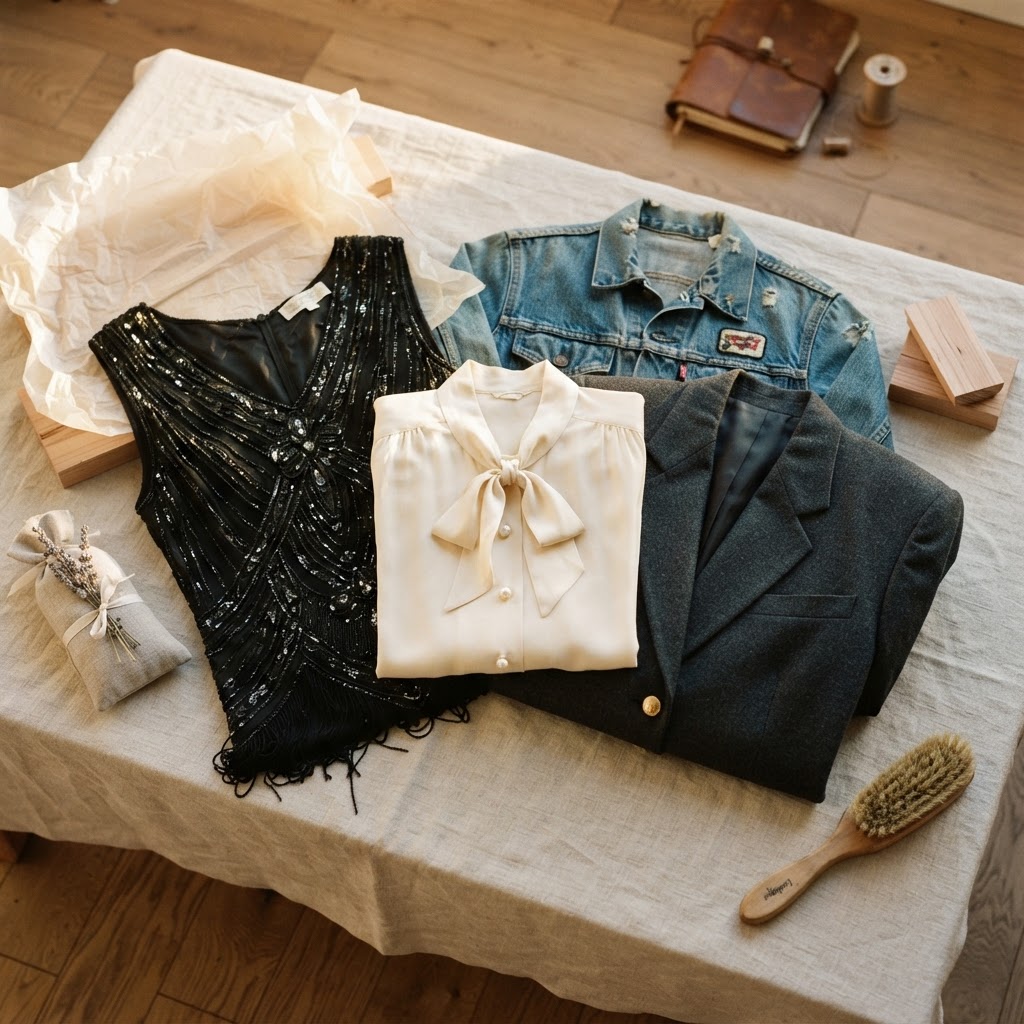
How to Care for and Preserve Vintage Clothing at Home: A Complete Guide
Vintage clothing carries decades of history in every seam and stitch — but without the right care, those irreplaceable pieces can fade, fray, or fall apart. Whether you've just scored a 1940s silk blouse or a 1980s power blazer, knowing how to properly clean and store your finds is essential. Here's everything you need to know to keep your vintage wardrobe looking its best for years to come.
Vintage clothing is more than fashion — it's wearable history. A beaded 1920s flapper dress, a perfectly tailored 1960s mod coat, or a hand-stitched 1970s denim jacket each tell a story that simply can't be replicated by modern manufacturing. But these storied garments require a level of care that goes well beyond tossing them in the washing machine. The good news? With a few simple habits and the right supplies, you can preserve your vintage pieces at home like a seasoned conservator.
Understand What You Have Before You Do Anything
Before cleaning or storing any vintage piece, take a moment to identify the fabric and era. Garments from the 1920s through the 1950s were often made from natural fibers like silk, wool, cotton, and rayon — all of which are more delicate and react poorly to harsh chemicals or heat. Pieces from the 1960s onward may include synthetic blends like polyester and nylon, which are generally more durable but can still be damaged by high temperatures.
Always check for a care label first. Garments made before 1971 in the United States won't have one, as standardized care labels weren't required until that year. For unlabeled pieces, err on the side of caution and treat the item as if it were the most delicate fabric you can identify.
Look for any existing damage — loose seams, fragile beading, rust stains from old metal zippers, or areas of fabric weakness — before attempting to clean. Agitating a weakened garment can cause irreversible tears.
The Golden Rule: When in Doubt, Hand Wash or Spot Clean
For most vintage pieces, hand washing in cool water with a gentle, pH-neutral detergent is the safest cleaning method. Fill a clean basin with cool water, add a small amount of detergent formulated for delicates, and gently submerge the garment. Avoid wringing, twisting, or scrubbing. Instead, softly swish the fabric through the water, then rinse thoroughly.
For particularly fragile items — heavily beaded gowns, silk charmeuse from the 1930s, or anything with metallic thread — spot cleaning is often the wiser choice. Use a clean white cloth dampened with cool water and a tiny drop of gentle soap, and dab (never rub) at stains.
Never machine wash vintage items unless they are post-1990s with a clear machine-wash label. The agitation cycle can destroy delicate fibers, snap threads, and distort original shapes in a matter of minutes.
Drying Vintage Clothing the Right Way
Heat is the enemy of vintage fabric. Never put vintage clothing in the dryer, regardless of how sturdy it seems. High heat weakens fibers, causes shrinkage, and can permanently set stains that might otherwise have come out.
After hand washing, gently press — don't wring — excess water from the garment by rolling it in a clean dry towel. Then lay the piece flat on a fresh dry towel or a mesh drying rack away from direct sunlight. Flat drying prevents stretching and distortion, especially important for knits, bias-cut gowns, and heavy wool pieces.
For items that must be hung to dry, use a padded hanger and make sure the garment is fully supported to avoid shoulder dimples or stress on seams.
Ironing and Steaming: Proceed with Caution
Many vintage fabrics respond beautifully to careful pressing, but the wrong temperature can scorch, melt, or permanently mark a garment. Always iron on the lowest setting appropriate for the fabric and use a pressing cloth — a thin piece of cotton muslin placed between the iron and the garment — to protect the surface.
Steaming is often the gentler, safer alternative to ironing. A handheld garment steamer can relax wrinkles from silk, rayon, and wool without direct contact. Hold the steamer a few inches from the fabric and allow the steam to do the work. Avoid over-saturating delicate beaded or embroidered sections.
Never iron directly over sequins, beading, plastic buttons, or synthetic trims, as heat can melt or warp these embellishments instantly.
Smart Storage: Protecting Your Collection Long-Term
How you store your vintage clothing may matter even more than how you clean it. Improper storage is responsible for much of the damage seen in vintage pieces — yellowing, creasing, mold, and insect damage among them.
Avoid plastic garment bags at all costs. Plastic traps moisture and releases gases that accelerate fabric deterioration and cause yellowing, especially in white or ivory pieces. Instead, use breathable cotton garment bags or wrap delicate items in acid-free tissue paper.
For folded items, place acid-free tissue paper between folds to prevent permanent creasing. Refold stored items periodically — every few months — to shift the stress points and prevent fabric from breaking down along fold lines.
Temperature and humidity control are crucial. Store vintage clothing in a cool, dry, and dark environment. Avoid attics and basements, which are prone to humidity extremes and temperature fluctuations. A climate-controlled closet or bedroom is ideal.
Use cedar blocks or lavender sachets rather than mothballs to deter insects. Mothballs contain naphthalene or paradichlorobenzene — both of which are harsh chemicals that can damage fabric fibers and leave lingering odors that are nearly impossible to remove.
For extremely fragile or valuable pieces, consider flat storage in archival boxes lined with acid-free tissue. Hang only items sturdy enough to support their own weight, and always use wide, padded hangers to distribute weight evenly and maintain shoulder shape.
Dealing with Common Vintage Clothing Problems
Yellowing: White and ivory fabrics from the mid-20th century often yellow over time due to oxidation. Soaking in a solution of oxygen-based whitener (not chlorine bleach) and cool water can help lift yellowing from sturdy cotton. For silk or rayon, consult a professional textile conservator.
Musty odors: Air the garment outdoors in indirect sunlight for several hours. If the odor persists, place the folded item in a sealed bag with baking soda or activated charcoal for 24–48 hours. Avoid spraying perfume directly on vintage fabric, as the alcohol content can stain and break down fibers.
Minor repairs: Small loose seams or missing buttons can often be repaired at home with careful hand-stitching using thread that matches the original. For significant repairs — especially on beaded, embroidered, or structured garments — seek out a tailor or textile conservator with vintage experience.
Rust stains: Old metal zippers and closures can leave rust stains on surrounding fabric. A paste of lemon juice and salt, left on the stain briefly before rinsing in cool water, can lift light rust from cotton. For more delicate fabrics, a commercial rust remover formulated for textiles is safer.
Wearing Vintage Without Wrecking It
Preservation doesn't mean your vintage pieces have to live in a box. Part of the joy of vintage fashion is wearing it. Just be mindful: apply perfume, hairspray, and deodorant before dressing, and allow them to fully dry before putting on vintage clothing. Body oils and cosmetics are among the most common causes of fabric degradation.
For special occasion pieces from the 1920s or 1930s, consider wearing a thin cotton or silk underlayer to minimize direct contact between the vintage fabric and your skin. And after wearing, always air garments out before returning them to storage — never store clothing that hasn't been freshened.
Conclusion: Love Your Vintage, Make It Last
Caring for vintage clothing is an act of respect — for the craft, the history, and the future wearers who might one day treasure the same pieces you love today. With the right knowledge and a gentle touch, even the most delicate vintage finds can be enjoyed for decades to come.
At Ensemble, we believe every vintage piece deserves a second life — and a third, and a fourth. When you shop our curated marketplace of authentic clothing from the 1920s through the 2010s, you're not just building a wardrobe. You're becoming a steward of fashion history. Browse our latest arrivals and find your next treasured piece today.