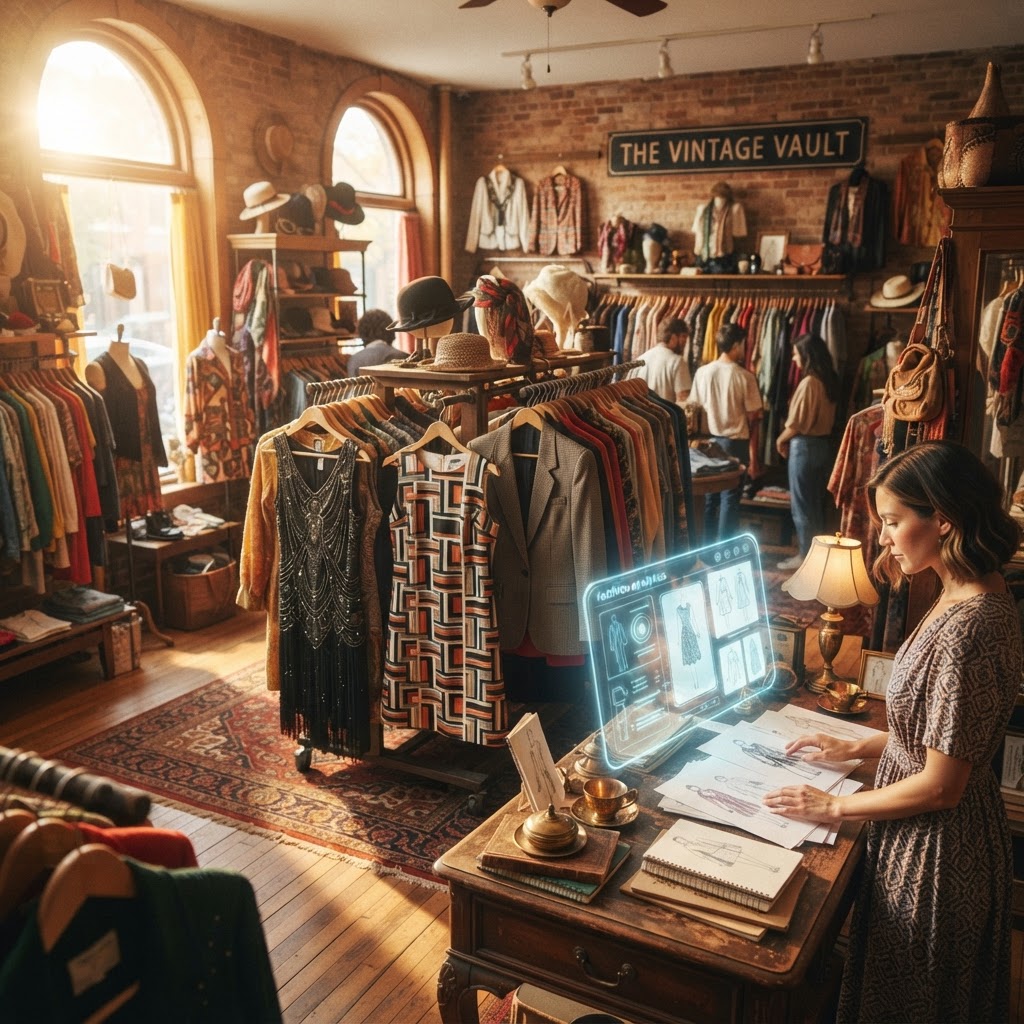
How AI Is Revolutionizing the Way People Buy and Sell Vintage Clothing
Artificial intelligence is quietly transforming the vintage fashion world, making it easier than ever to price, photograph, and market your one-of-a-kind pieces. Whether you're a seasoned seller or just cleaning out your grandmother's closet, AI tools are leveling the playing field. Here's what every vintage seller needs to know right now.
The Vintage Market Is Booming — And AI Is Fueling the Fire
The global secondhand clothing market is projected to reach $350 billion by 2027, and vintage fashion sits at the glamorous heart of that growth. Shoppers are hungry for authenticity — a 1960s mod shift dress, a 1980s power blazer, a hand-beaded 1920s flapper gown. But sourcing, pricing, and selling vintage has always been a time-consuming art that required deep knowledge and a good eye. Enter artificial intelligence, which is rapidly changing every step of the process for sellers and buyers alike.
From smart pricing tools to AI-powered photography, the technology is not replacing the human love of vintage — it's amplifying it.
AI-Powered Pricing: No More Guesswork
One of the biggest challenges for vintage sellers has always been accurate pricing. Price too high, and your gorgeous 1970s Halston-inspired wrap dress sits unsold for months. Price too low, and you're leaving real money on the table. Historically, sellers relied on hours of manual research — scrolling through sold listings, consulting price guides, and leaning on hard-won experience.
Today, AI pricing tools can analyze thousands of comparable sold listings in seconds, factoring in condition, brand, era, fabric, and current demand trends. Platforms and third-party apps now use machine learning models trained on millions of transactions to suggest price ranges with remarkable accuracy. For sellers, this means faster listing times and more confident pricing decisions.
Pro tip: Even when using AI pricing suggestions, always layer in your own expertise. AI tools are excellent at spotting market averages, but they may not fully account for a rare designer label or an exceptionally pristine piece that deserves a premium.
Smarter Photography and Visual Search
A beautiful photograph has always been the difference between a quick sale and a listing that languishes. AI photo enhancement tools — many of them free or low-cost — can now automatically adjust lighting, remove cluttered backgrounds, and even suggest the most flattering angles for a garment. Apps like remove.bg and built-in tools in major selling platforms use computer vision to help sellers present their pieces professionally without expensive studio setups.
But the real game-changer is visual search technology. Buyers can now upload a photo of a vintage piece they spotted in an old film or on a mood board, and AI will scour marketplace listings to find the closest matches. For sellers, this means that well-photographed, accurately described listings are more discoverable than ever before. The algorithm rewards detail and quality.
To take advantage of this, photograph your pieces on a neutral background with natural light, and include multiple angles — front, back, labels, and any notable details like embroidery or hardware. AI search tools will index all of it.
Writing Listings That Convert: AI as Your Copywriter
Let's be honest — writing compelling listing descriptions for dozens of pieces every week is exhausting. Generative AI tools like ChatGPT, Claude, and built-in marketplace assistants can now help sellers draft engaging, keyword-rich descriptions in seconds. Feed the tool a few details about your piece — decade, fabric, condition, measurements, any notable features — and it will return polished copy ready to publish.
This is particularly useful for sellers who may know their inventory well but struggle with the written word, or for those scaling their shops to handle large volumes. A well-written description that includes relevant SEO keywords (think: "1950s full circle skirt," "vintage deadstock," "1980s does 1940s") will rank higher in both marketplace search and Google results.
Remember, though, to always review and personalize AI-generated copy. Add your authentic voice, double-check measurements and condition notes, and make sure the description truly reflects the piece. Authenticity resonates with vintage buyers, who are a discerning bunch.
Trend Forecasting and Inventory Decisions
Savvy vintage sellers have always had an instinct for what's about to trend. But AI trend forecasting tools are now giving sellers a data-driven edge. By analyzing social media activity, runway reports, celebrity styling, and search volume patterns, these tools can predict which eras and styles are about to have a cultural moment.
Right now, for example, AI trend tools are flagging rising interest in early 2000s Y2K aesthetics, 1990s minimalism, and a renewed appreciation for 1930s and 1940s bias-cut silhouettes. For sellers hitting estate sales, thrift stores, and flea markets, this kind of intelligence can inform smarter sourcing decisions — prioritizing pieces that align with where buyer appetite is heading.
Some larger resale platforms are beginning to surface these insights directly within their seller dashboards, but independent sellers can also use tools like Google Trends, Pinterest Predicts, and emerging fashion-specific AI platforms to stay ahead of the curve.
Authentication and Condition Assessment
For high-value vintage pieces, authentication is everything. A genuine 1960s Pucci print commands a very different price than a later reproduction. AI is beginning to make meaningful inroads here, too. Some platforms are developing computer vision models trained to identify authentic vintage labels, stitching patterns, zipper hardware styles, and fabric weaves that correspond to specific eras and manufacturers.
While AI authentication is still an emerging field — and no substitute for a human expert when significant money is on the line — these tools are increasingly useful for a first-pass assessment. They can flag potential inconsistencies and prompt sellers to look more closely before listing a piece as a particular era or designer.
For buyers, this technology is building trust in online vintage shopping, which has historically suffered from concerns about misrepresentation. Greater trust means a more active market — good news for every seller.
The Human Element Remains Irreplaceable
For all its power, AI cannot replicate the thrill of discovering a perfect 1940s wool swing coat at a Sunday flea market, or the intuitive knowledge that a particular piece will resonate with your specific community of buyers. Curation, storytelling, and personal style expertise remain the soul of great vintage selling.
The sellers who will thrive in this AI-augmented landscape are those who use technology to handle the repetitive and analytical work — pricing research, copywriting, photography cleanup — while investing their human energy in the parts that matter most: sourcing exceptional pieces, building authentic relationships with buyers, and sharing the rich history behind every garment.
Vintage fashion is, at its core, about connection — to the past, to craftsmanship, to a slower and more intentional way of consuming. AI is a powerful tool in service of that mission, not a replacement for it.
Conclusion: Embrace the Tools, Stay True to the Craft
The intersection of artificial intelligence and vintage fashion is not something to fear — it's an opportunity to work smarter, reach more buyers, and build a more sustainable and profitable shop. From pricing confidence to discoverability to trend intelligence, the sellers who lean into these tools thoughtfully will have a meaningful edge.
At Ensemble, we're committed to supporting sellers at every stage of their journey — whether you're listing your first piece or scaling a serious vintage business. Our marketplace is built for authentic clothing from the 1920s through the 2010s, and we're continually exploring how emerging technologies can help our seller community grow. Start applying these AI strategies to your listings today, and watch the difference it makes in your shop's performance.