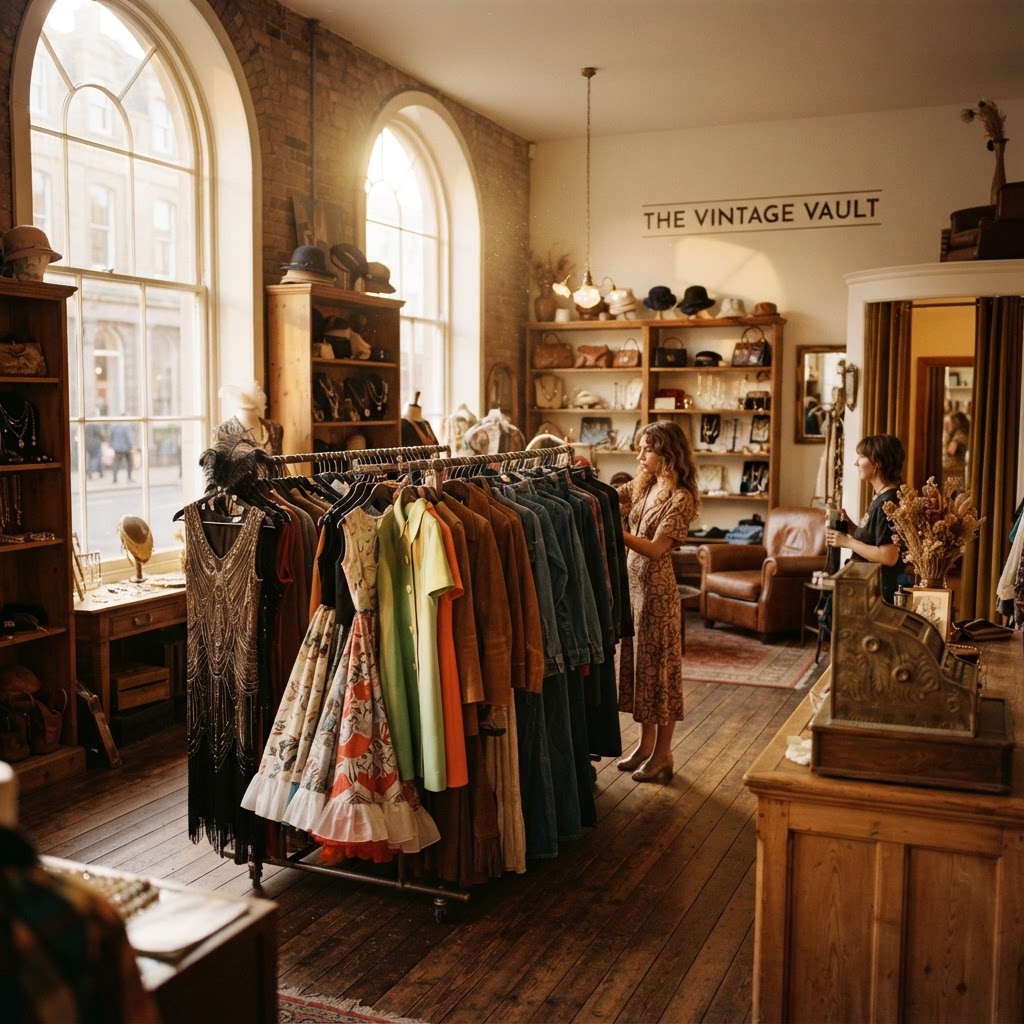
From Thrift Stores to Digital Runways: How Vintage Fashion Marketplaces Are Rewriting the Rules of Style
The vintage fashion market has exploded from a niche hobby into a multi-billion-dollar industry, and a new wave of curated online marketplaces is leading the charge. But not all platforms are created equal — and discerning shoppers are starting to notice the difference. Here's why the rise of vintage fashion marketplaces matters, and what sets Ensemble apart from the crowd.
The Vintage Boom: By the Numbers
If you've been paying attention to the fashion world over the past decade, you already know that vintage clothing is no longer an underground pursuit. According to ThredUp's 2023 Resale Report, the secondhand apparel market is projected to reach $350 billion globally by 2027, growing three times faster than the broader retail clothing sector. What was once the domain of Saturday-morning thrift store hunters and eccentric collectors has become a mainstream obsession — and the digital marketplace revolution is largely responsible for that transformation.
Platforms like Depop, Poshmark, and eBay opened the floodgates, making it possible for anyone with a smartphone to buy or sell pre-owned clothes. But as the market matured, so did the expectations of buyers. Shoppers began demanding more than just availability — they wanted authenticity, curation, and expertise. That demand gave rise to a new generation of specialized vintage marketplaces, and it's changing everything.
Why Vintage? The Cultural Forces Driving the Trend
The surge in vintage fashion isn't happening in a vacuum. Several converging cultural and economic forces are fueling the movement.
Sustainability concerns are at the top of the list. Fast fashion's environmental toll — the water waste, carbon emissions, and textile pollution — has become impossible to ignore for younger consumers. Buying vintage is one of the most direct ways to opt out of that system. Every pre-owned piece that finds a new home is one fewer garment sent to a landfill.
Then there's the anti-algorithm aesthetic. In an era where social media feeds are saturated with the same trending looks worn by the same influencers, many shoppers are actively seeking clothing that tells a different story. A 1970s suede jacket or a 1990s slip dress carries with it a history, a texture, a uniqueness that no fast-fashion drop can replicate.
Economic pressure also plays a role. With the cost of living squeezing discretionary budgets, vintage shopping offers a compelling value proposition: high-quality construction from eras when garments were built to last, often at prices well below comparable new items.
Finally, there's the undeniable power of nostalgia. Gen Z's fascination with Y2K aesthetics, millennials revisiting the grunge era, and a broader cultural appetite for the past have all conspired to make vintage not just acceptable, but aspirational.
The Problem with the Current Marketplace Landscape
Despite the explosive growth, the vintage marketplace space has a serious problem: quality control and trust.
General resale platforms were never built with vintage in mind. Their search functions, listing formats, and seller verification systems were designed for selling used iPhones and last season's sneakers — not authenticating a 1940s silk charmeuse blouse or verifying the provenance of a 1960s mod shift dress. The result is a chaotic landscape where misrepresented items, inaccurate dating, and outright fakes are commonplace.
Buyers have learned this the hard way. The thrill of finding a "genuine 1950s circle skirt" online too often dissolves upon arrival when the item turns out to be a 2005 reproduction, poorly photographed and inaccurately described. For serious collectors and style-conscious shoppers alike, this erosion of trust is a fundamental barrier to engagement.
Curation is the other missing ingredient. General platforms dump millions of listings into undifferentiated pools, leaving buyers to wade through mountains of mediocrity to find genuine treasures. The discovery experience — once one of the great joys of vintage shopping — becomes exhausting rather than exhilarating.
The Rise of the Curated Vintage Marketplace
In response to these frustrations, a new category of curated vintage marketplace has emerged. These platforms distinguish themselves by applying editorial judgment, authentication standards, and deep category expertise to every listing. They are, in effect, bringing the experience of the best vintage boutique — knowledgeable staff, carefully selected inventory, a coherent aesthetic vision — into the digital space.
The curated model benefits everyone in the transaction. Sellers gain access to buyers who are specifically seeking authenticated vintage pieces and who are willing to pay fair prices for quality. Buyers gain confidence that what they're purchasing is exactly what it claims to be, from the decade it claims to be from, in the condition accurately described.
This shift mirrors what happened in adjacent markets. Fine art, rare books, and antique furniture all went through a similar maturation: initial chaos on early internet platforms, followed by the emergence of specialized, trust-based marketplaces that elevated the entire category. Vintage fashion is now experiencing that same inflection point.
Decade Matters: Why Era-Specific Expertise Is Everything
One of the most underappreciated aspects of vintage fashion is just how technically specific accurate dating and authentication can be. The difference between a genuine 1920s beaded flapper dress and a 1970s disco-era reproduction of the same silhouette lies in details that require real expertise to identify — zipper types, fabric compositions, label typography, construction techniques, and seam finishing methods all evolved dramatically decade by decade.
A platform that spans the 1920s through the 2010s isn't just covering nine decades of fashion history — it's covering nine distinct technological and cultural eras of garment construction. Metal zippers weren't standard until the 1930s. Synthetic fabrics proliferated in the 1950s and 60s. Union labels changed their formatting multiple times across the mid-century decades. Care labels weren't federally mandated in the United States until 1971. Each of these details is a dating clue — and knowing how to read them separates genuine expertise from guesswork.
This is why marketplace expertise isn't a luxury; it's the entire foundation upon which trust is built.
What the Future of Vintage Commerce Looks Like
The trajectory is clear: specialization, authentication, and storytelling will define the next chapter of vintage fashion commerce. Shoppers are increasingly willing to pay a premium not just for a garment, but for the confidence that comes with knowing exactly what they're buying and the narrative context that makes the piece meaningful.
Technology will play a growing role — AI-assisted authentication tools, better image recognition for fabric and label analysis, and richer provenance documentation are all on the horizon. But technology is only as good as the human expertise behind it. The most successful platforms will be those that combine deep historical knowledge with thoughtful digital experiences.
Social features will also matter more. The vintage community is passionate and knowledgeable, and the best marketplace experiences will find ways to harness that collective expertise — through seller profiles that communicate genuine specialization, buyer communities organized around era or aesthetic, and editorial content that educates and inspires.
Why Ensemble Is Built for This Moment
Ensemble was conceived precisely for this inflection point in the market. By focusing exclusively on authenticated vintage clothing from the 1920s through the 2010s, Ensemble brings a depth of era-specific expertise that general resale platforms simply cannot replicate. Every piece in the marketplace has been evaluated against decade-appropriate authentication criteria — not just "vintage" as a vague catch-all, but rigorously dated and accurately represented.
But Ensemble isn't just about verification. It's about celebrating the story that each garment carries. A 1930s bias-cut evening gown isn't just a dress; it's a document of Depression-era glamour and Hollywood escapism. A 1980s power suit isn't just tailoring; it's a artifact of a seismic shift in women's professional identity. Ensemble treats these pieces with the historical reverence they deserve, giving buyers the context to truly appreciate what they're acquiring.
In a marketplace landscape crowded with noise, Ensemble offers something increasingly rare: clarity, confidence, and curatorial vision. For the growing community of shoppers who believe that the best fashion already exists — it just needs to be found — Ensemble is where the search begins and ends.