From Thrift Stores to Digital Runways: How Vintage Fashion Marketplaces Are Reshaping the Way We Shop
The secondhand clothing market is booming, and vintage fashion marketplaces are leading the charge — transforming how we discover, authenticate, and celebrate fashion from decades past. But not all platforms are created equal. Here's what's driving the trend, and why Ensemble is setting a new standard for vintage lovers everywhere.
The Secondhand Revolution Is Here to Stay
For decades, buying vintage clothing meant digging through dusty racks at weekend flea markets, crossing your fingers at estate sales, or navigating the chaotic aisles of your local thrift store. It was a labor of love — and frankly, it still is. But something seismic has shifted in the fashion world over the past ten years. Secondhand and vintage fashion has moved from the margins to the mainstream, and a new generation of digital marketplaces has made it easier than ever to find that perfect 1970s suede jacket or a pristine 1990s slip dress without leaving your couch.
According to a 2023 report by ThredUp, the global secondhand market is projected to reach $350 billion by 2027, nearly doubling in size within just a few years. Consumers — particularly Millennials and Gen Z — are driving this surge, motivated by a potent combination of sustainability concerns, a hunger for individuality, and a deep nostalgia for the aesthetics of eras they may never have lived through firsthand. Vintage isn't just shopping anymore. It's a lifestyle, a statement, and increasingly, an investment.
What Sparked the Vintage Marketplace Boom
The rise of platforms like Depop, Poshmark, Vestiaire Collective, and Etsy's vintage category throughout the 2010s democratized access to secondhand fashion in an unprecedented way. Suddenly, a seller in Manchester could connect with a buyer in Montreal over a single deadstock 1980s windbreaker. The friction that once made vintage shopping inaccessible — geography, time, expertise — began to dissolve.
But it wasn't just convenience that fueled the boom. Social media played an enormous role. TikTok's #ThriftFlip videos racked up billions of views. Instagram aesthetics built around cottagecore, Y2K revival, and old money style sent buyers racing to find authentic pieces rather than fast-fashion imitations. When influencers started showcasing their vintage hauls alongside designer pieces without apology, the cultural signal was clear: wearing the past had never felt more current.
The pandemic also acted as an unexpected accelerant. Locked-down consumers cleaned out their closets, launched selling accounts, and discovered the meditative pleasure of scrolling through decades of fashion history online. Vintage marketplaces saw record traffic, and many first-time buyers became devoted enthusiasts.
The Problem with Going Mainstream
Of course, rapid growth comes with growing pains. As vintage fashion exploded in popularity, so did the challenges facing buyers and sellers alike. Authenticity became a pressing concern — the more valuable vintage pieces became, the more incentive there was to mislabel, misdate, or outright counterfeit them. A "genuine 1960s mod dress" listed on a general marketplace might turn out to be a 1990s reproduction, or worse, a brand-new garment artificially distressed to look old.
Beyond authenticity, curation emerged as a major pain point. General platforms quickly became overwhelming. Finding a truly exceptional piece — say, an authentic 1940s silk evening gown or a deadstock 1985 college sweatshirt in mint condition — meant sifting through mountains of mediocre or misdated listings. The treasure-hunt thrill that makes vintage shopping magical was getting buried under sheer volume and inconsistent quality.
There was also the question of community and context. Vintage fashion isn't just about owning old clothes. It's about understanding the cultural moment a garment came from, knowing how it was worn, appreciating the craftsmanship that set one era's construction apart from another. Most mainstream platforms offered little of this. A listing was a photo, a price, and a brief description — stripped of the story that gives vintage its soul.
A New Kind of Marketplace Emerges
In response to these shortcomings, a new wave of specialized vintage marketplaces began to emerge — platforms built not just for resale, but for the celebration and preservation of fashion history. These platforms understood that their users weren't simply bargain hunters. They were collectors, historians, stylists, and storytellers.
The best of these new platforms share several defining characteristics:
Rigorous authentication processes. Rather than relying solely on seller self-reporting, specialist platforms employ knowledgeable authenticators — people who know their union labels from their care label timelines, who can spot a repro at a glance and date a zipper style to a specific decade.
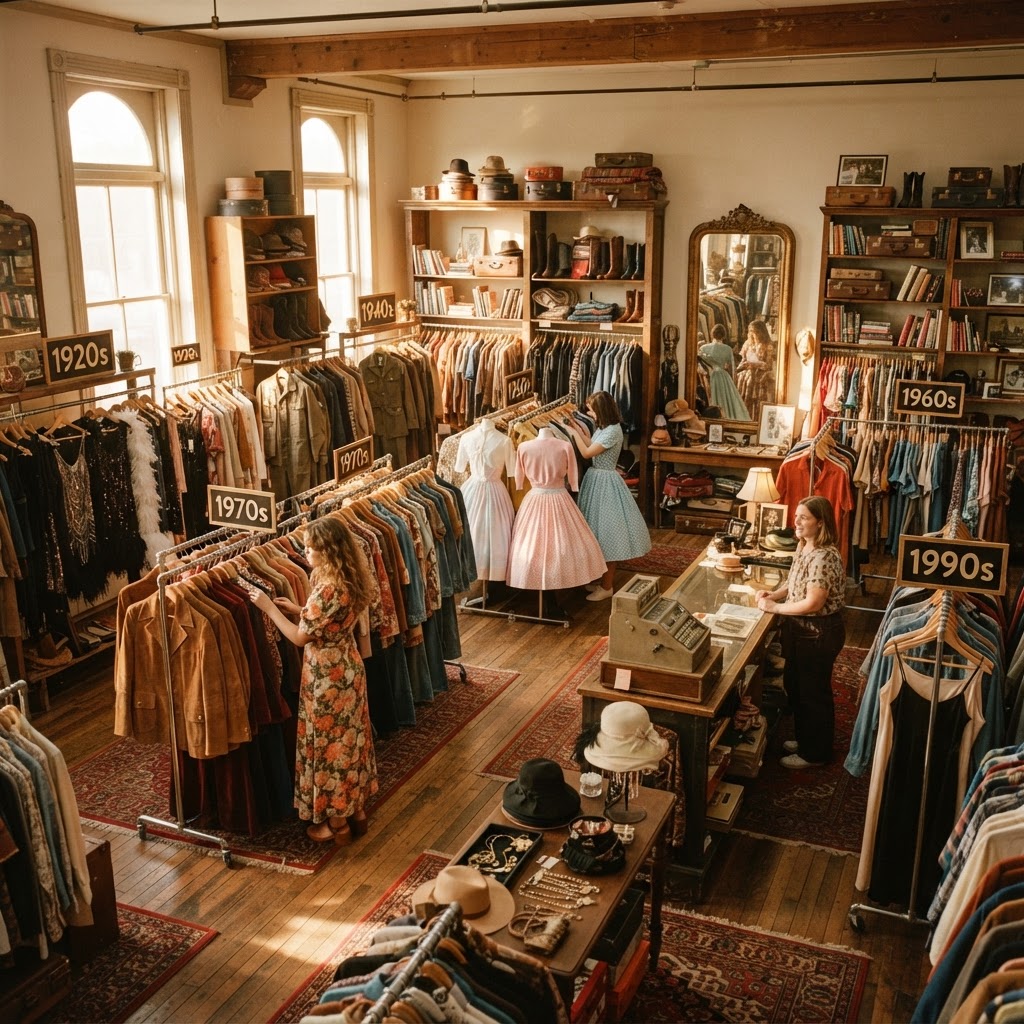
Decade-specific organization. Browsing by era rather than just by category allows shoppers to immerse themselves in a specific aesthetic world. A customer hunting for 1950s circle skirts doesn't want to wade through 1990s denim — and a well-designed specialist platform knows this.
Editorial content and community. The finest vintage marketplaces function as living archives, publishing guides on how to identify authentic pieces, spotlights on the designers and subcultures that defined each era, and styling inspiration that bridges past and present.
Seller accountability and expertise. Rather than opening the doors to anyone with a camera phone and a pile of clothes, thoughtful platforms vet their sellers, prioritizing those with genuine expertise and a commitment to accurate, honest listings.
What Makes Ensemble Different
This is precisely the philosophy at the heart of Ensemble. Covering authentic pieces from the 1920s through the 2010s, Ensemble was built on the conviction that every garment has a story worth telling — and that shoppers deserve both the beauty of the piece and the integrity of its history.
Unlike catch-all resale platforms, Ensemble's entire experience is organized around decade and era, making it effortless to dive deep into the aesthetic world you love most. Whether you're drawn to the fluid bias-cut gowns of the 1930s, the bold geometric prints of the 1960s, the maximalist glamour of the 1980s, or the minimalist grunge of the 1990s, Ensemble surfaces the right pieces without the noise.
Authentication isn't an afterthought at Ensemble — it's a founding principle. Every listed piece goes through a detailed review process informed by deep knowledge of fashion history: construction techniques, fabric compositions, label evolution, hardware details, and more. When you buy a 1970s piece on Ensemble, you can trust that it genuinely belongs to that era.
Ensemble also believes that context transforms commerce. Alongside its marketplace, the platform publishes rich editorial content — trend reports, decade deep-dives, care guides for delicate vintage textiles, and interviews with collectors and stylists who live and breathe fashion history. Shopping on Ensemble isn't a transaction. It's an education.
And the seller community? Carefully cultivated. Ensemble works with dealers, collectors, and enthusiasts who share a commitment to accuracy, quality, and the kind of detailed, loving descriptions that help a buyer truly understand what they're considering. It's a marketplace built on trust and shared passion, not just turnover.
The Future of Vintage Fashion
As sustainability continues to reshape consumer values and the backlash against fast fashion deepens, vintage will only grow more significant — culturally, economically, and ethically. Every vintage purchase is an act of circular fashion, extending the life of a garment and reducing the demand for new production. For eco-conscious shoppers, vintage isn't just stylish. It's responsible.
But the future of vintage shopping belongs to platforms that treat it with the reverence it deserves. As the market matures, shoppers will increasingly gravitate toward spaces that prioritize authenticity over volume, curation over chaos, and community over convenience alone.
Conclusion
The rise of vintage fashion marketplaces is one of the most exciting stories in retail today — a convergence of sustainability, nostalgia, creativity, and community that shows no signs of slowing down. But within this booming landscape, what matters most is not who is biggest, but who is most trusted, most knowledgeable, and most devoted to the craft of connecting people with the right piece of fashion history.
That's the promise Ensemble makes every day. Whether you're hunting for a beaded flapper dress from the Jazz Age or a perfectly faded band tee from the early 2000s, Ensemble is the place where fashion history lives — authenticated, curated, and ready to begin its next chapter with you.