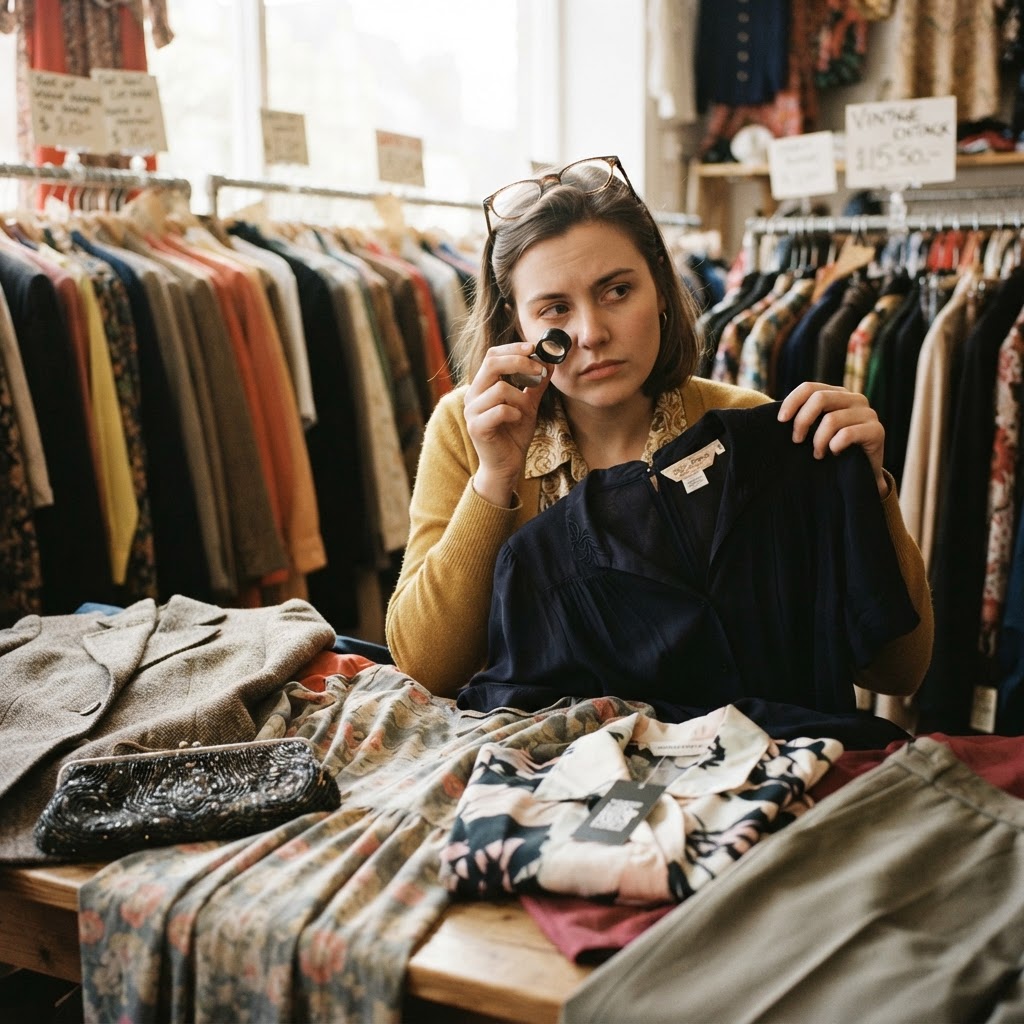
From Thrift Store Treasure Hunts to Digital Boutiques: The Rise of Vintage Fashion Marketplaces (And Why Ensemble Is Changing the Game)
Vintage fashion has evolved from a niche hobby into a global movement, with millions of shoppers turning away from fast fashion in favor of clothing that tells a real story. Online marketplaces have turbocharged this shift — but not all platforms are created equal. Here's how the vintage resale world got to where it is today, and what makes Ensemble a fundamentally different kind of destination.
The Vintage Revolution: How We Got Here
Not long ago, finding a genuine 1970s suede fringe jacket or a perfectly preserved 1950s swing dress meant dedicating your Saturday to dusty thrift store racks, estate sales, and the occasional lucky flea market score. The thrill was real, but so was the effort. Vintage fashion lived on the fringes — beloved by stylists, costume designers, and a passionate subculture of collectors, but largely invisible to mainstream shoppers.
Then the internet changed everything.
Through the early 2000s, eBay quietly became the world's first major vintage fashion marketplace, connecting sellers in small towns with buyers across the globe. It was clunky and inconsistent, but it proved a powerful concept: the digital marketplace could democratize access to rare, one-of-a-kind clothing. If you knew what you were looking for, you could find it — from anywhere.
By the 2010s, dedicated platforms like Etsy, Depop, Poshmark, and ThredUp began carving out spaces for secondhand and vintage clothing. Each had its own flavor. Etsy catered to handmade and truly vintage items. Depop attracted Gen Z sellers with a social-media sensibility. Poshmark built a community around closet cleanouts. ThredUp industrialized resale at scale. The vintage market was booming, and shoppers had more options than ever.
Why Vintage Fashion Went Mainstream
Several converging forces pushed vintage clothing from subculture to mainstream phenomenon over the past decade.
Sustainability concerns have reshaped how younger consumers think about their wardrobes. With fast fashion under intense scrutiny for its environmental impact — from water consumption to textile waste — buying secondhand became not just stylish, but ethical. Wearing vintage is, by definition, an act of circular fashion: no new resources consumed, no new waste generated.
Cultural nostalgia plays an equally powerful role. Each decade carries its own aesthetic mythology. The louche glamour of 1970s disco, the power-shouldered ambition of 1980s boardroom fashion, the grunge-inflected nonchalance of 1990s streetwear — these eras feel simultaneously distant and urgently relevant. Fashion has always cannibalised its own history, but social media accelerated the cycle dramatically. A single viral TikTok can resurrect an entire decade's aesthetic overnight.
The death of the trend cycle — or at least its fragmentation — has also fueled vintage's rise. When microtrends come and go within weeks, many shoppers are opting out entirely, building personal style vocabularies rooted in pieces with genuine history. A 1960s mod shift dress or a 1940s wool overcoat doesn't go out of style because it was never chasing a trend in the first place.
Finally, the pandemic reshuffled priorities. Stuck at home, millions of people rediscovered the joy of deep dives — into sourdough, into gardening, into building a considered vintage wardrobe. Online vintage sales surged. The market, already growing, accelerated sharply.
The Problem with Most Vintage Marketplaces
For all their growth, mainstream resale platforms have developed serious structural problems that frustrate serious vintage buyers.
Authenticity is a persistent headache. Platforms that allow anyone to list anything create fertile ground for misdescription, whether intentional or not. A 1990s-inspired blouse made in 2019 gets tagged