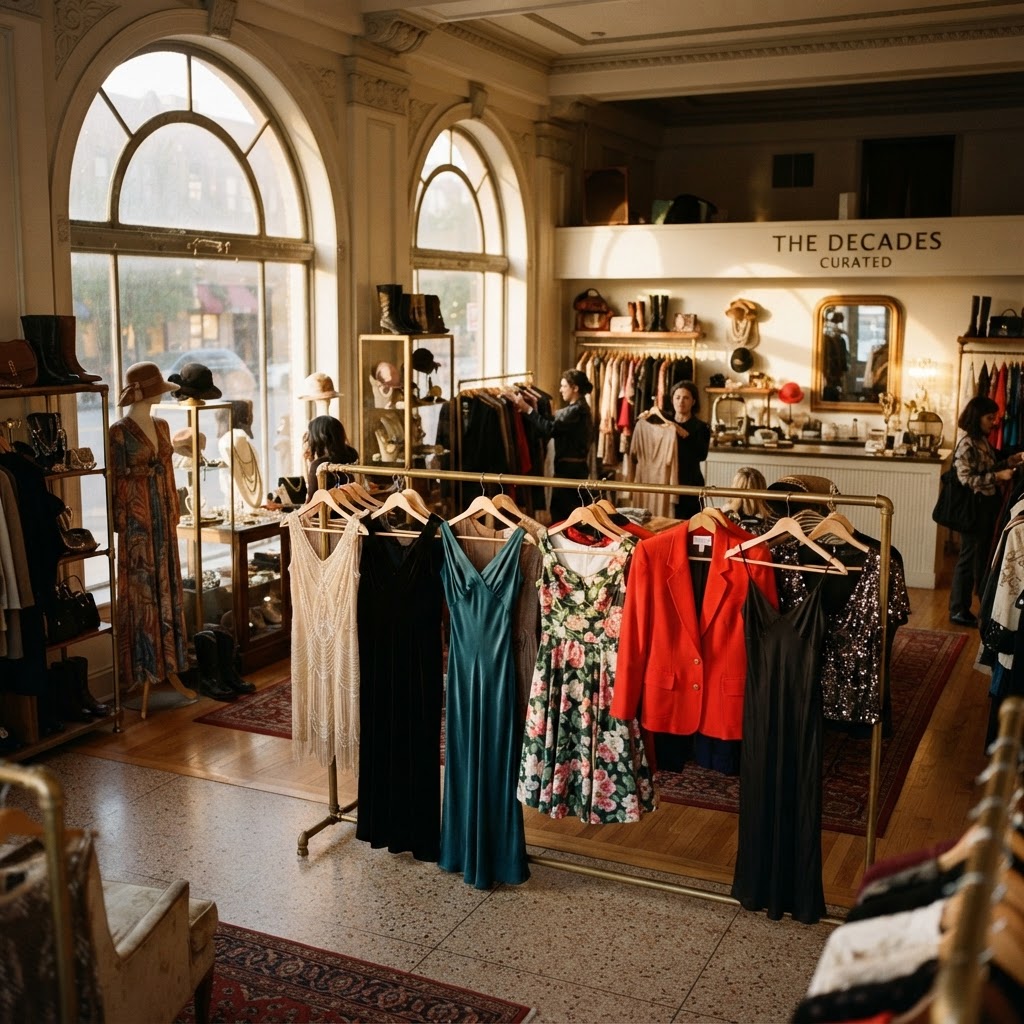
From Thrift Store to Time Machine: How Vintage Fashion Marketplaces Are Reshaping the Way We Dress
Vintage fashion has exploded from a niche hobby into a global cultural movement — and the marketplaces powering that shift are evolving fast. But not all platforms are created equal. Here's why a new generation of curated vintage destinations like Ensemble is changing everything.
The Vintage Revolution Is Here
Something remarkable has happened over the past decade. The dusty, fluorescent-lit thrift store — once the near-exclusive domain of budget shoppers and dedicated fashion obsessives — has given way to a booming, billion-dollar industry that spans continents, generations, and aesthetics. Vintage fashion is no longer a subculture. It's a movement.
According to a 2023 report by ThredUp, the global secondhand apparel market is projected to reach $350 billion by 2027. Platforms like Depop, Poshmark, and eBay helped ignite the initial spark, giving everyday people the ability to sell and discover pre-owned clothing at scale. But as the market has matured, so have the expectations of the buyers and sellers within it. Authenticity, curation, and historical integrity have become the new currency of vintage fashion — and a new class of specialized marketplaces is rising to meet that demand.
How We Got Here: A Brief History of Secondhand Style
To understand where vintage marketplaces are going, it helps to understand where they came from. Secondhand clothing has existed in some form for centuries — from medieval rag-and-bone men to Depression-era swap meets. But the modern vintage market as we know it began to take shape in the 1960s and 70s, when countercultural movements embraced old clothing as a form of anti-establishment self-expression. Wearing a 1940s swing coat or a 1950s circle skirt wasn't just thrifty — it was a statement.
By the 1990s, vintage had entered the mainstream. Grunge kids raided Salvation Army bins for flannel. Hip-hop artists elevated the aesthetic of decades past. Fashion designers like Marc Jacobs and Anna Sui openly referenced vintage silhouettes on the runway. Vintage wasn't just nostalgic — it was aspirational.
Then the internet arrived and changed everything. eBay, launched in 1995, was arguably the first major digital vintage marketplace, allowing collectors to bid on rare pieces from across the world. What had once required knowing the right dealer, attending the right flea market, or living in the right city was suddenly democratized. The gatekeepers began to fall.
The Explosion of Online Vintage Marketplaces
The 2010s brought a true proliferation of peer-to-peer vintage platforms. Etsy carved out a space for handmade and vintage goods with a crafty, community-driven feel. Depop attracted a younger, more fashion-forward crowd with its Instagram-like interface. Vestiaire Collective and The RealReal focused on luxury pre-owned goods, bringing authentication and white-glove service to designer resale.
Each of these platforms solved a real problem. They reduced friction, expanded access, and introduced millions of new buyers to the pleasures of secondhand shopping. But they also introduced new challenges. When anyone can list anything, the signal-to-noise ratio becomes overwhelming. How do you find a genuinely authentic 1960s mod shift dress among thousands of listings that simply describe something as "vintage vibes"? How do you know that the "1970s leather jacket" you're buying wasn't actually made in 2019 with deliberate distressing?
Authenticity became the great unsolved problem of the vintage internet.
The Curation Gap — and Why It Matters
For serious vintage enthusiasts, the lack of curation and historical accuracy on mainstream platforms isn't just annoying — it's a fundamental flaw. Vintage fashion is, at its heart, a form of material history. Each garment carries within it the manufacturing techniques, fabric innovations, design sensibilities, and cultural attitudes of its era. A 1930s bias-cut silk gown tells a story about the Depression era's simultaneous austerity and escapism. A 1980s power suit speaks volumes about women's entry into corporate America. These aren't just clothes — they're artifacts.
When a platform conflates genuinely historic garments with fast-fashion knockoffs dressed up in nostalgic language, it doesn't just mislead buyers. It erodes the cultural value of vintage itself. It collapses a century of fashion history into a single aesthetic blur labeled "retro."
This is the gap that a new generation of specialized vintage marketplaces is working to close. These platforms prioritize deep knowledge over volume, historical accuracy over trending aesthetics, and genuine community over algorithmic growth hacking.
What Serious Vintage Shoppers Actually Want
Talk to dedicated vintage collectors — the ones who can date a zipper by its teeth, identify a fabric by its weave, or spot a reproduction from across a room — and several themes emerge consistently.
First, they want verified era accuracy. Not "inspired by the 70s" but "manufactured between 1972 and 1976, confirmed by label and construction details." The difference matters enormously both for cultural appreciation and for long-term value.
Second, they want detailed provenance where possible. Where did this piece come from? What can be known about its history? Even partial information — a department store label, a monogram, a tailor's mark — transforms a garment from an object into a story.
Third, they want a community of expertise. The best vintage shopping has always been social — the knowledgeable dealer who teaches you what to look for, the fellow collector who alerts you to a rare find. Online platforms that replicate this sense of shared expertise and mutual education are worth their weight in gold.
Finally, they want range with integrity. The vintage world spans nearly a century of style, from the geometric elegance of the 1920s Art Deco period through the maximalist excess of the 1980s, the grunge-inflected minimalism of the 1990s, and the Y2K eclecticism of the early 2000s. A truly great vintage marketplace honors the full breadth of that timeline rather than cherry-picking whatever decade happens to be trending on social media this season.
The Sustainability Dimension
No conversation about the rise of vintage fashion is complete without addressing sustainability. The fashion industry is one of the world's most polluting, responsible for approximately 10% of global carbon emissions and enormous amounts of textile waste annually. Against this backdrop, buying vintage isn't just an aesthetic choice — it's an ethical one.
Every vintage garment purchased is one fewer garment manufactured. Every piece given a second (or third, or fourth) life keeps textile waste out of landfills. The circular fashion economy that vintage marketplaces represent is increasingly recognized not as a niche concern but as a critical component of a more sustainable future for the entire industry.
This is part of why younger consumers — Gen Z in particular — have embraced vintage shopping with such enthusiasm. For a generation that has grown up acutely aware of the environmental costs of fast fashion, vintage offers a way to express individuality, engage with fashion history, and consume more consciously all at once.
Why Ensemble Is Different
All of which brings us to what makes Ensemble a genuinely different kind of vintage marketplace.
Ensemble was built on a simple but powerful premise: that every decade from the 1920s through the 2010s produced fashion worth celebrating, preserving, and wearing — and that buyers and sellers deserve a platform that treats those garments with the historical seriousness they deserve. Where other platforms cast the widest possible net, Ensemble casts a more intentional one, prioritizing authenticity verification, decade-accurate cataloguing, and a community of knowledgeable enthusiasts over raw listing volume.
On Ensemble, a 1940s day dress is listed as a 1940s day dress — with the construction details, label information, and historical context to back that claim up. A 1990s archive piece from a recognizable designer is presented with the same care and reverence that piece would receive in a museum archive. Sellers are held to genuine standards of accuracy. Buyers can shop with confidence.
But Ensemble isn't just about rigor — it's about joy. The platform is designed to reflect the genuine delight of vintage fashion discovery: the thrill of finding a perfect 1960s mod coat in your size, the satisfaction of building a collection that tells a coherent story across decades, the pleasure of connecting with other people who share your obsession.
Conclusion: Dressing for History
Vintage fashion has always been about more than clothing. It's about connection — to the past, to craftsmanship, to the people who wore these garments before us and the moments those garments witnessed. The rise of vintage marketplaces has made that connection more accessible than ever before. But accessibility without integrity is just noise.
The best vintage marketplaces understand that they are, in a very real sense, custodians of history. The platforms that will endure — and that will truly serve the vintage community — are those that hold that responsibility seriously.
Ensemble was built for exactly that purpose. Whether you're a lifelong collector or just beginning to explore the rich, endlessly fascinating world of vintage fashion, it's a place where history is worn well.