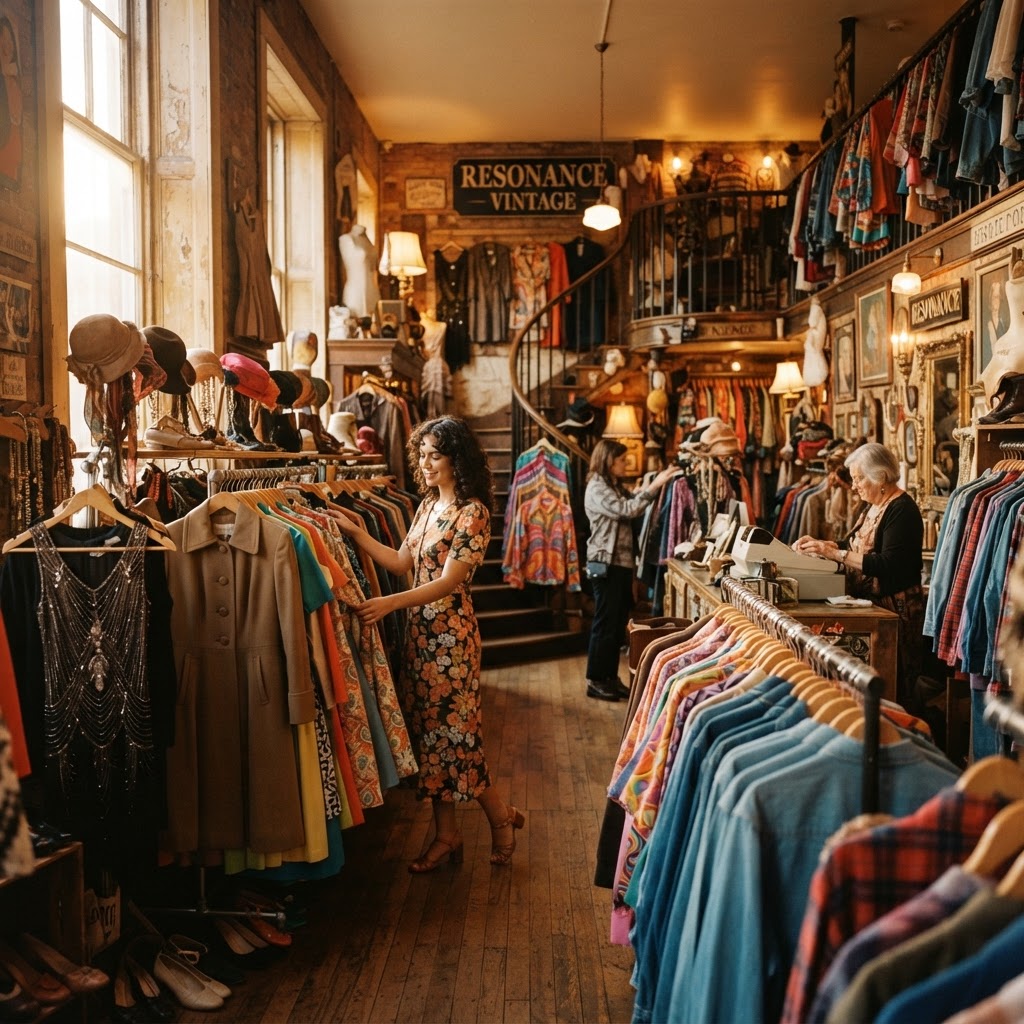
From Thrift Store Finds to Global Marketplace: How Vintage Fashion Found Its Digital Home
The vintage fashion industry has undergone a seismic shift — moving from dusty thrift store aisles to curated digital marketplaces where authenticity and style converge. As more shoppers seek sustainable, one-of-a-kind pieces with real history, a new generation of platforms has risen to meet the demand. But not all vintage marketplaces are created equal, and what sets the best apart is everything.
The Vintage Revolution: Why Now?
Something remarkable has happened in fashion over the past decade. While fast fashion brands churned out trend-of-the-moment pieces at breakneck speed, a counter-movement was quietly building momentum in the background. Vintage fashion — once the domain of thrift-savvy students and costume designers — has emerged as one of the most exciting, culturally rich, and environmentally responsible ways to dress.
The numbers tell a compelling story. The global secondhand and vintage apparel market is projected to reach over $350 billion by 2027, growing nearly three times faster than the broader fashion industry. What was once considered "used clothing" is now celebrated as heritage dressing, a way to connect with decades past while making a statement in the present.
But why now? Several forces have converged at once. Growing awareness of fashion's environmental toll has pushed consumers toward more sustainable choices. Social media — particularly platforms like Instagram and TikTok — has turbocharged the visibility of vintage aesthetics, from 1970s boho silhouettes to 1990s minimalist grunge. And a generation raised on curation and authenticity simply doesn't want what everyone else is wearing.
The Rise of the Digital Vintage Marketplace
Before the internet, finding authentic vintage meant haunting flea markets, estate sales, and charity shops — often a rewarding but time-consuming treasure hunt. The digitization of vintage shopping changed everything.
Early platforms like eBay opened up the possibility of buying vintage clothing from sellers around the world, but the experience was chaotic. Listings were inconsistent, authentication was nearly impossible, and buyers were often left guessing whether that "authentic 1960s mod dress" was actually from the 1960s or a contemporary reproduction.
The next wave of dedicated vintage marketplaces tried to solve these problems. Platforms began organizing inventory by era, category, and condition, making it easier for shoppers to find exactly what they were looking for. Some focused on luxury vintage — the Chanels and Givenchys of decades past. Others leaned into streetwear or denim. The market began to segment, mature, and professionalize.
Yet even as these platforms grew, a persistent problem remained: authenticity. The vintage world is riddled with reproductions, misdated items, and well-intentioned but inaccurate listings. For a buyer investing real money in a piece they believe to be a genuine 1940s silk blouse or an original 1980s Levi's denim jacket, the stakes are high.
What Makes a Vintage Marketplace Worth Trusting?
Not every platform that calls itself a "vintage marketplace" deserves the title. Here's what separates the serious players from the noise:
Curation and Expertise
Authentic vintage requires knowledge. Knowing the difference between a genuine 1920s beaded flapper dress and a later reproduction means understanding fabric composition, construction techniques, label history, and garment dating. The best marketplaces invest in this expertise — either through rigorous seller vetting, in-house authentication teams, or both.
Era Accuracy and Honest Description
Vague listings are a red flag. Trustworthy platforms demand specificity: not just "vintage 1980s" but a precise understanding of where a piece sits within its decade, what its condition genuinely is, and what a buyer should realistically expect when it arrives.
Condition Transparency
Vintage clothing, by definition, has lived a life. Honest condition reporting — noting the faint perfume still in the lining, the tiny moth hole near the hem, the replaced button on the cuff — is a hallmark of a platform that respects both its sellers and its buyers.
Seller Community Standards
Marketplaces are only as good as the people selling on them. Platforms that invest in educating their sellers, enforcing listing standards, and building a genuine community of passionate vintage experts create a fundamentally different experience than those that simply aggregate listings.
Decade by Decade: The Richness of True Vintage
One of the great joys of shopping authenticated vintage is the sheer breadth of fashion history available to explore. Each decade offers its own distinct aesthetic language:
The 1920s and 1930s gave us the elegance of bias-cut gowns, delicate lace, and the first stirrings of modern womenswear. Pieces from this era are rare and extraordinary — true collector's items.
The 1940s and 1950s brought structured silhouettes, full skirts, and the polished glamour of postwar optimism. A genuine 1950s circle skirt or tailored wool coat is as wearable today as it was seventy years ago.
The 1960s and 1970s exploded with color, experimentation, and cultural rebellion. Mod shifts, psychedelic prints, wide-leg trousers, and peasant blouses from this era remain perennially influential.
The 1980s delivered maximalism in every form — bold shoulders, power suits, neon, and excess. What was once derided is now fiercely sought after.
The 1990s and 2000s are firmly vintage territory now, and the appetite for authentic Y2K pieces, 90s minimalism, and early 2000s logomania shows no sign of slowing.
Even the 2010s are beginning their vintage arc — and the best marketplaces are already thinking about what from that decade will endure.
The Sustainability Argument Is Real
Beyond aesthetics and nostalgia, there is a serious ethical case for vintage fashion that deserves to be stated plainly. The fashion industry is one of the world's largest polluters, responsible for approximately 10% of global carbon emissions and enormous water consumption.
Choosing vintage is, at its core, a refusal to participate in that cycle. Every pre-loved piece purchased is one fewer garment manufactured, one fewer item destined for landfill. Circular fashion isn't a buzzword — it's a practical, meaningful way to reduce your environmental footprint while building a wardrobe that's more interesting, more durable, and more personal than anything fast fashion can offer.
Authenticated vintage marketplaces sit at the intersection of sustainability and quality. The clothes that have survived decades are, almost by definition, built to last — made with materials and construction methods that modern fast fashion has long abandoned.
How Ensemble Is Doing It Differently
In a crowded field of resale platforms and vintage aggregators, Ensemble was built on a simple but radical premise: that every decade of fashion history from the 1920s through the 2010s deserves to be treated with genuine expertise and care.
Where other platforms cast a wide net and hope for the best, Ensemble curates. Every piece listed on the marketplace is assessed for era accuracy, authenticity, and condition — because the person buying a 1930s crepe de chine blouse or a 1970s Halston wrap dress deserves to know exactly what they're getting.
Ensemble also believes in the people who make vintage fashion possible: the dedicated sellers who have spent years developing an eye for authenticity, learning the histories of labels and silhouettes, sourcing pieces with real provenance. The platform is designed to elevate those sellers and connect them with buyers who share their passion.
Conclusion: Dressing with History
Vintage fashion is not a trend. It is a fundamentally different relationship with clothing — one built on quality, history, sustainability, and the quiet thrill of wearing something that has already lived a life.
The rise of vintage marketplaces has made this world more accessible than ever before. But accessibility without authenticity is just noise. What the modern vintage shopper deserves is a platform that does the hard work of curation and authentication so they can focus on the joy of discovery.
That is exactly what Ensemble is here to provide — a beautifully curated, rigorously authenticated marketplace where nine decades of fashion history are waiting to be worn again. Whether you're hunting for a beaded 1920s evening coat or a perfectly worn-in 1990s leather jacket, Ensemble is where your search ends and your story begins.