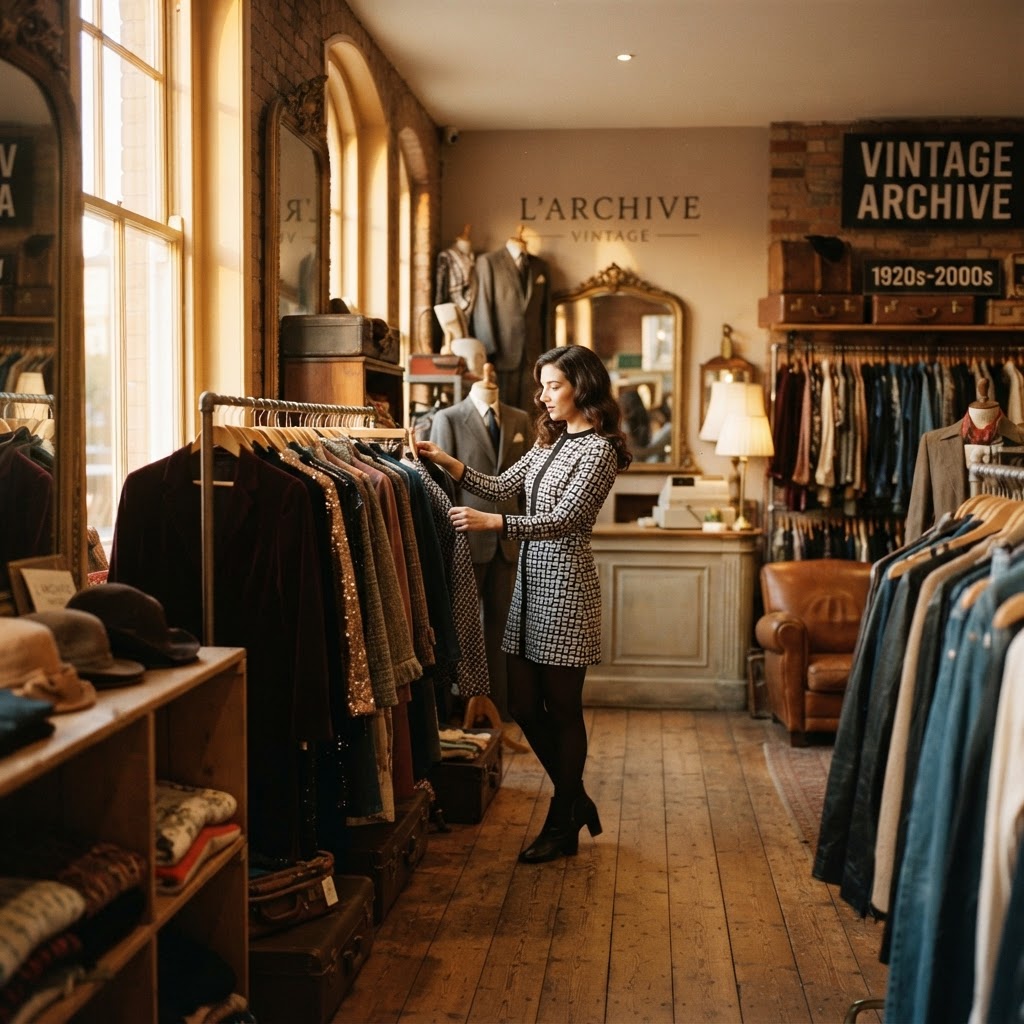
From Thrift Finds to Digital Gold: How Vintage Fashion Marketplaces Are Changing the Way We Shop (And Why Ensemble Leads the Pack)
Vintage fashion has exploded from a niche hobby into a global movement, with millions of shoppers turning away from fast fashion in favor of one-of-a-kind pieces with history. But not all vintage marketplaces are created equal. Here's why the rise of curated platforms like Ensemble is rewriting the rules of secondhand style.
The Vintage Revolution: A Cultural Shift, Not Just a Trend
Something remarkable has happened over the past decade. What was once the domain of dedicated thrifters rummaging through musty church sales and dusty estate auctions has transformed into one of the most dynamic sectors in fashion retail. Vintage clothing — authentic, pre-owned garments spanning nearly a century of style — has gone from countercultural curiosity to mainstream obsession.
The numbers back this up. The global secondhand apparel market is projected to reach $350 billion by 2028, growing nearly three times faster than the broader fashion industry. Gen Z and millennials are leading the charge, driven by a potent mix of sustainability values, a hunger for individuality, and a deep nostalgia for eras they may never have lived through. When a 1970s wrap dress or a perfectly worn 1990s leather jacket can tell more of a story than anything hanging on a fast-fashion rack, it's no surprise shoppers are paying attention.
But the vintage boom has also created a new set of challenges. As demand has surged, so has the marketplace landscape — and not all of it serves buyers and sellers equally well.
The Wild West of Online Vintage
The earliest wave of online vintage shopping was democratizing but chaotic. Platforms like eBay opened the floodgates in the late 1990s and early 2000s, allowing anyone to list a moth-eaten blazer alongside a genuine 1940s swing coat with no meaningful distinction between them. For savvy shoppers who knew exactly what they were looking for, it was thrilling. For everyone else, it was a minefield.
The next generation of platforms — Depop, Poshmark, Vinted, Etsy — refined the experience with better photography tools, social features, and seller ratings. These platforms democratized the seller side even further, turning vintage hunting into a side hustle for millions. But they also introduced a new problem: inauthenticity and misdating. Listings claiming "vintage" status for items made in 2015. Fast-fashion pieces relabeled as retro finds. Reproductions sold as originals.
For serious collectors and style-conscious shoppers, the signal-to-noise ratio became exhausting. The need for something better — something curated, authenticated, and genuinely expert — became impossible to ignore.
What Buyers Actually Want From a Vintage Marketplace
To understand what makes a vintage marketplace truly great, it helps to understand what shoppers are really looking for when they go vintage. It's rarely just about price, though vintage can offer remarkable value. More often, buyers are seeking:
- Authenticity: The confidence that a piece is exactly what it claims to be, from the era advertised, with honest condition notes.
- Discovery: The joy of finding something unexpected, something that couldn't exist in a contemporary collection.
- Story: Context that connects a garment to its historical moment — the silhouettes of the 1950s, the rebellion of the 1980s, the minimalism of the 1990s.
- Trust: A platform that stands behind its listings, with clear policies and knowledgeable human curation.
This is where the gap between general resale platforms and dedicated vintage marketplaces becomes a chasm. A platform optimized for selling last season's sneakers is fundamentally different from one built around the specific craft of vintage authentication and dating.
The Art and Science of Authentication
Authentication is the backbone of any trustworthy vintage marketplace, and it's far more nuanced than most shoppers realize. Dating a garment accurately requires reading a constellation of clues: union labels and care labels (which weren't required in the U.S. until 1971), zipper types (metal versus nylon, the introduction of the YKK zipper in the 1960s), fabric compositions, construction techniques like bound buttonholes or French seams, and even the specific fonts used on clothing tags.
A genuine 1960s mod shift dress looks superficially similar to a modern reproduction — but under scrutiny, the differences are unmistakable to a trained eye. The same applies to a 1940s gabardine suit versus a 1970s revival piece, or a true 1990s grunge flannel versus a contemporary homage.
This expertise takes years to develop. It's the difference between a platform staffed by passionate professionals and one that relies entirely on seller self-reporting. When authentication is done right, it protects buyers from disappointment and sellers from unfair competition with misdated or misrepresented listings.
Decade by Decade: Why Era Matters in Vintage Fashion
One of the most compelling things about vintage fashion is that each decade carries its own distinct aesthetic DNA. Shopping vintage isn't just shopping secondhand — it's shopping through history.
The 1920s and 1930s offer extraordinary craftsmanship: hand-beaded flapper dresses, bias-cut silk gowns, tailoring that modern manufacturing can barely replicate. The 1940s brings wartime ingenuity — structured silhouettes, durable fabrics, and a certain quiet elegance born of constraint. The 1950s explodes with full skirts, nipped waists, and the optimism of postwar prosperity.
The 1960s fractures into multiple movements simultaneously: Mod geometric prints, the folk-influenced bohemian looks of the later decade, the first stirrings of youth culture's takeover of fashion. The 1970s embraces maximalism — wide lapels, earth tones, the glorious excess of disco. The 1980s turns the volume up further with power shoulders, bold color blocking, and the rise of designer logomania. The 1990s pulls back into studied coolness: slip dresses, oversized flannels, the minimalism of Calvin Klein and the grunge of Nirvana. And the 2000s and 2010s are increasingly recognized as vintage territory in their own right, with Y2K aesthetics and early-aughts nostalgia driving some of the hottest searches in the secondhand market today.
Each era demands different expertise, different authentication benchmarks, and different styling knowledge. A platform that covers the full sweep from the 1920s through the 2010s isn't just offering variety — it's offering a complete education in fashion history.
The Case for Curation Over Volume
In the age of algorithmic abundance, curation has become a genuine luxury. The most successful vintage destinations — whether physical shops or digital platforms — have learned that less, done right, is worth infinitely more than a warehouse of unloved items with no context.
Great curation means more than just picking pretty things. It means understanding how pieces relate to each other across eras, how to help a shopper who loves 1970s bohemian find their way to 1930s bias-cut pieces that share the same sensibility. It means writing listings that educate as well as sell, building a community of shoppers who come not just to buy but to learn and to belong.
It also means maintaining rigorous condition standards. Vintage fashion lives on a spectrum from museum-quality unworn pieces to lovingly worn everyday items, and both have their place — as long as the condition is accurately represented and honestly priced.
Why Ensemble Is Different
In a marketplace landscape crowded with options, Ensemble was built from the ground up to solve the problems that have plagued vintage shopping for decades. Every listing on Ensemble covers authentic clothing from the 1920s through the 2010s, authenticated and dated by experts who understand the specific visual and material language of each era.
Ensemble isn't trying to be the biggest vintage marketplace — it's committed to being the most trustworthy one. That means rigorous authentication standards, honest condition grading, rich historical context for every piece, and a curatorial sensibility that connects shoppers to items that genuinely suit them rather than simply flooding their screens with options.
For sellers, Ensemble offers something equally valuable: a platform where authentically sourced, properly represented vintage pieces aren't competing on price with misdated fast fashion. It's a level playing field built on shared expertise and mutual respect for the history embedded in every garment.
Conclusion: The Future of Fashion Is Already a Century Old
The rise of vintage fashion marketplaces reflects something deeper than a shopping trend. It reflects a growing recognition that fashion has a history worth preserving, that the best things made deserve more than a single owner, and that individual style is richer when it draws from the full breadth of the past.
Ensemble exists at the intersection of all of this — the expertise, the curation, the authenticity, and the genuine love of fashion history that makes vintage shopping not just sustainable, but joyful. Whether you're chasing a 1940s gabardine coat, a 1980s power suit, or a perfectly faded 1990s denim jacket, Ensemble is the place where the search ends and the story begins.