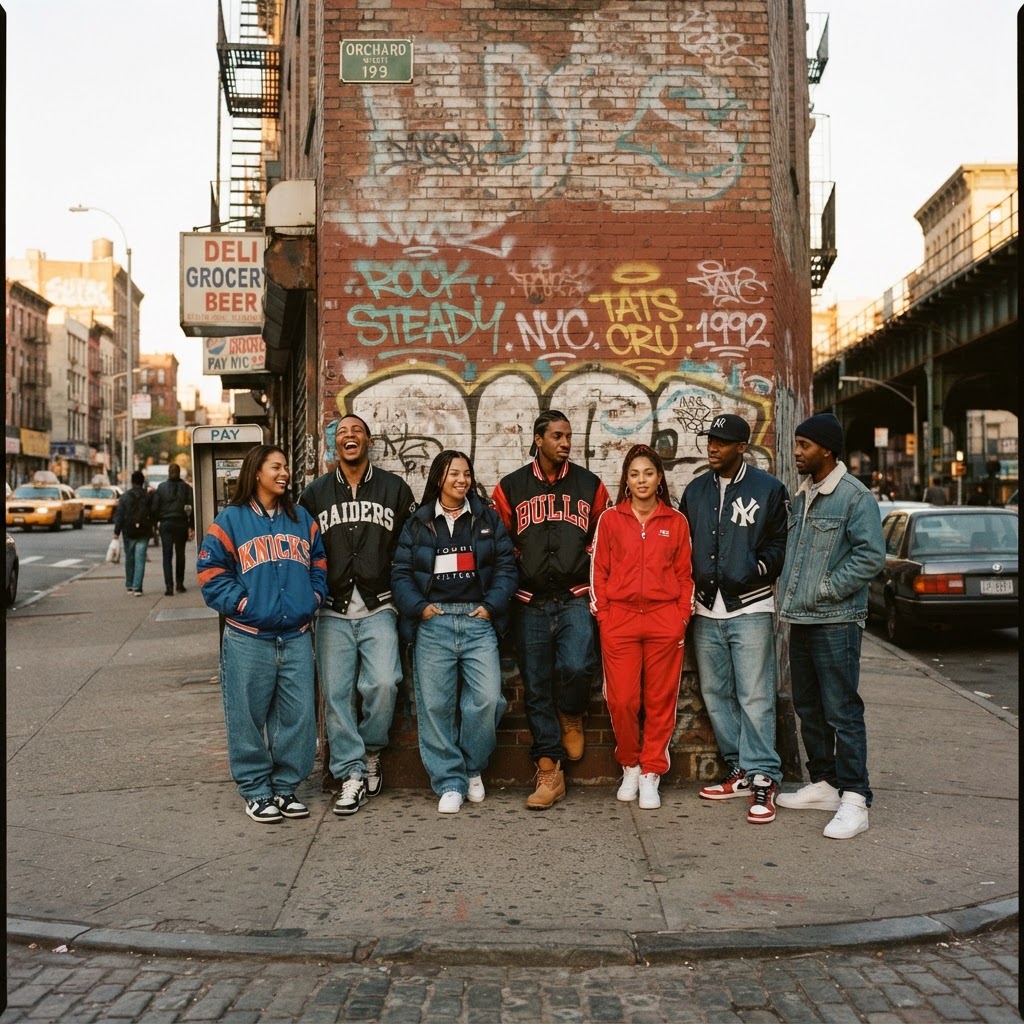
From the Block to the Runway: A Complete Guide to 1990s Hip-Hop Streetwear and How to Shop It Today
Few fashion movements have left as indelible a mark on global style as 1990s hip-hop streetwear. Born on the streets of New York, Los Angeles, and Atlanta, this era's clothing was a bold declaration of identity, community, and cultural pride. Whether you're a seasoned collector or a first-time buyer, understanding the roots of this movement will help you spot the authentic pieces worth owning.
The Streets as a Runway: Origins of Hip-Hop Fashion
Long before luxury fashion houses began borrowing from hip-hop aesthetics, the culture was dressing itself. In the late 1980s and accelerating through the 1990s, hip-hop streetwear emerged as a fully realized fashion language — one spoken fluently on the corners of Harlem, in the housing projects of Compton, and along the avenues of Atlanta's Westside.
This wasn't fashion dictated by editors or designers in glass towers. It was fashion born of necessity, creativity, and a fierce desire to be seen. Young Black and Latino men and women repurposed and elevated workwear, sportswear, and athletic gear into something entirely new. The oversized silhouette wasn't accidental — it was intentional, communicating ease, abundance, and an almost architectural sense of cool.
Key Pieces That Defined the Era
To shop 1990s hip-hop streetwear intelligently, you need to know the canonical pieces that defined the decade.
Baggy denim is perhaps the most iconic silhouette of the era. Brands like JNCO, Girbaud (Marithé + François Girbaud), and Karl Kani produced jeans with exaggerated wide legs and deep rises that became synonymous with the culture. When worn low — sometimes revealing designer waistbands — they signaled membership in a shared aesthetic universe.
Logo-heavy sportswear from brands like Nike, Adidas, FILA, and Starter dominated the wardrobes of hip-hop artists and their fans alike. Starter jackets, in particular — those satin-finish team-branded pullovers and zip-ups — became so coveted they were referenced in countless rap lyrics and, tragically, became targets in street robberies. An authentic early-90s Starter jacket today is a serious collectible.
Timberland boots, originally a workwear product from New Hampshire, were adopted by the hip-hop community in the Northeast and transformed into cultural currency. The wheat-colored 6-inch boot became a staple year-round, not just in winter.
Oversized graphic tees and Polo Ralph Lauren occupied an interesting dual space. While Tommy Hilfiger and Ralph Lauren were mainstream prep brands, hip-hop artists — particularly the Lo-Lifes crew in Brooklyn — appropriated Polo Ralph Lauren en masse, wearing it in ways the brand's designers never imagined. This act of cultural reclamation is now recognized as one of fashion history's most fascinating inversions.
Tracksuits and velour sets from FILA and Kappa were elevated to near-ceremonial status. Wu-Tang Clan, Notorious B.I.G., and later Jay-Z were frequently photographed in athletic sets that blurred the line between sportswear and luxury loungewear.
The Role of Music Videos and Television
Before social media, music videos on BET and MTV served as the primary runway for hip-hop fashion. A single appearance in a video could launch a brand into stratospheric demand. When TLC appeared in layered, deconstructed outfits with oversized overalls and crop tops in the early 90s, it redefined what women's streetwear could look like. When Notorious B.I.G. wore a crown and a Coogi sweater, it cemented the sweater brand as royalty by association.
Television shows like The Fresh Prince of Bel-Air and Martin brought streetwear into living rooms across America every week. Will Smith's character's wardrobe — neon colors, backwards caps, high-top sneakers — became aspirational for millions of viewers who had never set foot in West Philadelphia or Compton.
Regional Identities Within the Movement
One of the richest aspects of 90s hip-hop fashion is its regional variation. The coasts and the South developed distinctly different aesthetics.
The East Coast — particularly New York — favored darker palettes, layered looks, and a harder, more utilitarian edge. Timberlands, North Face 700-fill down jackets (another coveted collectible today), and Carhartt work gear mixed with Polo and Tommy.
The West Coast, shaped by artists like Dr. Dre, Snoop Dogg, and later Tupac, leaned into Pendleton flannels, Dickies work pants, Chucks, and a relaxed Chicano-influenced style that drew from lowrider culture. Starter caps worn straight or slightly tilted were standard.
The South, rising in influence through the late 90s with artists like OutKast, Goodie Mob, and Master P, brought a more maximalist energy — No Limit Records' camouflage gear, massive chains, and a general aesthetic of abundance that would become the blueprint for early 2000s rap excess.
Cultural Impact: How Hip-Hop Streetwear Changed Fashion Forever
It's impossible to overstate how thoroughly 1990s hip-hop culture reshaped the global fashion industry. By the early 2000s, designers from Marc Jacobs to Karl Lagerfeld were borrowing heavily from streetwear vocabularies. The luxury streetwear movement of the 2010s — Supreme, Off-White, Fear of God — is a direct descendant of the 90s hip-hop aesthetic.
Sean Combs (Puff Daddy) launched Sean John in 1998, becoming one of the first hip-hop artists to build a credible fashion empire. Jay-Z's Rocawear and Russell Simmons' Phat Farm followed, creating a blueprint for artist-driven fashion brands that exists to this day.
More broadly, the movement democratized fashion in a profound way. It proved that style authority didn't originate exclusively in Paris or Milan — it could come from a housing project in the Bronx, from a street corner in Inglewood, from a cookout in Atlanta. The gatekeepers never fully recovered.
What to Look for When Buying Authentic 90s Hip-Hop Streetwear
Shopping vintage 90s streetwear requires a sharp eye. Here's what to prioritize:
Check the tags carefully. Authentic 90s pieces will have tags with period-accurate typography, country-of-origin labeling, and fabric content information consistent with the era. Many brands were still manufacturing in the USA or had specific offshore manufacturing locations that changed over time.
Condition matters, but wear is expected. Unlike some vintage categories where pristine condition is paramount, 90s streetwear has a culture of authenticity around wear. Some cracking on graphics is expected and even desirable. However, structural damage — significant tears, broken zippers on Starter jackets — will diminish value and wearability.
Logos and graphics should be sharp and correctly proportioned. Counterfeit 90s pieces exist, particularly for highly coveted items like certain Nike and FILA pieces. Research the correct logo proportions for the specific year you're targeting.
Sizing runs differently. 90s garments were intentionally oversized, but also used sizing conventions that differ from today's standards. A 90s Large may wear more like a contemporary XL or XXL depending on the brand. Always check measurements.
Provenance adds value. If a seller can provide any documentation — original receipts, photographs, or clear styling context — that adds to the authenticity and collectibility of a piece.
Building a Collection with Intention
The best vintage collections tell a story. When approaching 90s hip-hop streetwear, think about the narrative arc you want to build. Are you focused on a specific region? A particular artist's aesthetic? The evolution of a single brand like Tommy Hilfiger from prep brand to hip-hop staple and back again?
Start with the foundational pieces — a great pair of baggy denim, a logo-heavy athletic piece, a strong outerwear item — and build from there. The most compelling collections balance iconic pieces with unexpected finds: the obvious Starter jacket alongside an obscure regional brand tee that only locals would recognize.
Conclusion: Find Your Piece of the Story at Ensemble
The 1990s hip-hop streetwear movement was more than fashion — it was a cultural revolution that permanently altered how the world understood style, identity, and the power of subcultural aesthetics. Every piece from this era carries the weight of that history.
At Ensemble, our curated marketplace specializes in authentic vintage clothing from the 1920s through the 2010s, and our 90s streetwear offerings represent some of the most culturally significant garments of the twentieth century's final decade. Whether you're searching for that perfect Starter jacket, a pair of original Girbaud jeans, or a pristine Tommy Hilfiger logo fleece, our sellers are vetted for authenticity and our community is built on a shared passion for fashion with a real story to tell. Browse our 1990s collection today and find your piece of the era that changed everything.