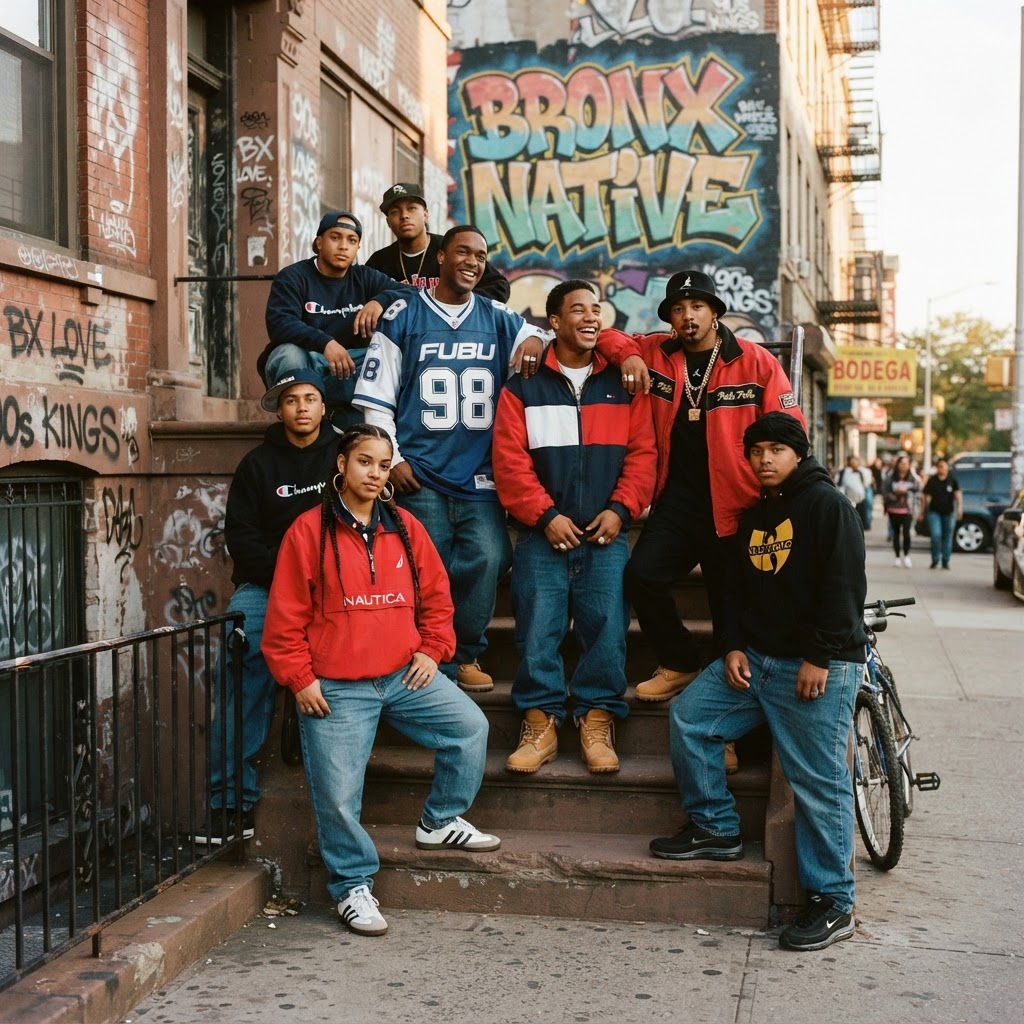
From the Block to the Runway: A Buyer's Guide to Authentic 1990s Hip-Hop Streetwear
Few fashion movements have reshaped the global style landscape as dramatically as 1990s hip-hop streetwear. Born on the streets of New York, Los Angeles, and Atlanta, these looks transcended music to become a cultural revolution still echoing through fashion today. Whether you're a seasoned collector or a first-time vintage shopper, understanding the roots and key pieces of this era is essential to building an authentic wardrobe.
The Cultural Roots of Hip-Hop Fashion
To truly appreciate 1990s hip-hop streetwear, you have to understand where it came from. Hip-hop culture emerged in the South Bronx during the late 1970s, born from block parties, breakdancing, graffiti art, and MCing. By the time the 1990s rolled around, hip-hop had exploded into a mainstream cultural force — and its fashion was a direct reflection of the community's values, struggles, and triumphs.
Dress was never just aesthetic in hip-hop culture. Clothing was identity, status, and resistance all at once. Young Black and Latino artists and fans were reclaiming luxury brands, sporting oversized silhouettes that defied mainstream fashion norms, and building entirely new labels from the ground up. What the fashion industry once dismissed as "street" would go on to dominate every major runway by the 2000s.
The Silhouette: Go Big or Go Home
If there's one defining visual characteristic of 1990s hip-hop fashion, it's size. Oversized everything — baggy jeans, XXXL hoodies, wide-leg trousers — defined the decade. Inspired in part by the practical workwear and prison-influenced styles of inner-city communities, the oversized look was also a deliberate aesthetic and political statement: taking up space in a world that tried to minimize you.
FUBU (For Us, By Us), founded in Queens in 1992, became one of the most iconic labels of the era, built explicitly by and for the hip-hop community. Wearing FUBU was a declaration of solidarity. Similarly, Karl Kani pioneered oversized denim and sportswear with a luxury feel, dressing everyone from Tupac Shakur to Biggie Smalls.
When shopping for authentic 1990s pieces, look for:
- Baggy jeans with high rises and wide legs, particularly from brands like Cross Colours, JNCO, and Girbaud
- Oversized flannel shirts worn open over graphic tees
- Hoodies and crewneck sweatshirts in neutral palettes or bold primary colors
- Windbreakers and track suits from labels like Karl Kani and Wu-Wear
Sportswear Brands and the Hip-Hop Takeover
One of the most fascinating chapters in 1990s streetwear history is how hip-hop artists co-opted major sportswear brands, transforming athletic gear into luxury fashion. Adidas had already cemented its hip-hop legacy when Run-DMC released "My Adidas" in 1986, but the 1990s took the brand relationship to a new level.
Nike Air Jordans became arguably the most coveted items in streetwear culture. Sneakers weren't just shoes — they were collectibles, social currency, and art objects. The Air Jordan III, IV, and XI releases of the late 1980s and early 1990s are among the most sought-after vintage sneaker finds today.
Timberland boots, originally designed for New England outdoor workers, were adopted by hip-hop communities in New York as the ultimate cold-weather staple. The classic wheat-colored 6-inch boot became synonymous with the East Coast sound and style. When shopping vintage, look for authentic early-1990s construction details, including the original foil tree logo and made-in-USA labeling on older pairs.
Tommy Hilfiger experienced a dramatic resurgence in hip-hop culture during this period. When Snoop Dogg wore a Tommy rugby shirt on Saturday Night Live in 1994, sales reportedly skyrocketed overnight. The brand's preppy, Americana aesthetic was subversively reinterpreted through an oversized, street-ready lens. Authentic vintage Tommy pieces from this era — particularly rugby shirts, color-blocked jackets, and logo-heavy denim — are highly collectible today.
Luxury Brands and the Art of Flexing
The 1990s also saw hip-hop artists embracing and redefining luxury fashion in bold new ways. Versace, Gucci, and MCM became staples of rap videos and album covers. Wearing luxury wasn't just about wealth — it was a form of visual storytelling, a narrative about rising from poverty to prosperity.
MCM bags and backpacks, originally a German luxury brand, became wildly popular in East Coast hip-hop communities in the late 1980s and early 1990s. Authentic vintage MCM pieces from this period are identified by their signature visetos (the diamond and laurel pattern), genuine leather construction, and interior serial numbers.
The Coogi sweater, an Australian knitwear brand known for its explosively colorful, textured patterns, became iconic after Biggie Smalls name-dropped it in "Big Poppa." Authentic vintage Coogi pieces are immediately recognizable by their vibrant multi-color knit patterns and carry a premium on the vintage market today.
The West Coast Aesthetic
While East Coast hip-hop embraced Timberlands and Tommy Hilfiger, the West Coast developed its own distinct visual language. Compton and Los Angeles gave the world Dickies work pants, Pendleton flannels, Ben Davis shirts, and Cortez sneakers. The low-rider culture of Southern California infused hip-hop streetwear with Chicano influences, creating a rich sartorial blend that artists like Snoop Dogg, Dr. Dre, and Cypress Hill brought to global audiences.
For collectors interested in the West Coast look, seek out:
- Dickies 874 work pants in black or khaki (look for early 1990s tags and construction)
- Pendleton wool shirts in bold plaids
- Ben Davis button-front shirts with the trademark gorilla logo
- Nike Cortez sneakers, particularly early-production pairs
How to Authenticate Vintage 1990s Streetwear
Authenticity is everything when collecting vintage hip-hop streetwear. The era's popularity means reproductions and modern reissues are plentiful. Here are key authentication tips:
Check the tags. Vintage 1990s garments will have tags made with materials and fonts specific to that era. Union labels on American-made garments, country-of-origin labels, and care instruction formatting can all help date a piece accurately.
Examine the construction. Authentic vintage pieces often show minor inconsistencies in stitching — signs of genuine era production rather than modern mass manufacture. Zippers, buttons, and hardware can also be period-telling details.
Know your colorways. Certain colorways were only produced in specific years. Research original catalog images and editorial photography to confirm that the color you're looking at was actually available during the decade.
Condition grading matters. In the vintage market, condition is described on a scale from "deadstock" (never worn, with original tags) to "heavily worn." For wearable pieces, look for grades of "excellent" to "good" — some fading and wear is authentic and desirable, but significant structural damage will impact longevity.
Why 1990s Hip-Hop Streetwear Endures
Decades later, the cultural impact of 1990s hip-hop fashion cannot be overstated. Virgil Abloh, Dapper Dan, and an entire generation of designers who grew up during this era have cited its influence. The oversized silhouette that high fashion "discovered" in the 2010s had been living on Flatbush Avenue since 1993.
More than nostalgia, collecting these pieces is an act of cultural preservation. Each authentic FUBU jersey, each vintage Wu-Tang tee, each pair of original Timberlands is a primary source document — a tangible artifact of one of the most creatively explosive cultural movements of the 20th century.
Building Your Collection with Ensemble
Whether you're hunting for an authentic Cross Colours varsity jacket, a vintage Tommy color-block windbreaker, or a genuine Coogi sweater to channel your inner Biggie, Ensemble is your destination for verified, authenticated vintage fashion from every decade. Our curated marketplace connects passionate sellers with knowledgeable buyers, ensuring that every piece you add to your wardrobe carries a real story — and real provenance. Explore our 1990s streetwear collection today and wear a piece of history.