From the Block to the Runway: A Buyer's Guide to Authentic 1990s Hip-Hop Streetwear
Few fashion movements have reshaped global style as profoundly as 1990s hip-hop streetwear. Born on the streets of New York, Compton, and Atlanta, this aesthetic became a cultural revolution that luxury houses are still chasing today. Whether you're a seasoned collector or a first-time buyer, understanding the roots of this movement will help you shop smarter — and wear more meaningfully.
The Streets as Runway: How Hip-Hop Built Its Own Fashion Language
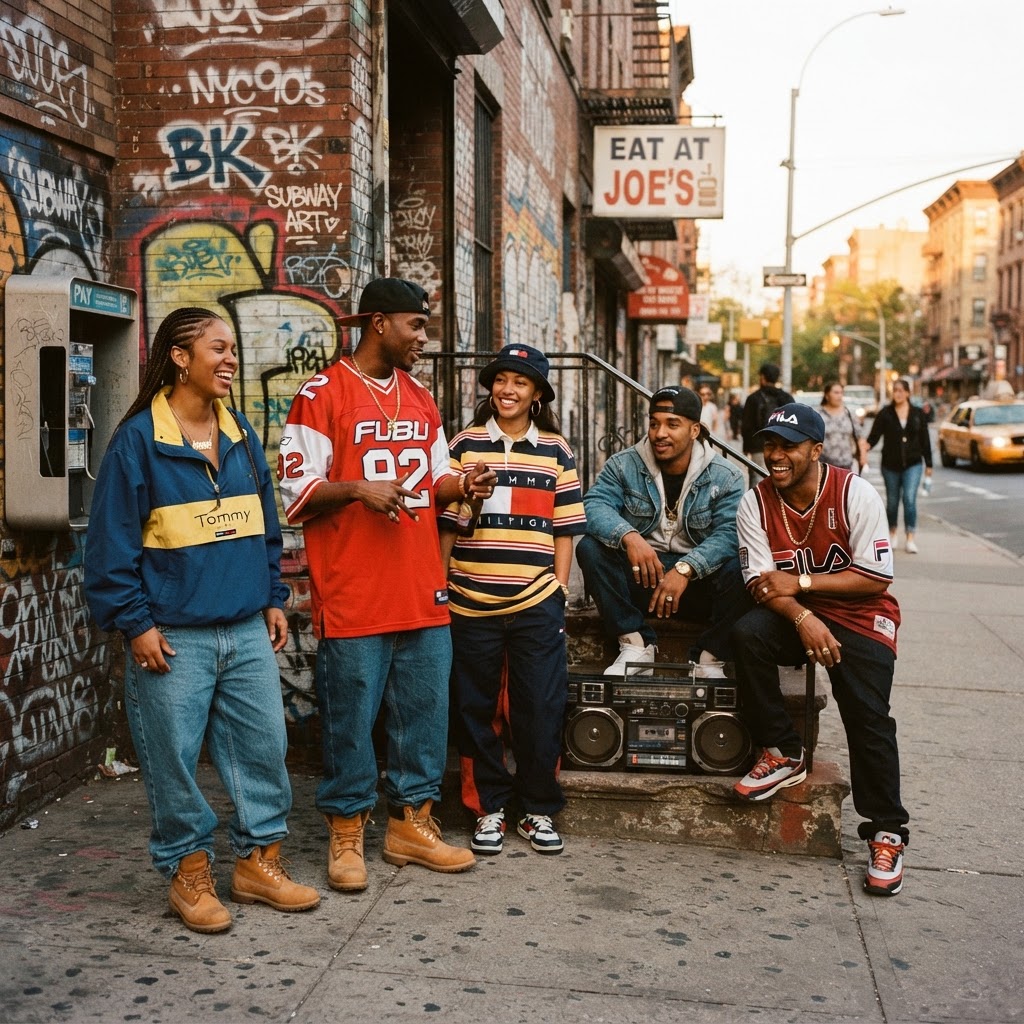
Before brands came to hip-hop, hip-hop came to itself. In the early 1990s, MCs, DJs, and b-boys weren't following fashion trends — they were inventing them. The aesthetic that emerged from neighborhoods like Harlem, Bed-Stuy, Compton, and the South Bronx was a deliberate statement of identity, community, and pride. Oversized silhouettes, Timberland boots, varsity jackets, and bucket hats weren't random choices. They were armor, language, and art all at once.
This was a generation of young Black Americans who took workwear, sportswear, and luxury goods and remixed them into something entirely new. The result was a fashion dialect that the rest of the world would spend the next three decades trying to learn.
The Brands That Defined the Era
Certain labels became synonymous with 1990s hip-hop culture, and authenticating vintage pieces from these houses is the holy grail for today's collectors.
FUBU — which stood for "For Us, By Us" — was perhaps the most culturally significant brand of the decade. Founded in Queens by Daymond John and his partners, FUBU was a direct response to the lack of Black-owned representation in the fashion industry. Pieces bearing the original FUBU logo, particularly from the mid-to-late 1990s, are highly sought after on the vintage market. Look for the classic embroidered logo, the FB and the number 05, and the distinctive hockey jerseys and oversized denim.
Karl Kani brought architectural tailoring to streetwear, offering baggy jeans and color-blocked jackets that felt simultaneously casual and intentional. Tupac Shakur famously wore Karl Kani in a 1993 photo shoot, and the brand's visibility on album covers and in music videos made it a wardrobe staple for millions.
Cross Colours deserves enormous credit as a trailblazer. Launched in 1989 and exploding through the early 1990s, the label used bold primary colors and messages of peace and unity stitched directly into the clothing. A Cross Colours piece isn't just vintage fashion — it's a wearable document of a political moment.
Polo Ralph Lauren occupies a fascinating chapter in this story. The Lo-Lifes, a crew from Brooklyn, famously shoplifted and collected Polo gear in the late 1980s and early 1990s, elevating the preppy American brand into a streetwear icon entirely on their own terms. Vintage Polo Rugby shirts, Snow Beach jackets, and Stadium collection pieces from this era now command extraordinary prices.
Tommy Hilfiger experienced perhaps the most dramatic ascent thanks to hip-hop. After Aaliyah and then Snoop Dogg wore the brand, sales exploded. Vintage Tommy pieces from 1994–1999, particularly the color-blocked windbreakers and flag-logo rugby shirts, are cornerstone items in any serious 1990s collection.
Sportswear as Street Uniform
If there's one category that unites every corner of 1990s hip-hop style, it's sportswear. Nike Air Jordans, Adidas tracksuits, Champion reverse-weave sweatshirts, and starter jackets from NFL and NBA teams transcended athletics entirely.
Champion, in particular, is a fascinating case study. Long a budget athletic brand sold in discount stores, Champion was adopted by hip-hop artists who appreciated its quality construction and unpretentious identity. The reverse-weave hoodie became a canvas — worn oversized, sometimes cut or customized. Vintage Champion pieces from this era, identifiable by the classic C logo placement and the specific weight of the fleece, are now considered premium collectibles.
Starter jackets — those satin-shell team jackets with bold color blocking — were so coveted in the early 1990s that they reportedly became targets for robberies. Today they're cherished artifacts of the era. When shopping for vintage Starters, check the interior label for authentic Starter Corp branding and look for the snap-collar construction that defined the originals.
The Denim Conversation
No discussion of 1990s hip-hop style is complete without addressing denim. This was the decade of the JNCO, the Girbaud, and the Phat Farm jean. Baggy, wide-legged, and often heavily branded, 1990s hip-hop denim was the opposite of everything that came before it.
Marithe + François Girbaud created some of the most architecturally complex jeans of the decade, with unusual seaming, strap details, and a silhouette that felt futuristic. Original Girbaud pieces from the 1990s are increasingly difficult to find in good condition, making them particularly valuable.
Phat Farm, founded by Russell Simmons in 1992, brought a preppy-meets-street sensibility to denim. Vintage Phat Farm pieces are wonderful entry points for collectors because they remain relatively affordable while offering genuine historical significance.
When buying vintage 1990s denim, prioritize condition of the hardware — rivets, buttons, and zippers are often the first things to show wear. Original tags dramatically increase value.
Accessories: The Details That Made the Outfit
Hip-hop styling in the 1990s was a head-to-toe commitment. Accessories weren't afterthoughts — they were exclamation points.
Bucket hats — worn by LL Cool J, Kangol branded or otherwise — remain among the most wearable vintage accessories from this era. Snapback caps, particularly from teams like the Chicago Bulls and the New York Yankees, carried enormous cultural weight. A vintage New York Yankees fitted cap from this period is simultaneously a sports artifact, a fashion piece, and a piece of New York City history.
Door-knocker earrings, nameplate necklaces, and bamboo hoops defined feminine hip-hop style, with artists like Queen Latifah, Salt-N-Pepa, and TLC popularizing looks that blended toughness and glamour. These jewelry pieces are now found at estate sales and vintage markets and tend to be underpriced relative to their cultural significance.
Timberland 6-inch boots, particularly in wheat nubuck, became so associated with hip-hop culture — especially in the Northeast — that they transcended footwear entirely. While shoes fall outside the traditional vintage clothing market, original 1990s Timberlands occasionally surface and are prized by collectors.
What to Look for When Shopping Vintage 1990s Hip-Hop
For buyers entering this space, a few principles will serve you well.
Prioritize tags and labels. Authentic vintage pieces will have labels consistent with the manufacturing standards of the period. Research what a brand's label looked like in a specific year — many labels changed subtly decade to decade, and this is your first line of authentication.
Assess construction, not just appearance. 1990s garments were often built to last. Heavy cotton, reinforced seams, and quality embroidery are good signs. Thin fabric with cracked screen printing is a red flag.
Embrace the oversized silhouette. Many buyers instinctively shy away from the large sizing that defined this era, but wearing a piece in its original intended proportion is both more authentic and increasingly fashionable.
Condition grades matter. Terms like "deadstock" (unworn with tags), "excellent vintage condition," and "good vintage condition" have real meaning in the collector market. Be wary of sellers who don't grade condition clearly.
Conclusion: Where to Find the Real Thing
The cultural legacy of 1990s hip-hop streetwear is impossible to overstate. These garments represent a moment when marginalized communities used fashion as a form of self-determination — and changed the entire world's wardrobe in the process. Collecting these pieces is an act of cultural preservation as much as personal style.
At Ensemble, our marketplace specializes in authenticated vintage clothing from the 1920s through the 2010s, and our 1990s streetwear offerings are curated with exactly this history in mind. Every FUBU jersey, every Cross Colours bomber, every oversized Tommy windbreaker in our collection has been verified for authenticity and graded for condition. When you shop Ensemble, you're not just buying clothes — you're acquiring a piece of the culture that built modern fashion. Browse our 1990s hip-hop collection today and wear the revolution.