Dress Through the Decades: How Vintage Fashion Can Help You Discover Your True Personal Style
Your personal style isn't found in a single season's lookbook — it's built across decades of fashion history, waiting to be uncovered one thrifted gem at a time. Vintage clothing offers something modern fast fashion simply cannot: a full century of silhouettes, fabrics, and cultural movements to draw from. Whether you're drawn to the glamour of the 1930s or the grunge of the 1990s, your authentic style story might just be hiding in the past.
Why Personal Style Feels So Hard to Pin Down
In an era of micro-trends that cycle faster than the seasons, finding your personal style can feel like chasing a moving target. One week barrel-leg jeans are everywhere; the next, everyone has pivoted to something else entirely. The result? Wardrobes stuffed with clothes that feel borrowed from someone else's identity.
Here's the secret that seasoned vintage lovers already know: personal style isn't about following trends — it's about recognizing what resonates with you across time. And there is no better laboratory for that kind of self-discovery than the rich, diverse world of vintage fashion.
By exploring clothing from the 1920s through the 2010s, you gain access to an entire spectrum of aesthetics, silhouettes, and cultural attitudes. Each decade tells a different story about how people wanted to present themselves to the world. When one of those stories feels like yours, that's the beginning of genuine personal style.
The Decades as a Style Menu
Think of fashion history less as a timeline and more as a menu. You don't have to commit to one era wholesale. Instead, you can sample freely, mixing and matching until something clicks.
The 1920s and 1930s: Drama and Elegance If you find yourself drawn to art deco jewelry, bias-cut silhouettes, and the idea of dressing as a form of high art, the interwar decades might speak to your soul. The 1920s brought us drop-waist dresses, beaded embellishments, and a radical rethinking of the female form, while the 1930s refined that energy into sleek Hollywood glamour — backless gowns, wide-leg trousers, and dramatic collars. Incorporating a single 1930s-inspired piece into a modern outfit instantly elevates it with old-world sophistication.
The 1940s and 1950s: Structure and Femininity The post-war decades celebrated tailoring with an almost architectural precision. Nipped waists, full skirts, structured blazers, and kitten heels defined an era that believed getting dressed was a serious and joyful act. If you love a polished, put-together aesthetic but want to avoid the corporate stiffness of contemporary workwear, raiding the 1950s is your answer. A fit-and-flare dress or a beautifully constructed wool coat from this era will outlast any modern equivalent — in quality and style.
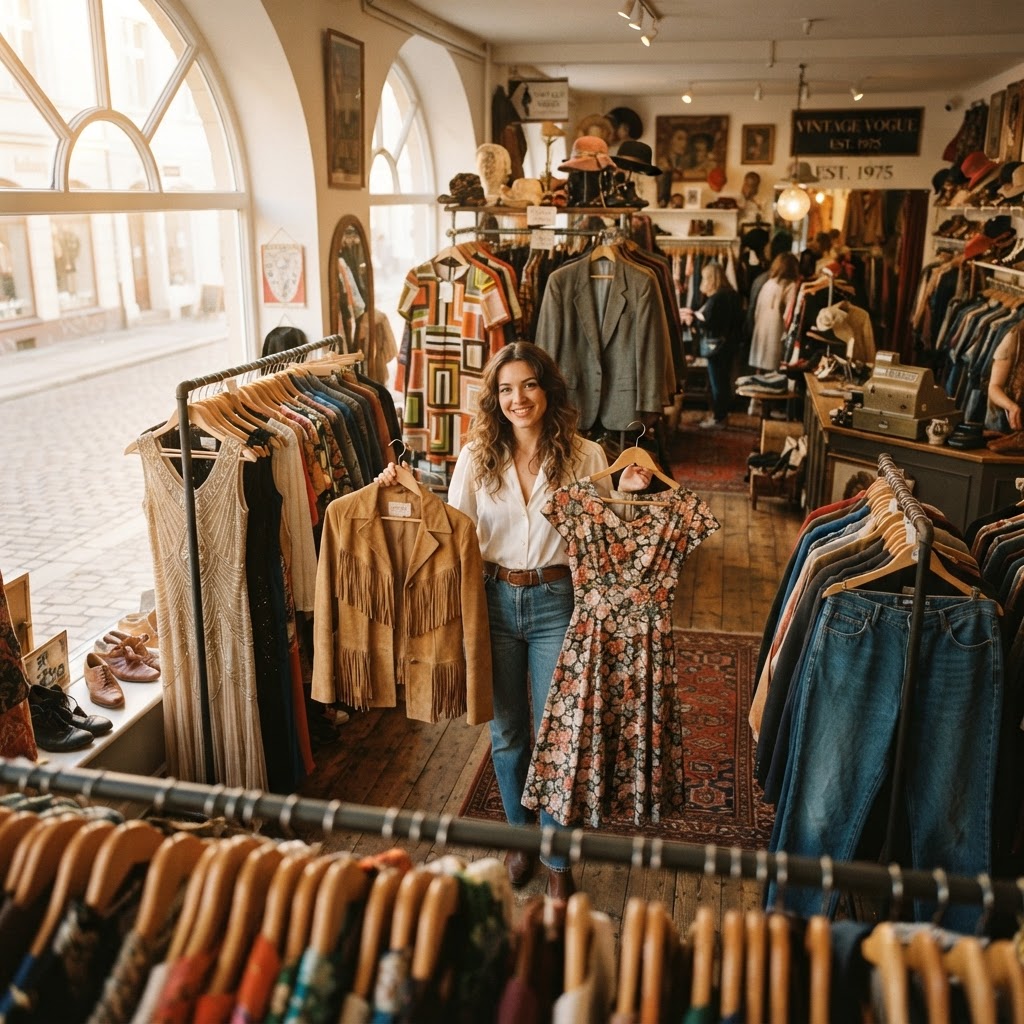
The 1960s and 1970s: Freedom and Experimentation Few decades rivaled the 1960s and 1970s for sheer creative liberation. From the mod minimalism of Carnaby Street — think shift dresses, bold geometric prints, and go-go boots — to the earthy, flowing bohemianism of the 1970s, these years gave us permission to play. If your wardrobe currently feels a little safe or predictable, borrowing from these decades is a fast track to visual confidence. A 1970s suede fringe jacket or a 1960s color-block mini dress makes a statement without saying a single word.
The 1980s: Power and Personality Love it or roll your eyes at it, the 1980s were never boring. Oversized blazers with padded shoulders, bold color blocking, athletic-inspired streetwear, and maximalist accessories defined an era that equated visibility with power. Today, styling a single 1980s power-shoulder blazer over a simple slip dress or straight-leg jeans creates a look that's simultaneously nostalgic and thoroughly contemporary. The decade rewards those who are unafraid of taking up space.
The 1990s and 2000s: Cool, Casual, and Subcultural For those whose personal style gravitates toward the effortless and the rebellious, the 1990s and early 2000s remain an endlessly fertile source. Grunge, minimalism, hip-hop streetwear, and Y2K maximalism all coexisted in these decades, offering wildly different entry points. A 1990s slip dress worn over a vintage band tee, or a pair of perfectly worn-in straight-leg Levi's from the same era, captures a kind of studied nonchalance that modern reproductions rarely replicate.
The 2010s: Curated and Self-Aware Yes, the 2010s are now vintage territory — and they offer their own fascinating aesthetic vocabulary. Normcore, athleisure, Tumblr-era romanticism, and fast-fashion minimalism all left their marks. Finding 2010s pieces on the secondary market is a reminder that even recent history is worth revisiting with fresh eyes.
How to Actually Build Your Style Through Vintage
Start with a mood board, not a purchase. Before you begin shopping, spend time collecting images of outfits, eras, and aesthetics that make you feel something. Don't filter yourself — include everything from old film stills to magazine editorials to street style photography. Patterns will emerge. You might notice you keep returning to a particular silhouette, color palette, or cultural moment.
Identify your non-negotiables. Personal style has a physical component. Consider what makes you feel comfortable and confident in your body. Do you love structure or flow? Do you run warm or cold? Are you on your feet all day? Vintage fashion spans a century of answers to these questions, and there is absolutely a decade whose dominant silhouettes will work beautifully for your lifestyle.
Buy one statement piece from each decade you're curious about. This is the most fun approach, and arguably the most educational. Wear that piece in your regular rotation and pay attention to how it makes you feel. Does it feel like a costume, or does it feel like coming home? That distinction is everything.
Learn the art of the vintage mix. The most stylish people in any city are rarely wearing head-to-toe looks from a single era — they're combining a 1940s blouse with contemporary trousers, or layering a 1970s suede coat over a modern minimalist outfit. Mixing decades creates outfits that feel personal rather than theatrical, signaling that you've done the work of developing a genuine point of view.
Condition your eye for quality. One of the great gifts of vintage shopping is that it teaches you to evaluate clothing on its own merits — construction, fabric, fit — rather than brand name or price tag. An authentically made 1960s wool coat will typically outlast almost anything produced today. As your eye develops, so does your ability to invest intentionally in pieces that will last.
The Unexpected Emotional Dimension
There is something quietly profound about wearing a garment that has already lived a life. Vintage clothing carries a kind of embodied history — it has been chosen, worn, and loved by someone whose name you'll never know. For many people, that connection to the human past transforms getting dressed from a mundane routine into something more meaningful.
This is especially true when vintage fashion intersects with cultural identity. For many shoppers, tracking down authentic pieces from specific subcultural movements — Harlem Renaissance fashion, 1970s Black Power aesthetics, queer club culture of the 1980s and 1990s — is an act of reclamation and celebration. Vintage clothing, at its best, is a form of living archive.
Your Style Story Is Already Out There
Personal style is not something you manufacture from scratch. It's something you uncover — through curiosity, experimentation, and honest self-reflection. Vintage fashion, with its century-spanning range of aesthetics and human stories, is one of the richest tools available for that kind of discovery.
The good news is that you don't have to dig through dusty bins or rely on luck to find the pieces that will define your wardrobe. Ensemble is a curated vintage marketplace built for exactly this kind of style journey — offering authenticated clothing from the 1920s through the 2010s, organized to help you explore the decades that call to you. Whether you're just beginning to experiment with vintage or you're a seasoned collector looking for your next defining piece, Ensemble is where your style story takes its next turn.