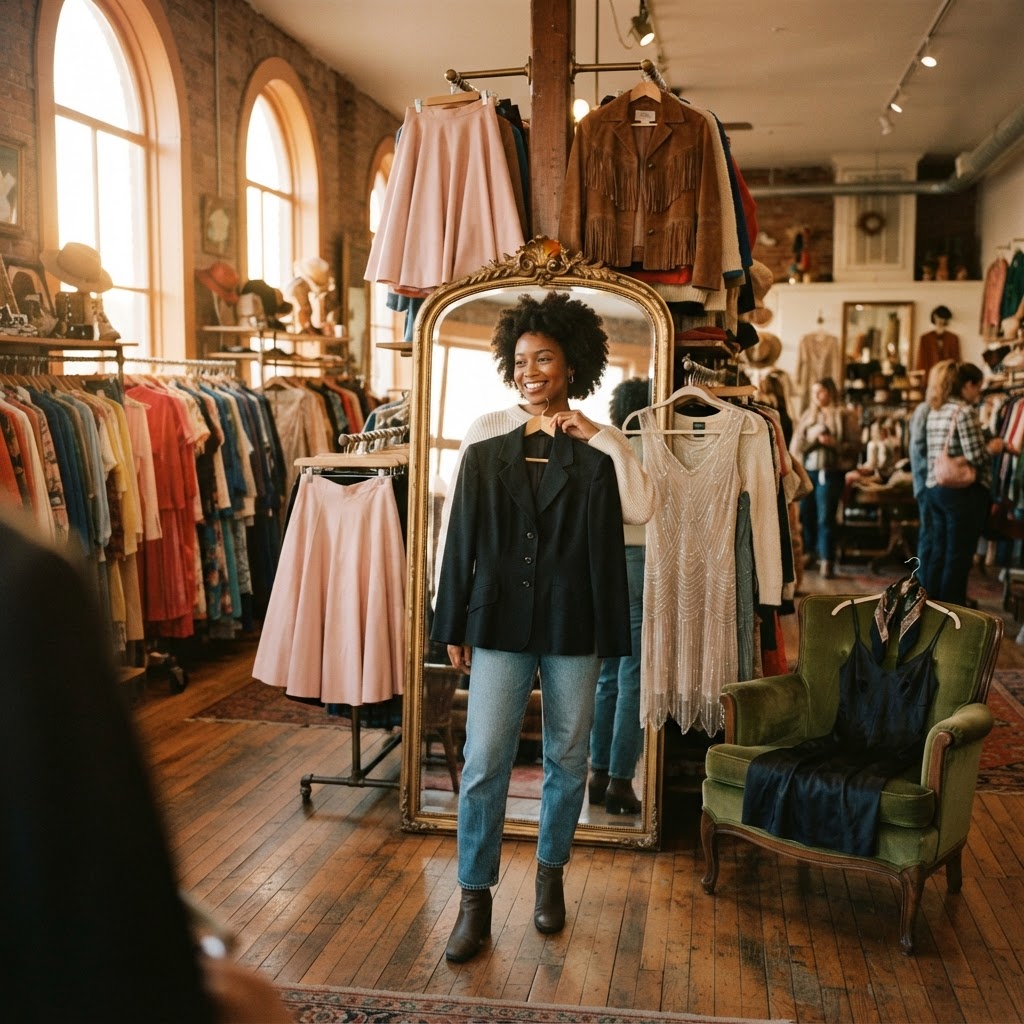
Decode Your Personal Style: A Decade-by-Decade Guide to Finding Yourself Through Vintage Fashion
Your personal style isn't something you're born with — it's something you discover, piece by piece, era by era. Vintage fashion gives you a unique shortcut: nearly a century of distinct aesthetic movements, each one waiting to tell you something about who you are. Whether you're a seller curating your Ensemble shop or a buyer building a wardrobe, this guide will help you find the decade that speaks to your soul.
Why Vintage Fashion Is the Ultimate Style Laboratory
Finding your personal style can feel overwhelming when you're staring down an endless scroll of fast fashion that all looks the same. But vintage fashion offers something modern retail simply can't: genuine diversity of vision. Each decade from the 1920s through the 2010s represents a distinct cultural moment, a specific set of values, fears, dreams, and aesthetics that were stitched directly into the clothing people wore.
When you try on a 1940s swing dress or slip into a 1970s suede jacket, you're not just wearing clothes — you're trying on an entire worldview. That process of experimentation is one of the most honest ways to discover what resonates with you on a deeper level. For sellers on Ensemble, understanding these decade-specific aesthetics also helps you write richer listings, attract the right buyers, and position your pieces with authority.
Let's take a tour through the decades and explore what each one might reveal about you.
The 1920s–1930s: Drama, Elegance, and Old Soul Energy
If you find yourself gravitating toward bias-cut silk gowns, art deco beading, and long cigarette-holder glamour, you likely have what stylists call an "old soul" aesthetic. The 1920s were defined by liberation — from corsets, from convention, from the trauma of World War I. The resulting fashion was both rebellious and deeply luxurious.
The 1930s softened this into something more romantic: longer hemlines, draped cowl necks, and a cinematic quality borrowed directly from Hollywood's golden age. If you love timeless elegance over trend-chasing, pieces from these two decades will feel like coming home.
Seller tip: When listing 1920s–1930s pieces, lean into words like "heirloom," "old Hollywood," and "collector's item." Buyers drawn to this era are often willing to invest in quality and authenticity.
The 1940s–1950s: Structure, Polish, and the Power of Silhouette
The 1940s gave us utility chic — fashion shaped by wartime rationing that somehow produced incredibly strong, structured looks. Broad shoulders, tailored waists, and practical fabrics defined the decade. If you're someone who believes clothing should feel like armor — empowering, precise, intentional — the 1940s wardrobe is your kindred spirit.
The 1950s pivoted toward femininity with full circle skirts, nipped waists, and a pastel-drenched optimism that reflected postwar prosperity. This is the decade for people who love dressing as a form of joy — polished, playful, and deeply committed to the art of getting dressed.
If you're a seller with 1950s pieces, your audience likely skims Pinterest boards titled "vintage everyday" and "retro pinup casual." Descriptions should emphasize fit, fabric, and occasion — where would someone actually wear this gorgeous circle skirt?
The 1960s–1970s: Counterculture, Color, and Clothes That Mean Something
Here is where personal style starts to get loud. The 1960s split into two powerful aesthetics: the mod revolution (geometric prints, shift dresses, go-go boots) and the bohemian counterculture (peasant blouses, fringe, flower crowns). Both were acts of identity, not just fashion.
If you feel most like yourself in clothes that signal your values, that start conversations, or that push against whatever the mainstream is doing — the 1960s and 1970s are your decades. The 1970s especially embraced individual expression: patchwork denim, maxi skirts, earth tones, and that irreplaceable quality of looking like you assembled your outfit on a road trip through New Mexico.
For sellers, 1960s–1970s pieces are some of the most searched categories in vintage marketplaces. Authenticity indicators matter enormously here — original labels, union tags, and fabric content labels help buyers trust they're getting the real thing. Mention them prominently in your Ensemble listings.
The 1980s: More Is More, and That's the Point
There is no decade more misunderstood — or more fun — than the 1980s. Power dressing, neon, oversized blazers, animal print, and shoulder pads aren't just trends that happened; they were a full-throated shout of ambition and excess. If you secretly love maximalism but have been talked into minimalism by the internet, the 1980s might be your true home.
Personal style is ultimately about honesty. The 1980s demands it. You cannot wear a hot-pink ruched mini dress ironically for long — eventually, you just love it. And that discovery is valuable.
Sellers: condition is key with 1980s pieces. Buyers know these items were worn to parties, to offices, to concerts. Be transparent about wear and highlight original details like brand labels (think Escada, Norma Kamali, or even department store house brands that now feel nostalgic).
The 1990s–2000s: The Decades That Are Now Fully Vintage
Here's the secret the vintage world has been sitting with for a few years now: the 1990s and 2000s are officially vintage territory, and they're driving some of the most passionate buying on the market.
The 1990s gave us minimalism and grunge in the same breath — slip dresses and combat boots, Calvin Klein and Kurt Cobain. If your style feels effortless, slightly undone, and allergic to trying too hard, you are a 1990s person. The 2000s went the opposite direction with logomania, low-rise everything, and bedazzled excess that is now being reclaimed with genuine affection.
For sellers, this is a hot category with a younger buyer base that is highly trend-aware. Accurate decade attribution (early 90s vs. late 90s), brand recognition, and sharp photography will set your Ensemble listings apart from the competition.
The 2010s: The Decade of the Archive
Yes, even the 2010s are finding their vintage footing. Normcore, fast fashion irony, and the rise of "indie sleaze" revival mean that pieces from this decade — particularly early 2010s indie and festival fashion — are being sought after as cultural artifacts. If your style is rooted in internet culture, niche subcultures, or the specific nostalgia of early Instagram aesthetics, you're working in the 2010s lane.
How to Mix Decades and Make It Yours
The most compelling personal styles are rarely single-decade loyal. The real magic happens when you combine eras deliberately: a 1940s blazer over a 1990s slip dress; 1970s boots with a 1960s mod shift; 1980s jewelry with a 1950s full skirt.
Here's a practical exercise for building your style identity through vintage:
- Pick three decades that call to you and purchase one affordable piece from each.
- Wear each piece in multiple combinations with what you already own.
- Notice which combinations make you feel most like you — not the most photographed, not the most complimented, but most authentically yourself.
- Build from that feeling, not from trends.
For sellers, this multi-decade sensibility is also a powerful curation strategy. Shops that tell a coherent style story — even across decades — build stronger followings and repeat customers.
Conclusion: Your Wardrobe Is a Time Machine
Finding your personal style is an ongoing conversation between who you are, who you've been, and who you want to become. Vintage fashion hands you nearly a hundred years of human expression and says: take what fits. That's an extraordinary gift.
Whether you're shopping for yourself or building your seller shop, Ensemble is the place where that discovery happens. Our marketplace is built for people who understand that authentic clothing — from every decade — carries something irreplaceable: a history, a character, and the potential to become part of your story. Start exploring, start experimenting, and let the decades guide you home.