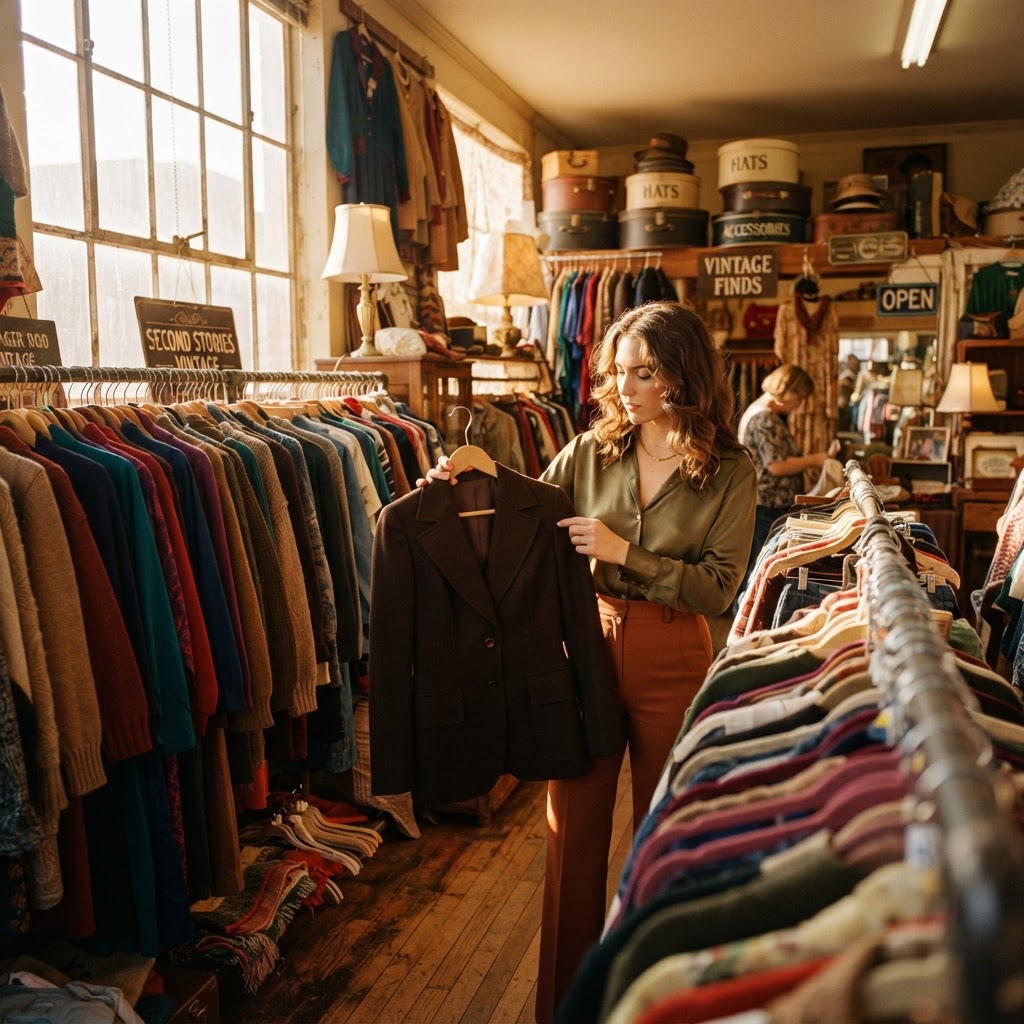
Building a Vintage Wardrobe on a Budget: Smart Thrift Shopping Tips for Authentic Style
Dreaming of a closet full of authentic vintage pieces but worried about the price tag? Building a stunning vintage wardrobe doesn't have to break the bank. With the right strategies, a sharp eye, and a little patience, you can curate a collection that turns heads — without emptying your wallet.
Why Vintage Fashion Is Worth the Hunt
There's something undeniably special about wearing a piece of clothing that has already lived a life. A 1970s suede fringe jacket, a 1950s circle skirt, or a 1990s oversized blazer carries with it a history, a craftsmanship, and a uniqueness that fast fashion simply cannot replicate. Vintage clothing is also increasingly sustainable — choosing pre-loved pieces keeps garments out of landfills and reduces demand for new production.
But let's be honest: the words "vintage" and "authentic" can sometimes come with intimidating price tags, especially as the resale market has grown in popularity. The good news? Building a genuinely impressive vintage wardrobe on a budget is absolutely achievable. You just need to shop smarter, not harder.
Know What You're Looking For Before You Shop
One of the biggest mistakes new vintage shoppers make is walking into a thrift store or scrolling through a marketplace with no clear direction. Before you spend a single dollar, take time to define your personal style aesthetic. Are you drawn to the sleek minimalism of 1990s fashion? The bold prints of the 1960s? The romantic silhouettes of the 1940s? Having a vision prevents impulse buys that end up unworn.
Create a wishlist of key pieces — a structured blazer, high-waisted trousers, a silk blouse — and prioritize those over decorative or novelty items. Anchor pieces will give you the most versatility and value for your money.
Learn to Read Labels Like a Pro
Authentic vintage pieces can often be identified through their care labels and brand tags, and knowing how to read them is one of the most valuable skills a budget vintage shopper can develop. Here's a quick cheat sheet:
- No care label typically indicates a garment made before 1971, when the FTC made care labels mandatory in the U.S.
- "Made in USA," "Made in England," or "Made in West Germany" are strong indicators of older provenance.
- Union labels (such as ILGWU or ACWA) can help date American-made garments, often to the 1930s–1970s.
- Font styles and logo designs on brand tags evolved over decades — learning a brand's label history can help you date pieces accurately.
This knowledge helps you spot genuine vintage items at thrift stores before other shoppers do, and it protects you from overpaying for pieces that are merely "vintage-inspired" rather than authentic.
Master the Art of the Thrift Store Visit
Not all thrift shopping trips are created equal. To maximize your finds and minimize wasted time, adopt these strategic thrift store habits:
Go on restock days. Most thrift stores restock their floors on specific days of the week — often Monday through Wednesday. Ask staff when new donations hit the floor and plan your visits accordingly.
Shop off-season. Buying a 1960s wool coat in July means far less competition and dramatically lower prices. Stock up on seasonal vintage pieces out of season and store them until you need them.
Check every section. Vintage pieces are frequently miscategorized. A stunning 1940s house dress might be hanging in the plus-size section. A 1980s silk blouse could be lurking in the men's shirts. Always browse the full store.
Bring a tape measure. Vintage sizing runs completely differently from modern sizing — a vintage "size 14" from the 1950s is equivalent to a modern size 8 or 10. Measuring garments directly (bust, waist, hips, inseam) ensures you only bring home pieces that will actually fit.
Set a Budget and Stick to a Price-Per-Wear Mindset
Budget shopping doesn't mean buying everything cheap — it means buying wisely. A $5 polyester novelty tee you'll wear once is a worse investment than a $35 perfectly tailored 1970s blazer you'll wear weekly for years.
Adopt the price-per-wear formula: divide the cost of an item by the number of times you realistically expect to wear it. A $40 vintage trench coat worn 100 times costs you $0.40 per wear. That's exceptional value.
Set a firm monthly vintage budget — even $30–$50 per month adds up to a meaningful wardrobe over time. Prioritize quality fabrics like wool, silk, cotton, and linen over synthetic blends, which tend to age poorly and pill quickly.
Build Around a Core Decade or Aesthetic
One of the secrets to a cohesive, wearable vintage wardrobe is anchoring it around one or two decades or aesthetics. Mixing every era at once can result in a closet full of pieces that don't work together. Instead, choose a primary decade to build around and let other eras play a supporting role.
For example:
- A 1970s-core wardrobe might center on wide-leg trousers, earth tones, wrap dresses, and leather accessories.
- A 1990s-inspired wardrobe could feature slip dresses, minimalist blazers, chunky knits, and platform shoes.
- A 1940s–1950s feminine aesthetic might prioritize nipped-waist dresses, pencil skirts, and structured cardigans.
When your pieces share a common design language — silhouette, color palette, or era — they mix and match effortlessly, multiplying your outfit options without multiplying your spending.
Don't Fear Alterations and Minor Repairs
One of the most budget-savvy skills you can develop as a vintage shopper is a basic understanding of alterations and repairs. Many incredible vintage pieces are passed over — and therefore deeply discounted — because of minor issues: a missing button, a small hem tear, a stuck zipper.
Learn to:
- Sew on replacement buttons (often found at fabric stores or on other thrifted garments)
- Fix simple hems with iron-on hem tape or basic hand-stitching
- Spot-treat stains with gentle vintage-safe cleaners before writing off a piece
- Take in or let out seams slightly to improve fit
A garment that costs $8 and requires $5 in simple repairs is still a $13 piece of authentic vintage clothing — often a fraction of what you'd pay elsewhere. Developing this eye for potential over perfection opens up a much wider world of affordable finds.
Shop Smarter Online with Marketplace Filters
Online vintage marketplaces have transformed the accessibility of vintage shopping, allowing you to search by decade, size, color, garment type, and price range from your couch. To shop on a budget online:
- Filter by lowest price first and sort through listings patiently.
- Set up saved searches and alerts for specific items you're hunting.
- Check seller bundles — many sellers offer discounts when you buy multiple items at once, and combining shipping saves money.
- Read descriptions carefully and always ask sellers for measurements before purchasing.
- Look for "as-is" or "needs TLC" listings — these are often authentic, beautiful pieces at reduced prices that a little care can restore.
Building Your Wardrobe Is a Long Game
Perhaps the most important mindset shift for budget vintage shopping is patience. Unlike fast fashion, where you can build an entire wardrobe in an afternoon, curating authentic vintage takes time — and that's part of what makes it so rewarding. Each piece you find has a story. Each thrift run is a treasure hunt.
Celebrate the small wins. That pristine 1985 Levi's denim jacket you found for $12? That's a victory. That 1960s mod shift dress in your exact size and favorite color? That's the magic of vintage shopping.
Discover Authentic Vintage at Ensemble
When thrift stores leave you empty-handed or you're searching for a specific authenticated piece, Ensemble is your destination. Our curated marketplace connects buyers with trusted sellers offering authentic clothing from the 1920s through the 2010s, all carefully described and priced with transparency. Whether you're building your first vintage wardrobe or adding a statement piece to an established collection, Ensemble makes it easier to shop with confidence, knowledge, and style — no matter your budget. Start exploring today and find the piece that was always meant to be yours.