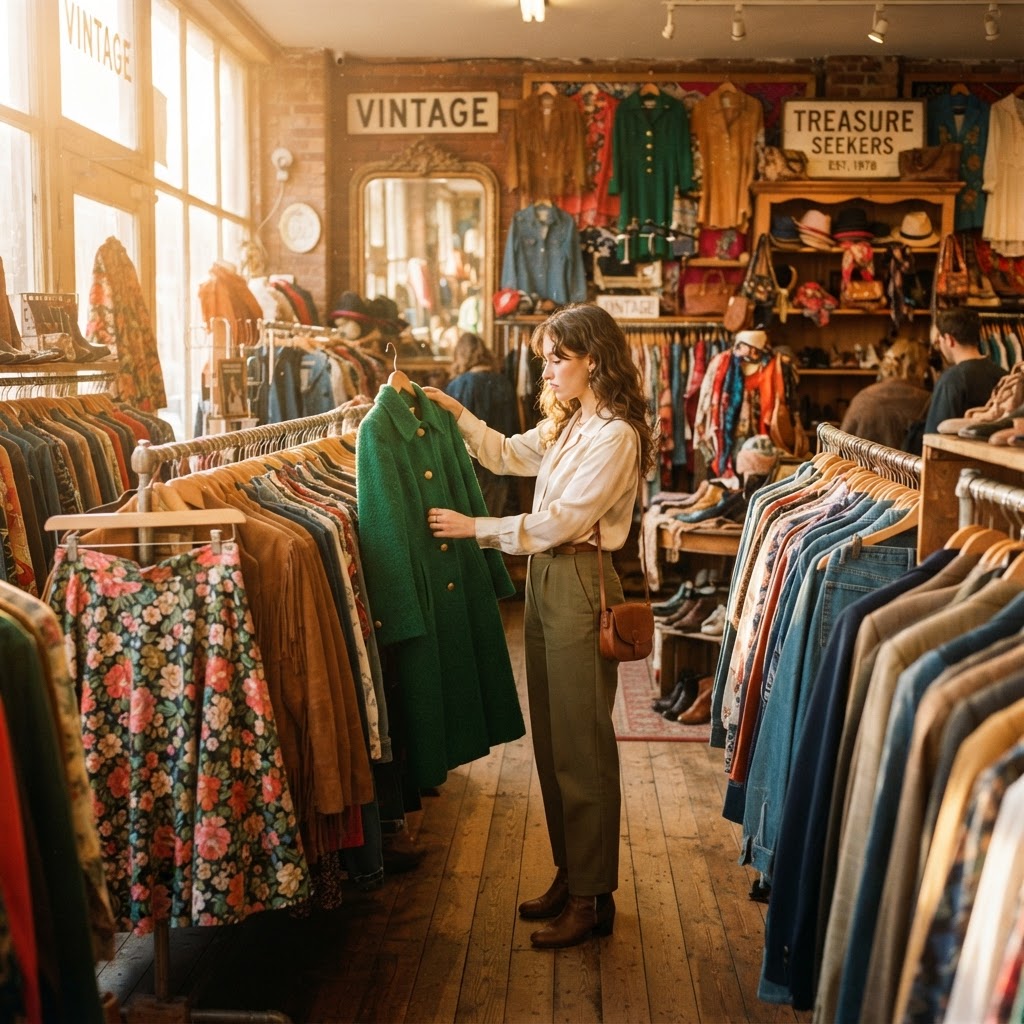
Building a Vintage Wardrobe on a Budget: Smart Thrift Shopping Tips for Authentic Style
Dreaming of a closet full of authentic vintage pieces but worried about the cost? Building a stunning vintage wardrobe doesn't have to break the bank. With the right strategies, a sharp eye, and a little patience, you can curate a collection that spans decades — all without emptying your wallet.
Why Vintage Fashion Is Worth the Hunt
There's something undeniably special about slipping into a 1970s halter dress or buttoning up a 1940s wool coat. Vintage clothing carries history, craftsmanship, and a personality that fast fashion simply cannot replicate. But the misconception that building a vintage wardrobe requires a luxury budget keeps too many style lovers on the sidelines.
The truth? Some of the most extraordinary vintage finds come from the most affordable places. The key is knowing what to look for, where to look, and how to build strategically over time. Whether you're drawn to the art deco glamour of the 1920s, the bold prints of the 1980s, or anything in between, this guide will help you shop smarter — not harder.
Start With a Vision, Not a Wish List
Before you walk into a thrift store or start scrolling through vintage listings, take a moment to define your aesthetic anchor. Ask yourself: What decade speaks to me? What silhouettes flatter my body? What colors dominate my existing wardrobe?
A focused vision prevents impulse purchases that crowd your closet without ever getting worn. For example, if you're drawn to 1960s mod fashion, you know to prioritize A-line silhouettes, geometric patterns, and shift dresses. If 1990s minimalism is your calling, you're hunting for clean-lined blazers, slip dresses, and straight-leg trousers.
Write down three to five core pieces you genuinely need — a statement coat, an everyday blouse, a versatile skirt — and use that list as your compass. Focused shoppers leave thrift stores with treasures. Unfocused shoppers leave with bags full of regret.
Learn to Read Labels and Fabrics
One of the most valuable skills a vintage shopper can develop is garment literacy — the ability to assess age, quality, and authenticity just by examining a piece closely.
Care labels are your first clue. Clothing manufactured before 1971 in the United States was not required to carry care labels, so their absence can actually indicate age. Labels from the 1950s and 1960s often feature ornate typography and may list only the fiber content. By the 1980s, RN (Registered Number) codes became standard and can be looked up to verify a brand's registration date.
Fabric quality is the next giveaway. Older garments were frequently made from natural fibers — wool, silk, cotton, rayon — because synthetic alternatives were either unavailable or expensive. Run your fingers along the seams. Feel the weight of the cloth. Well-made vintage pieces have a density and drape that modern fast fashion rarely achieves.
Also examine construction details: hand-stitched hems, metal zippers (versus plastic), reinforced buttonholes, and fully lined interiors are hallmarks of quality vintage garments worth investing in — even at a thrift store markup.
Master the Art of the Thrift Store Visit
Not all thrift shopping sessions are created equal. Strategic timing and technique can dramatically improve your haul.
Shop on weekdays. Most thrift stores restock their floors after weekend rushes. Monday through Wednesday mornings are often when fresh donations hit the racks, giving you first pick before the weekend crowd descends.
Go through every rack. It sounds obvious, but many shoppers skim the surface. Vintage pieces are rarely grouped together — a 1950s circle skirt might be wedged between a 2015 fast-fashion blouse and a holiday sweater. Slow down, push hangers apart, and actually look.
Shop out of season. Buying a 1960s fur-trimmed wool coat in July means you're competing with almost no one. Thrift stores price and stock seasonally, but vintage is timeless. Off-season shopping yields dramatically lower prices and better selection.
Check the men's section. Oversized 1980s blazers, vintage flannels, and 1990s workwear are all hiding in the men's racks — and they're often priced lower. Oversized tailoring is eternally chic.
Set a Budget and Stick to It
It's tempting to justify every purchase with "but it's vintage!" — and that logic can quietly drain your bank account. Budget discipline is what separates a curated wardrobe from a cluttered one.
Consider a per-item ceiling based on category. For example:
- Tops and blouses: up to $15
- Skirts and trousers: up to $25
- Dresses: up to $40
- Outerwear: up to $60
These numbers will flex depending on your city and the specific shop, but having a framework prevents emotional overspending. If a piece exceeds your ceiling, ask yourself: Would I pay this price for this item at a regular retailer? If the honest answer is no, walk away.
Also, track your purchases in a simple notes app or spreadsheet. Knowing you've spent $120 this month makes you more deliberate about that next find.
Prioritize Versatility Over Novelty
The most budget-conscious vintage wardrobes are built on versatile workhorses, not conversation-piece one-offs. Yes, the 1970s sequined jumpsuit is spectacular — but how often will you actually wear it?
When evaluating a potential purchase, ask: Can I style this three different ways? A 1980s silk blouse can be tucked into high-waisted trousers, layered under a blazer, or knotted over a midi skirt. A 1960s shift dress works for the office, a dinner date, or a weekend market. These are the pieces that earn their closet space.
Novely pieces have their place — but earn them. Buy the funky 1990s windbreaker after you've secured the basics.
Repair, Alter, and Reimagine
A small flaw shouldn't disqualify a great vintage piece — it should give you negotiating leverage. A missing button, a small seam separation, or a minor stain can drop a garment's thrift store price significantly, and most of these issues are simple fixes.
Learn a few basic hand-stitching techniques: closing a seam, sewing on a button, and hemming a skirt. These skills take an afternoon to learn and will save you hundreds of dollars over a lifetime of thrift shopping.
For more complex alterations, build a relationship with a local tailor or seamstress. A trusted tailor can take in a 1940s evening gown two sizes too large, raise the hem on a 1950s swing skirt, or replace a broken zipper — all for far less than the cost of a new garment.
Dyeing is another underrated tool. A faded 1970s linen blouse can be transformed with a simple cold-water dye bath. Suddenly that overlooked $4 find becomes a standout piece.
Build Community and Trade Knowledge
Some of the best vintage deals don't happen in stores at all — they happen within communities. Local vintage swaps, online resale groups, and collector communities are treasure troves for budget shoppers.
Follow local thrift stores and estate sale companies on social media. Many announce sale days — 50% off colored tags, dollar-a-pound events, holiday clearances — exclusively online. Signing up for newsletters can put you in the right place at the right time.
Connect with other vintage enthusiasts. Seasoned collectors often know which stores in your area are most likely to carry which decades, which neighborhoods receive the best donations, and which online sellers consistently price fairly.
Conclusion: Curate Intentionally, Shop Joyfully
Building a vintage wardrobe on a budget isn't about settling — it's about developing the patience, knowledge, and discipline to find the pieces that truly belong in your life. Every thrift store visit is a small adventure, and every great find is a reward for showing up prepared.
When you're ready to complement your thrift store discoveries with authenticated, carefully curated vintage pieces, Ensemble is here to help. Our marketplace connects buyers with trusted sellers offering authentic clothing from the 1920s through the 2010s — so whether you're searching for a rare art deco beaded gown or a pristine Y2K denim jacket, you'll find it here with confidence. Happy hunting.