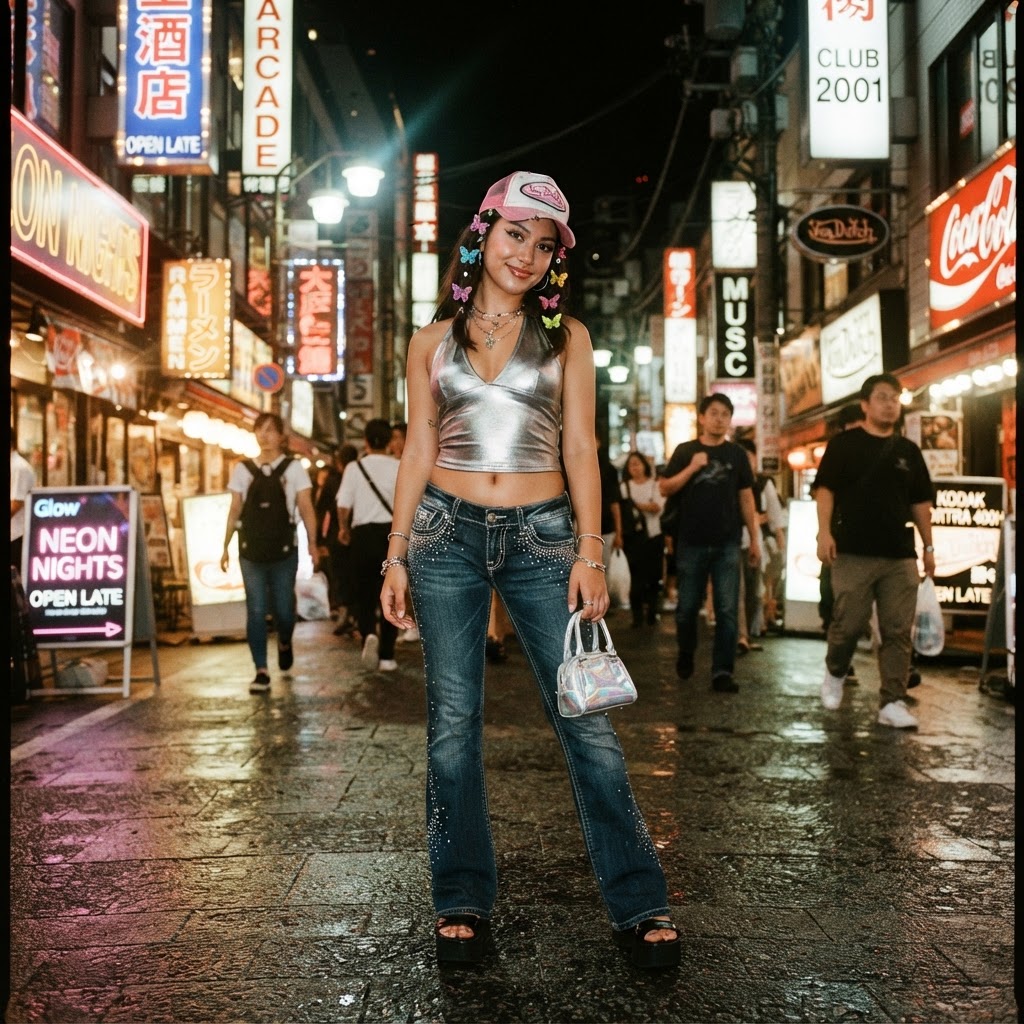
Back to the Future: Why Y2K Fashion Is Taking Over Style Culture Again
Low-rise jeans, butterfly clips, and bedazzled everything — the aesthetic that once defined a generation is making a spectacular comeback. Y2K fashion, the bold and unapologetic style of the late 1990s and early 2000s, is no longer just nostalgia — it's the dominant language of contemporary cool. Here's why the millennium's original style moment is having its ultimate second act.
The Turn of the Millennium Had a Look — and It Was Unforgettable
If you were alive and fashion-conscious between 1998 and 2004, you remember it vividly: the shimmer, the logos, the visible waistbands, the everything-must-sparkle energy that defined getting dressed. Y2K fashion wasn't subtle. It was an era that believed more was more — more chrome, more skin, more rhinestones, more attitude. Baby tees sat high on the torso. Cargo pants slouched low on the hips. Platform shoes added inches to everyone's height and confidence.
Now, decades later, that aesthetic has roared back with a vengeance — and not just as a Halloween costume or ironic throwback. Gen Z has wholeheartedly adopted the Y2K visual language, styling vintage pieces with a fresh eye and posting the results to millions of followers. The question isn't just what is trending — it's why, and what it tells us about the cultural moment we're living in right now.
Nostalgia as a Cultural Force
Fashion has always moved in cycles, but the speed at which millennial nostalgia has captured Gen Z's imagination is striking. Typically, cultural historians note that nostalgia peaks around 20–30 years after an era ends. By that math, the late 1990s and early 2000s are right on schedule for a renaissance.
But it's deeper than timing. Gen Z — born roughly between 1997 and 2012 — grew up watching older siblings, parents, and pop culture reruns from the Y2K era. The aesthetic carries the warmth of childhood memory for some, and the intoxicating allure of a pre-smartphone world for others. There's a certain optimism encoded in Y2K style: it was designed in a moment when the world was riding a wave of technological excitement and economic confidence. The clothes reflect that — they're fun, maximalist, and unapologetically celebratory.
In contrast, today's world feels complex and uncertain. Reaching back toward that glittery, carefree aesthetic is, in part, a form of emotional escapism — and fashion has always served that purpose beautifully.
The Influencer and Social Media Effect
No discussion of the Y2K revival is complete without acknowledging the enormous role that TikTok and Instagram have played in accelerating it. Vintage fashion content — hauls, styling videos, thrift flips — consistently performs at the top of fashion-related social media. And Y2K pieces photograph extraordinarily well. The bold colors, the sheen of satin and vinyl, the graphic logos: all of it pops on a screen.
Influencers and celebrities have been critical catalysts. Artists like Doja Cat, Olivia Rodrigo, and Ice Spice have embraced Y2K references in their music videos, red carpet looks, and everyday style. When a cultural icon wears a Von Dutch trucker hat or a halter top with low-rise trousers, their audience doesn't just notice — they immediately search for similar pieces. That search increasingly leads to the vintage market, where the originals live.
What Makes Y2K Style So Rewearable Now
One of the most interesting aspects of this revival is how wearable Gen Z is making Y2K aesthetics. Rather than recreating looks wholesale, today's style enthusiasts are cherry-picking the era's best elements and blending them with modern sensibilities.
Key Y2K staples dominating wardrobes today include:
- Baby tees and cropped knits — tiny, tight, and endlessly versatile, these pair with everything from wide-leg trousers to midi skirts
- Low-rise denim — perhaps the most debated comeback, but undeniably present on runways and street style alike
- Butterfly clips and Y2K hair accessories — affordable, playful, and deeply nostalgic
- Logomania — bold brand insignia on bags, belts, and clothing, echoing the era's love of visible status signaling
- Velour tracksuits — the Juicy Couture aesthetic has been fully rehabilitated, elevated from casual to covetable
- Platform shoes and chunky sneakers — adding height and visual weight, reflecting the maximalist spirit of the era
What makes these pieces feel fresh rather than costumey is context. A vintage satin slip dress from 2001 worn with chunky loafers and a structured blazer feels entirely contemporary. The Y2K piece becomes an anchor, while the surrounding styling keeps the look grounded in 2024.
The Sustainability Angle
Another powerful driver of the Y2K vintage market is the growing sustainable fashion movement. Younger consumers are increasingly aware of the environmental cost of fast fashion, and many are actively choosing to shop secondhand. Vintage Y2K pieces offer the perfect intersection of ecological responsibility and stylistic excitement.
Buying an authentic vintage piece from the late 1990s or early 2000s means giving clothing a second life rather than contributing to new production. It also means owning something genuinely original — not a mass-produced fast-fashion imitation, but the real thing, with the history and character that comes with it. In an era of endless dupes and trend-chasing replicas, authenticity has become its own kind of luxury.
The High Fashion Validation
It would be easy to dismiss Y2K as a street-level trend — but high fashion has fully endorsed the revival. Miu Miu's iconic micro-mini skirts directly echo Y2K proportions. Diesel has leaned into its early-2000s denim heritage with enormous commercial success. Versace, Blumarine, and Roberto Cavalli have all revisited their Y2K-era archives, presenting updated versions of their most iconic millennial-era pieces on current runways.
When luxury fashion houses start mining an era's aesthetic, it signals something important: the cultural conversation around that period has matured from nostalgia into genuine historical appreciation. Y2K is no longer just a vibe — it's a recognized chapter in fashion history, worthy of serious study and celebration.
Collecting Y2K: What to Look For
For those looking to build an authentic Y2K wardrobe, the vintage market rewards patience and knowledge. The most collectible pieces tend to come from a handful of iconic sources:
Designer labels like Versace, Gucci (the Tom Ford era specifically), Prada, and Fendi produced some of the most memorable Y2K pieces, and authenticated examples command serious attention from collectors.
Denim from brands like Miss Sixty, Frankie B, and early True Religion captures the low-rise, embellished denim moment perfectly. Look for original embroidery, rhinestone detailing, and distinctive washes that fast fashion can't quite replicate.
Velour and terry cloth pieces from Juicy Couture are perhaps the most recognizable Y2K artifacts — instantly readable, deeply nostalgic, and increasingly rare in good condition.
Club and party wear from this era — think satin, mesh, and metallic fabrications — tends to be rarer because it was worn hard and not always carefully preserved. Finding a pristine example is genuinely exciting.
Authentication matters enormously in the Y2K vintage space. Labels, stitching, hardware, and provenance all help establish whether a piece is genuinely from the era or a later reproduction. Buying from trusted sources is essential.
The Bigger Picture: What Y2K Tells Us About Now
Every fashion revival is really a conversation about the present. When we reach for Y2K aesthetics, we're not just borrowing clothes — we're borrowing an attitude. The Y2K era was brazenly optimistic, visually loud, and fiercely individual in its excess. In a cultural moment that sometimes feels defined by anxiety and conformity, those qualities feel genuinely radical.
There's also something meaningful about Gen Z's willingness to embrace an era they didn't directly live through. It speaks to a generation that is voracious about cultural history, unafraid of bold choices, and deeply interested in personal expression over algorithmic dressing. Y2K fashion, at its best, was always about standing out — and that message resonates powerfully today.
Find Your Y2K Moment at Ensemble
The Y2K revival is more than a trend — it's a full cultural reclamation of one of fashion history's most exuberant chapters. And the best way to participate isn't through fast-fashion imitations, but through the real thing.
At Ensemble, our carefully curated marketplace specializes in authenticated vintage clothing from the 1920s through the 2010s — including an ever-growing selection of genuine Y2K treasures. Whether you're hunting for a Tom Ford–era Gucci slip skirt, a pristine Juicy Couture tracksuit, or a pair of embellished low-rise Miss Sixty jeans, our community of trusted sellers brings the era's most iconic pieces directly to you.
Dress for the moment you want to be in. Shop the archive at Ensemble — where every piece has a past, and a perfect future ahead of it.